Betancuria, the Village That Was the Island's First Capital
Betancuria village was Fuerteventura's first capital, founded in the 15th century deep in the mountains — one of the must-sees covered on our pillar page, Things to do in Fuerteventura. Today a modest village of a few hundred people, it remains one of the island's most historic spots, with its church, museums and the viewpoints overlooking its valley.
In a nutshell
- Founded in 1404 by Jean de Béthencourt, inland to escape pirates.
- The island's capital until 1834, despite being sacked in 1593.
- Don't miss: Santa María church, the Sacred Art and Archaeology museums, the Morro Velosa viewpoint.
- Half a day is enough for the village and surrounding viewpoints.
A capital founded far from the sea: Betancuria's history
Unlike most island capitals, Betancuria was founded in 1404 by Jean de Béthencourt, alongside Gadifer de La Salle, well away from the coast to escape pirates. Tucked among the mountains, the town was harder to reach for attacks coming from the sea.
That precaution wasn't quite enough: the village was sacked and burned by pirates in 1593. Rebuilt, Betancuria remained the island's capital until 1834, when the title passed to Puerto del Rosario, better placed for maritime trade.
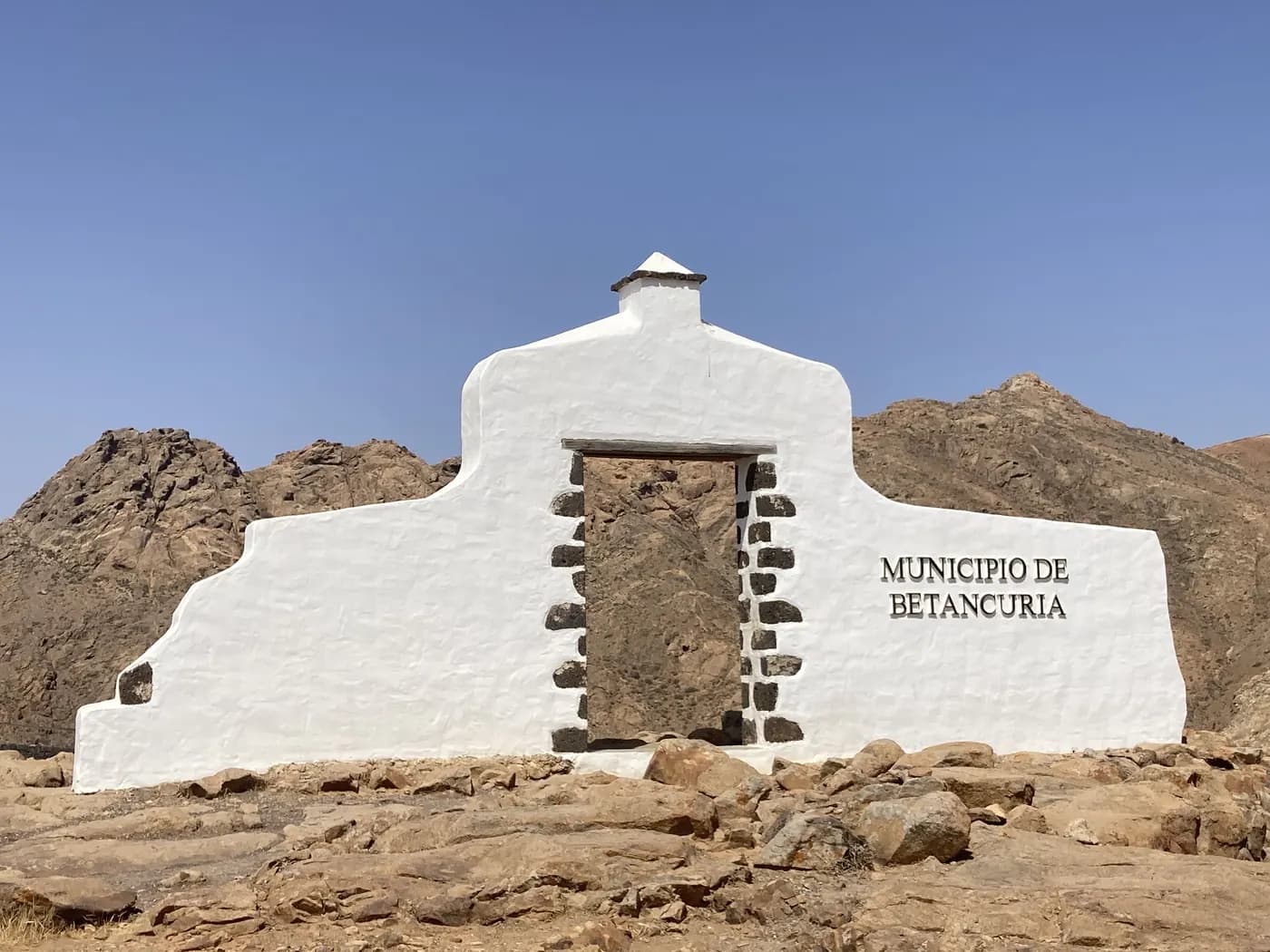
What to see in the village: church, museums and convent
The heart of the village can be explored in a leisurely hour's walk through its cobbled streets and traditional whitewashed houses.
The viewpoints around Betancuria
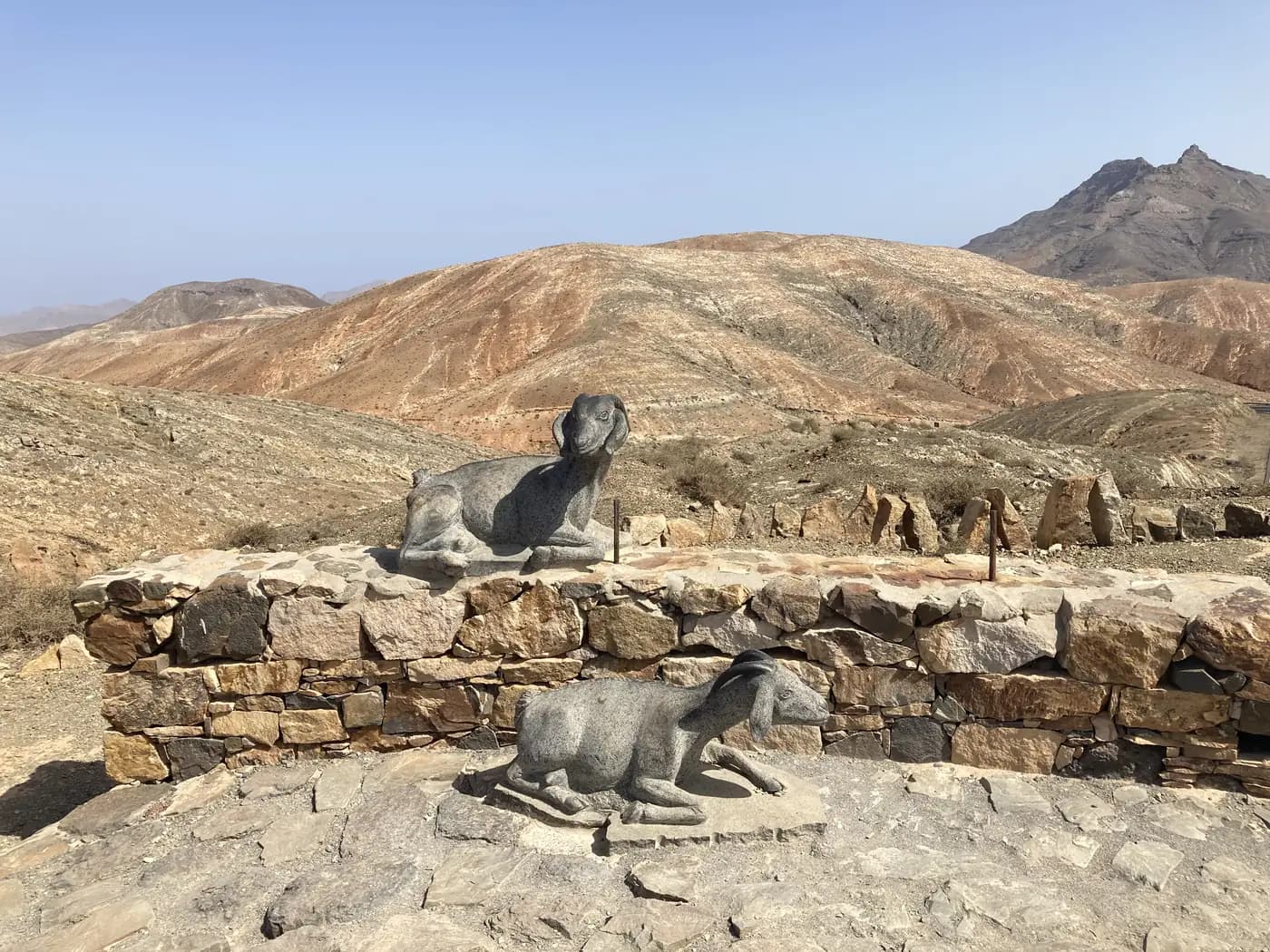
Two viewpoints round off the visit to this historic village. The Morro Velosa viewpoint, designed by César Manrique, offers the best view over the valley, at 669m altitude north of the village, with statues of Ayose and Guise, the island's last two kings before the conquest. To the south, the Las Peñitas viewpoint offers another angle on the Betancuria valley.
We stopped at the Morro Velosa viewpoint during our trip: the view over the valley and the statues of Ayose and Guise are worth the detour alone, even for a ten-minute break between visits.
For the rest of your trip through the island's interior, head to our Canary Islands guide.
Frequently asked questions
Why was Betancuria founded far from the sea?
To protect the town from pirate attacks, common along the Canary coasts in the 15th century.
When did Betancuria stop being Fuerteventura's capital?
In 1834, when the title passed to Puerto del Rosario, better placed for maritime trade.
What is there to see in Betancuria village?
The Santa María church, the chapels of Santa Inés and Nuestra Señora de la Peña, the former Franciscan convent, and the two museums (Sacred Art, and Archaeology and Ethnography).
What is the Morro Velosa viewpoint?
A viewpoint designed by architect César Manrique, at 669m altitude north of Betancuria, with statues of the island's last two kings.
How long should you plan for a visit to Betancuria?
Half a day is enough for the village, its museums and a stop at the surrounding viewpoints.
Is Betancuria accessible by public transport?
Driving remains the most practical option; bus routes into the island's interior are infrequent.