Car hire in Fuerteventura: our complete guide (prices, agencies and top tips)
On such a large island, with buses few and far between and coves at the end of deserted tracks, car hire in Fuerteventura is almost essential to make the most of your stay. Fuerteventura is the Canaries' second-largest island by area, at 1,660 km², and the car remains the best way to explore it freely. We hired a car in Fuerteventura for a week in July 2025 and for 2 weeks in July 2023: this guide gathers the essentials to hire without nasty surprises — prices, agencies, vehicles, insurance and pitfalls to avoid.
The essentials at a glance
- Where to hire: at the airport, the most convenient point, where agencies are most numerous and offer the most cars.
- Hire price: around €25-35/day in low season, €45-70/day in summer, insurance extra.
- Vehicle: a city car is enough everywhere, except for Cofete where a 4x4 is advised.
- Watch out: frequent punctures on the tracks — check the spare wheel and the insurance before setting off.
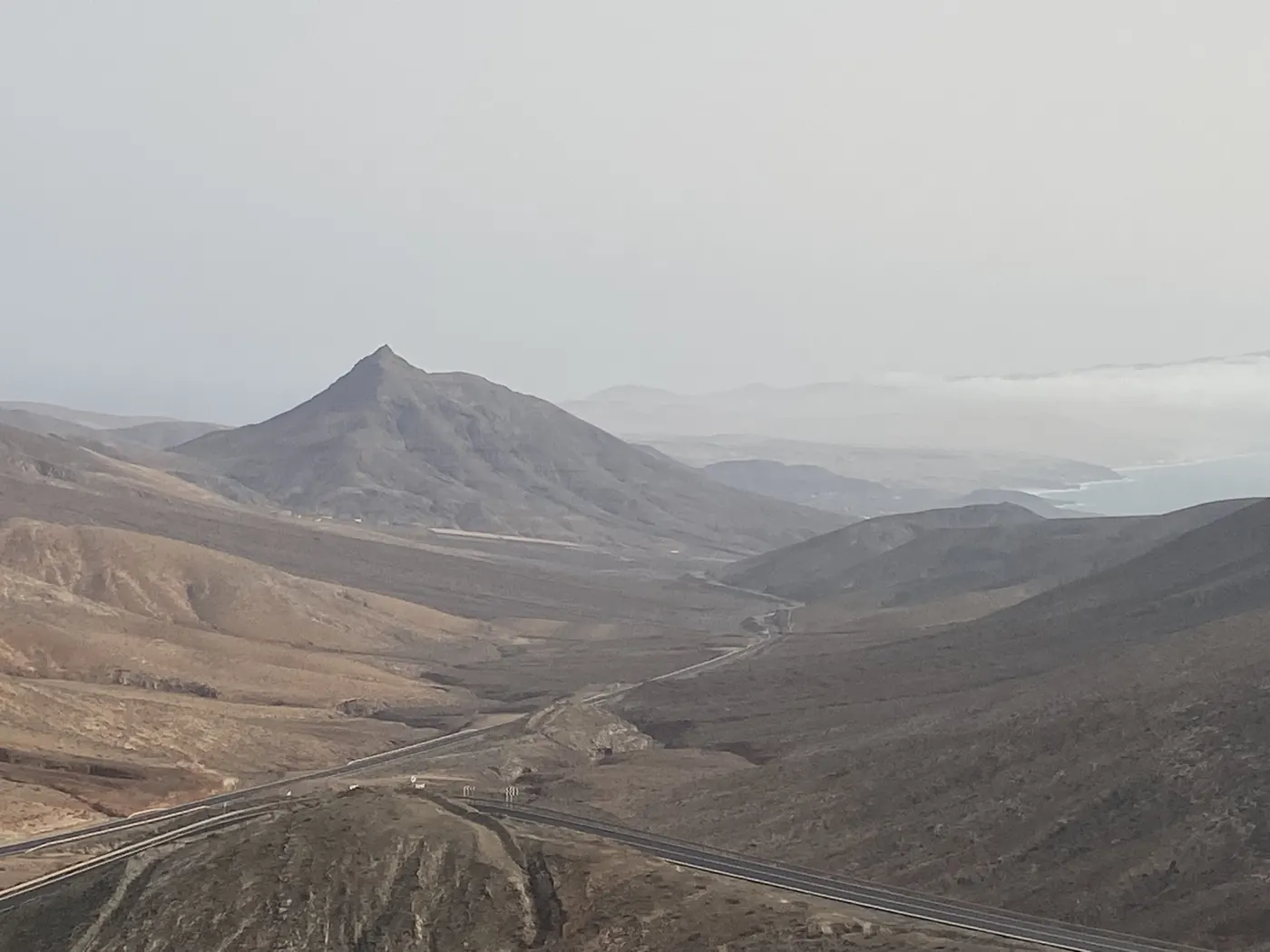
Our car hire, for real (July 2025)
- Volkswagen T-Cross (manual gearbox), 14 days, 1,306 km driven including our week in Lanzarote, picked up and returned at the airport. Car booked online via Booking.com (Budget agency), with no insurance ticked.
- Final bill: €390.25 all in, including €186.50 of fully comprehensive insurance taken at the counter, €91.30 for a recovery truck after a puncture and €35.43 in fuel charges. The price shown online had therefore almost doubled once on site.
Why hire a car in Fuerteventura?
Because without a car, you only see a fraction of the island. Fuerteventura is the second-largest of the Canary Islands by area, just behind Tenerife. That expanse is its richness, but also its constraint: everything is spread out, and hiring a car radically changes the stay.
There isn't just one Fuerteventura to discover, but three. The north (Corralejo, El Cotillo, the dunes) has a very different feel from the south (Jandía, Morro Jable, Cofete), and the island's interior is just as worth the detour, with villages like Betancuria and its volcanic relief. To discover these three faces, and enjoy both north and south, a car is a must.
The buses (Tiadhe) link the main towns but run infrequently and don't serve the isolated sites. With a car, you string together Puerto del Rosario, Corralejo and Betancuria in the same day, at your own pace, where public transport would take two.
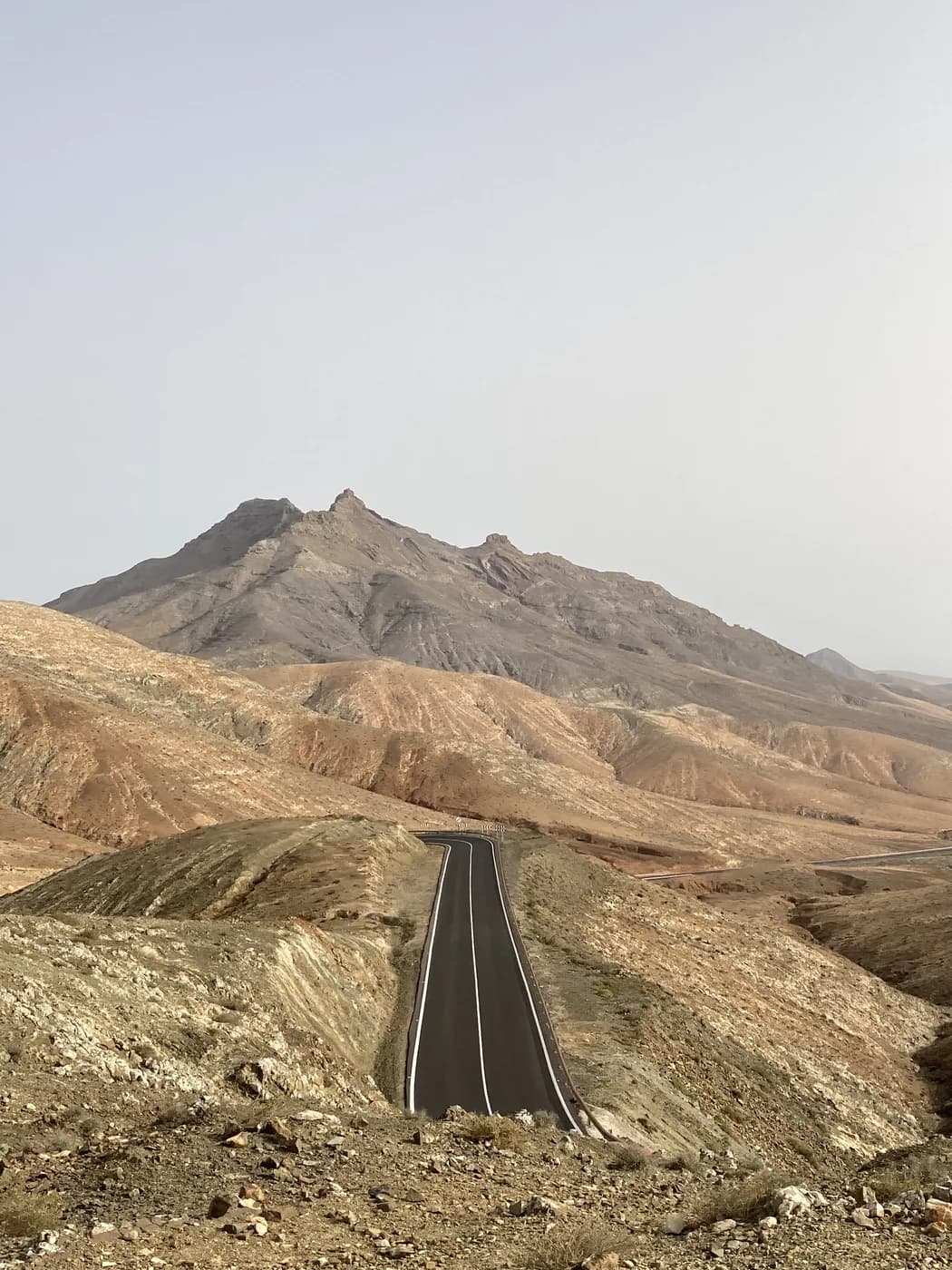
Another plus: there are no tolls in Fuerteventura. You drive freely along the coast and inland, and the driving is part of the trip. Fuerteventura's landscapes are spectacular — desert expanses, volcanoes, long ribbons of sand — and many viewpoints and miradors line the roads. That's exactly what makes the freedom of a car so precious here: being able to stop the moment a panorama appears.
Where to hire your car in Fuerteventura?
In town and in the resorts
A successful car hire in Fuerteventura starts with the choice of pick-up point. The simplest is to collect the vehicle on arrival. That's also where agencies are most numerous and cars most varied, so often where prices are most attractive.
A few kilometres from Puerto del Rosario, the airport concentrates most of the agencies. Booking online lets you have a vehicle right from the airport, with unlimited mileage and comprehensive insurance, available on landing rather than hunting for an agency once on site.
For the details of counters, opening hours and tips to avoid extra fees, head to our page dedicated to car hire at Fuerteventura airport.
Two families of agencies share the island. Local and regional firms, like CICAR, very established in the Canaries, often show lower prices on their cars. The international brands (Avis, Europcar and the rest) cost a little more but offer a more standardised service.
Local firms like CICAR have a good reputation and good customer reviews, but in peak season demand soars: cars go fast and the queue to collect your vehicle can be long. The international brands, for their part, offer a smoother counter and better-structured assistance — something that matters on the day of a breakdown. Going through an online comparison site before booking lets you quickly spot the best offers and the best value among the various agencies present on the island.
Beyond the terminal, you'll find agencies in Corralejo, Caleta de Fuste, Costa Calma and Morro Jable. Handy if you're staying in a specific resort and want to collect your car there rather than on arrival.
If you're staying locally, head to our car hire in Corralejo page to find an agency near the resort, harbour included for ferry arrivals.
▸ Compare hire cars in Fuerteventura
Which vehicle to choose: city car, SUV or 4x4?
The range on offer is wide, from small city cars to SUVs and convertibles, and the choice mainly depends on your plans and the length of hire. Whether you're after an economical city car or a roomier one for a long trip, agencies have vehicles in every category subject to availability. For most journeys, an economical city car is enough: paved roads, easy parking, low consumption. Our T-Cross covered 1,306 km without difficulty on the main routes.
For short trips or a two-person jaunt, scooter hire in Fuerteventura remains an economical alternative worth considering.
How much does car hire cost in Fuerteventura?
The fees added at the counter
The hire price varies mostly with the season and the car category. Expect around €25 to €35 per day in low season for a small city car, and €45 to €70 per day in summer or over the Christmas holidays. For a stay of several weeks, some agencies offer sliding long-term rates, to be negotiated directly with them. On top of this base price, insurance and, sometimes, fuel charges are almost always added.
On a car hire, that's where the bill climbs. The best habit is to compare agencies to find the best rate in low season, but also to read the terms: insurance, fuel policy and deposit quickly make the difference on the final price.
In our case, three lines were added to the base rate: comprehensive insurance taken at the counter (€186.50 over 14 days), a recovery truck (€91.30) and fuel charges (€35.43 on top of the full tank). The most sought-after cars go first in high season, so it's worth booking ahead; a cheap headline rate can also hide a much higher final bill.
Insurance, driver and licence
On a hire in Fuerteventura, insurance is the cost to watch closely. Full cover is strongly advised — but the right time to take it out isn't necessarily the counter.
We had chosen the no-insurance option to bring down the displayed price. The result: at the counter, the agency offered its comprehensive insurance (excess waiver) at €13.32 a day, i.e. €186.50 over two weeks. Taken out online, the same cover generally costs far less. The lesson: hiring without insurance doesn't mean driving without insurance — better to include it from the start.
As for the driver, the minimum age is often set at 21, sometimes with a 'young driver' surcharge before 25. A European Union driving licence is accepted in Spain; outside the EU, an international format is recommended. If several people are to drive during the stay, remember to declare an additional driver at the time of booking: driving without having declared them can void the insurance cover in the event of a claim. Also plan for a credit card (not a debit card) in the main holder's name for the deposit.
▸ Take out insurance for your hire car
Punctures and tracks: the Cofete trap
This is the most important point in this guide, and the least said elsewhere: the stony tracks puncture tyres, and the assistance will be charged to you.
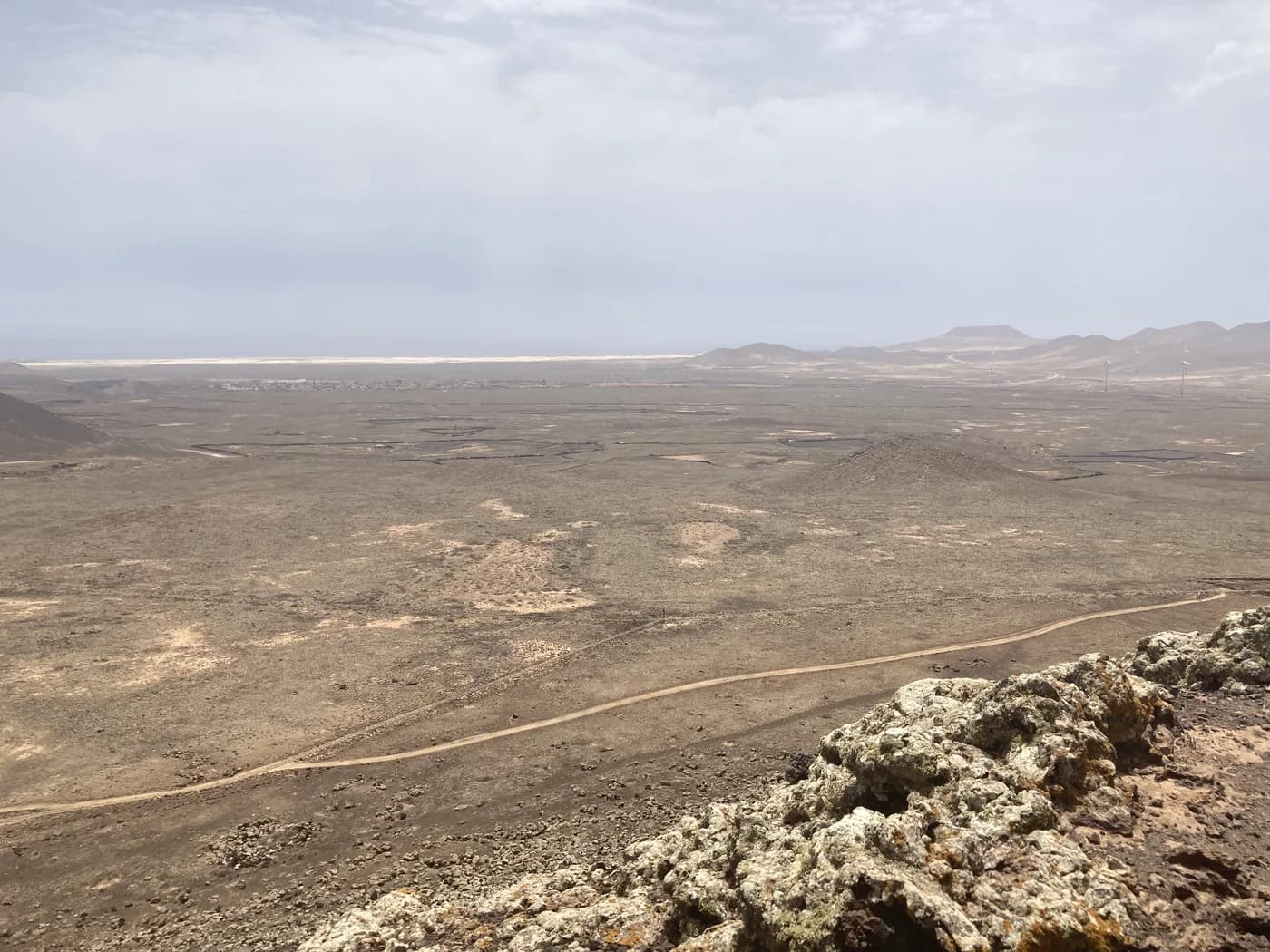
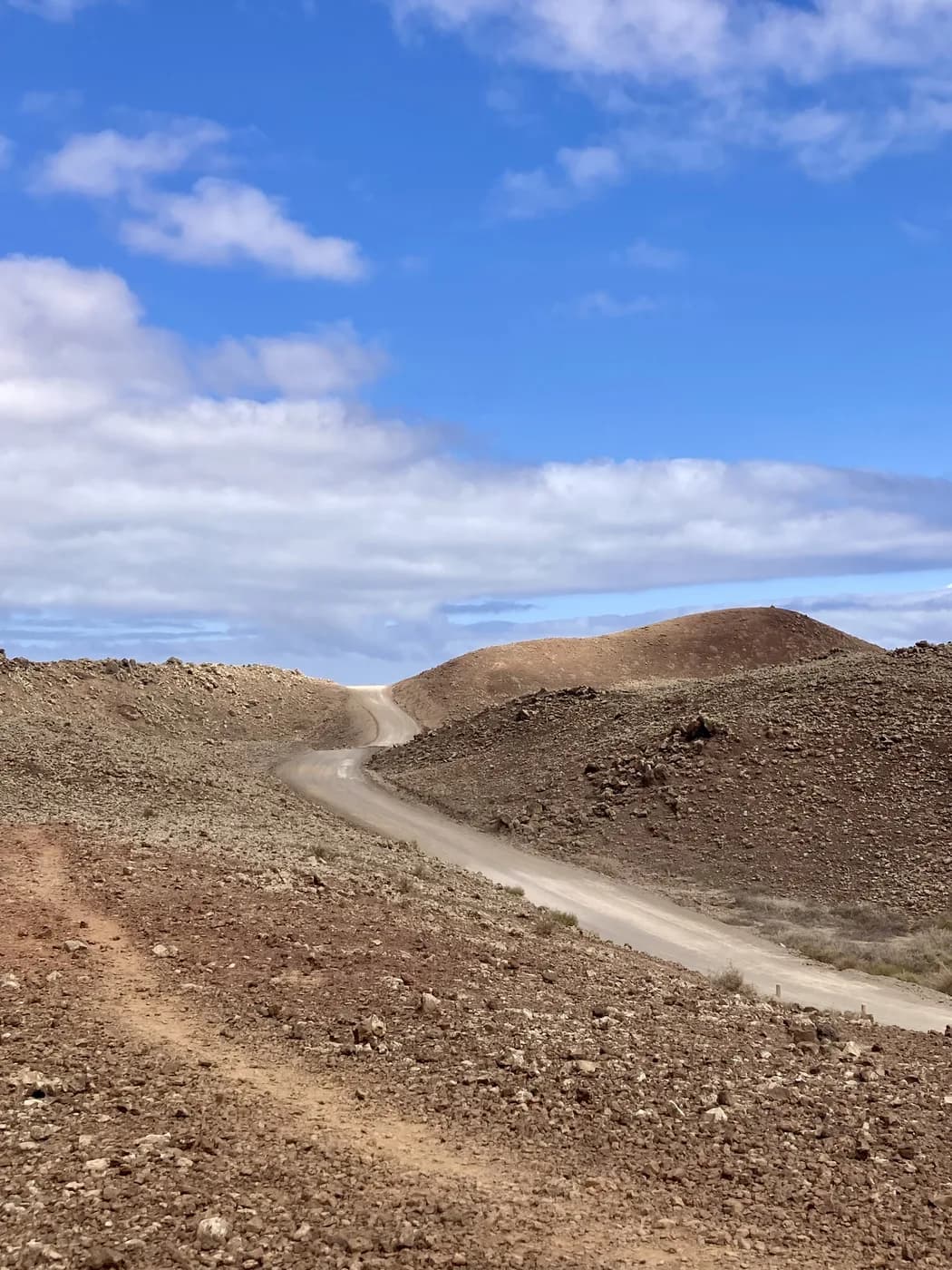
Trying to reach a cove by a stony path, we got a puncture. Impossible to loosen the wheel nut by hand: we had to call the recovery truck (the 'grúa'), wait, then pay €91.30 extra. Towards Cofete, behind the Jandía massif, the risk is real because the track is long, isolated and unpaved.
Our concrete tips: take the time for a thorough inspection with the agent at the counter, photos to back it up — that's your best protection in case of a dispute when returning the vehicle. Also check for a real spare wheel (not just a puncture-repair spray) and a wheel key when leaving the agency; drive slowly over stones; and for Cofete, go for a 4x4 with insurance that covers the authorised tracks.
One more line to plan for around Cofete: the Fuerteventura Cabildo is preparing an access fee for the beach from summer 2026, with the amount not yet set as of mid-August 2026.
Driving in Fuerteventura: our tips
Driving is simple and on the right, on a network in good condition and with no tolls at all. The main axis, the FV-2 along the east coast, is smooth and well maintained; traffic stays light away from the approaches to Puerto del Rosario.
The network is quiet and we never hit a traffic jam. When you live in a big city, the contrast is striking: driving here becomes almost a relaxed stroll, without the pressure of traffic. It's one of the pleasant surprises of the stay.
Driving in Fuerteventura, even on the most winding mountain roads, happens with almost no other car in sight. Far from the density of big European cities' roads, you can pull over onto the verge, where possible, to admire a panorama without bothering anyone, or slow down in a bend just to enjoy the volcanic scenery going by.
Above all, allow time: the driving is a pleasure in itself. Many miradors and viewpoints line the routes, notably towards Betancuria, La Pared or the Sicasumbre viewpoint. Set off early, drive gently and stack up photo stops rather than clocking up the kilometres.
A few rules deserve attention:
What to see behind the wheel: our routes
Once you've collected the car, three main routes let you see the essence of the island. Each suits a day and makes you want to go ever further.
In the north, the Corralejo – dunes – El Cotillo loop follows a superb coast and fishing villages. In the centre, the Betancuria road crosses the interior and its miradors. In the south, the Jandía peninsula leads to Morro Jable then the Cofete track, the wildest of Fuerteventura's sites. Along the way, Costa Calma and Caleta de Fuste make good stops.
And for Lanzarote and the other islands?
Many travellers combine several Canary Islands, as we did with Lanzarote. The principles of car hire there are the same as in Fuerteventura: hire on arrival, sort out insurance ahead and stay careful on the volcanic tracks. The same method applies to Tenerife or Gran Canaria (Las Palmas), where the distances equally justify a car.
In short, a well-prepared car hire — good agency, insurance included, suitable vehicle — is the key to a successful stay in Fuerteventura. It's what truly opens up the island, from north to south.
Frequently asked questions
Do you really need to hire a car in Fuerteventura?
Yes in most cases. The island is large and buses infrequent; a car is needed for isolated beaches like Cofete and to visit the interior.
Where to find the best price for a car hire?
By booking online, comparing and collecting the vehicle at the airport, where cars are numerous and competition pushes prices down.
Local agency (CICAR) or international brand (Avis, Budget)?
Local firms like CICAR are often cheaper and well rated, but taken by storm in summer. The international brands cost a little more but offer a smoother service.
What age and licence to hire a vehicle?
Generally 21 minimum and a licence valid for at least a year, accepted as is for the EU; outside the EU, an international format is recommended.
Can you go to Cofete with a hire car?
The Cofete track is unpaved and often forbidden by standard contracts. A 4x4 insured for tracks is advised; the risk of a puncture is real there. That said, we saw small city cars when we went.
What to do in case of a puncture?
First check the spare wheel and the tools when you collect the vehicle. If you can't change the wheel or the nuts are too tight (it happens with power tools), you have to call the recovery truck, charged extra (€91.30 in our case).