Sports Activities in Fuerteventura: Surf, Kitesurf, Buggy and Diving
Fuerteventura is world-famous for surfing and kitesurfing, driven by near-constant trade winds all year round. But the island, one of the largest in the Canary archipelago, is about far more than watersports: dunes to tear across by buggy, seabeds to explore on a trial dive, jet-ski spots facing the Atlantic — here's how to pick the right activities in Fuerteventura for your level and interests.
In a nutshell
- Corralejo and El Cotillo for learning to surf and kitesurf, Sotavento for world-class riding (PWA championship), the northern dunes for buggy and quad tours, Costa Calma and Caleta de Fuste for diving, and a climate that allows almost year-round activity.
Surf, kitesurf and windsurf: Fuerteventura's world-class spot
Fuerteventura ranks among Europe's best wind spots: the trade winds blow almost year-round, with conditions suited to kitesurfing about nine days out of ten according to local schools. That's what made the island a global benchmark for watersports, long before beach tourism took off here.
Where to learn to surf or kitesurf
El Cotillo and Corralejo (Flag Beach in particular) are the two areas best suited to beginners, thanks to sheltered beaches and a high concentration of schools. For experienced surfers, the north of the island (Majanicho and its reef breaks) offers more technical waves, with a rocky bottom that demands experience.
Surf and kitesurf schools in Fuerteventura cater to every level. On the kitesurf side, a typical taster session runs three hours split between land theory and time on the water (from around €140), with 4-5 hour independence packages to progress towards riding solo. Surf lessons typically run over three four-hour sessions, in small groups of up to six, with equipment (board and wetsuit) provided.
Sotavento: the world-class spot
Sotavento beach, on the Jandía peninsula, has hosted a leg of the world windsurfing and kitesurfing championship (PWA World Tour) every year since 1986. The shallow lagoon at low tide makes it accessible, but Sotavento remains primarily a spot for experienced riders — beginners are better off at the Corralejo schools.
Which spot for which level?
Buggy and quad tours in the Corralejo dunes
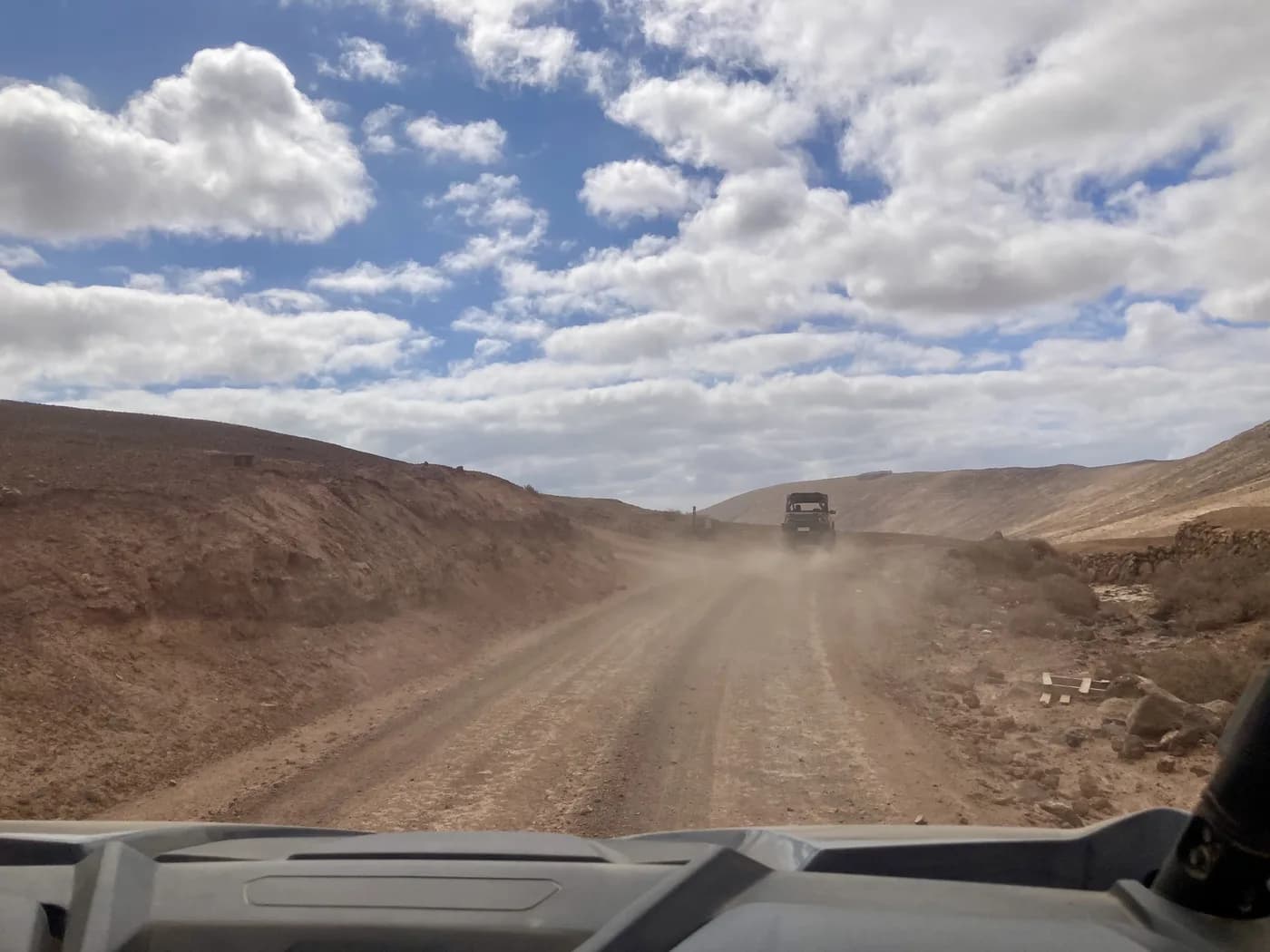
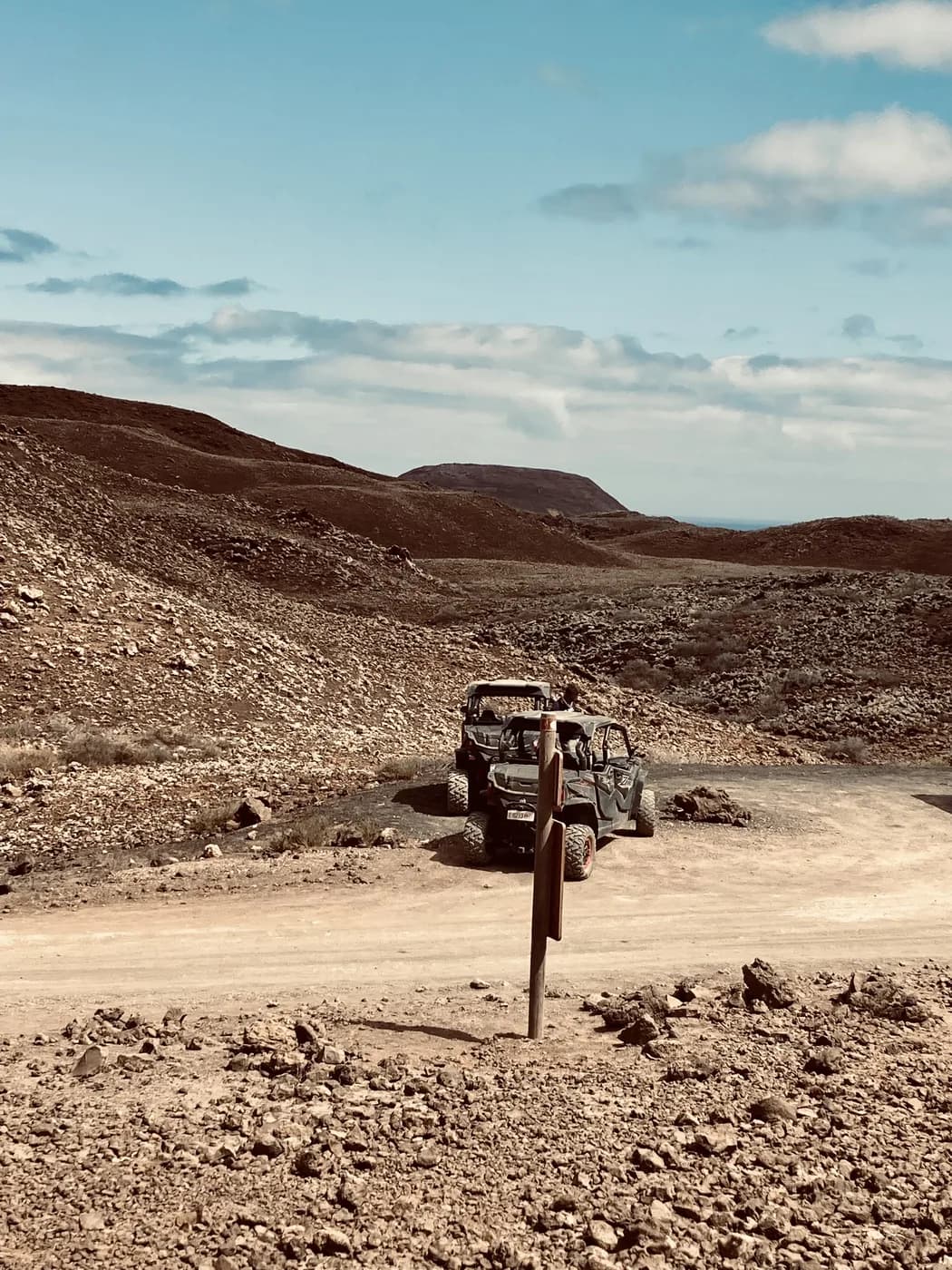
A buggy tour through the dunes remains one of the most popular activities for families and thrill-seekers alike. Routes usually set off from the north of the island, crossing the volcanic belt, Villaverde, the Parque Holandés and the dunes of the Corralejo natural park.
Most tours last about three hours and often include hotel pickup for visitors staying near Corralejo. The driver must be at least 18 with a valid driving licence (car or 125cc+ motorbike minimum). Helmet and protective goggles are always provided, essential to guard against sand kicked up by other vehicles in the convoy.
Most providers offer two formats: a guided convoy tour, following an instructor in single file at a controlled pace, and a free-roaming GPS-guided trip for more experienced groups. The first format suits a first-time experience or a family outing better.
We tried a buggy tour ourselves in 2025, setting off from Corralejo as a family, with a provider whose guides spoke several languages. It's a lovely outing to do across generations: real thrills while covering inland tracks completely inaccessible by ordinary car. Groups stay deliberately small, two to three buggies maximum per convoy, which makes it easier to keep up with the guide.
One tip from that experience: it's worth positioning yourself right behind the guide in the convoy. The buggies at the back eat a lot more dust kicked up by those in front — helmet and goggles are far from optional there too.
The provider we went with, Jetski Corralejo Fuerteventura, based in Corralejo, gave us a particularly warm welcome — an address we'd recommend for booking your buggy tour.
Karting: a fun activity for the whole family
Fuerteventura also has a karting track, an option that's accessible to kids and adults alike between two beach days. Sessions typically run on a closed circuit, helmet provided, with karts suited to the driver's age.
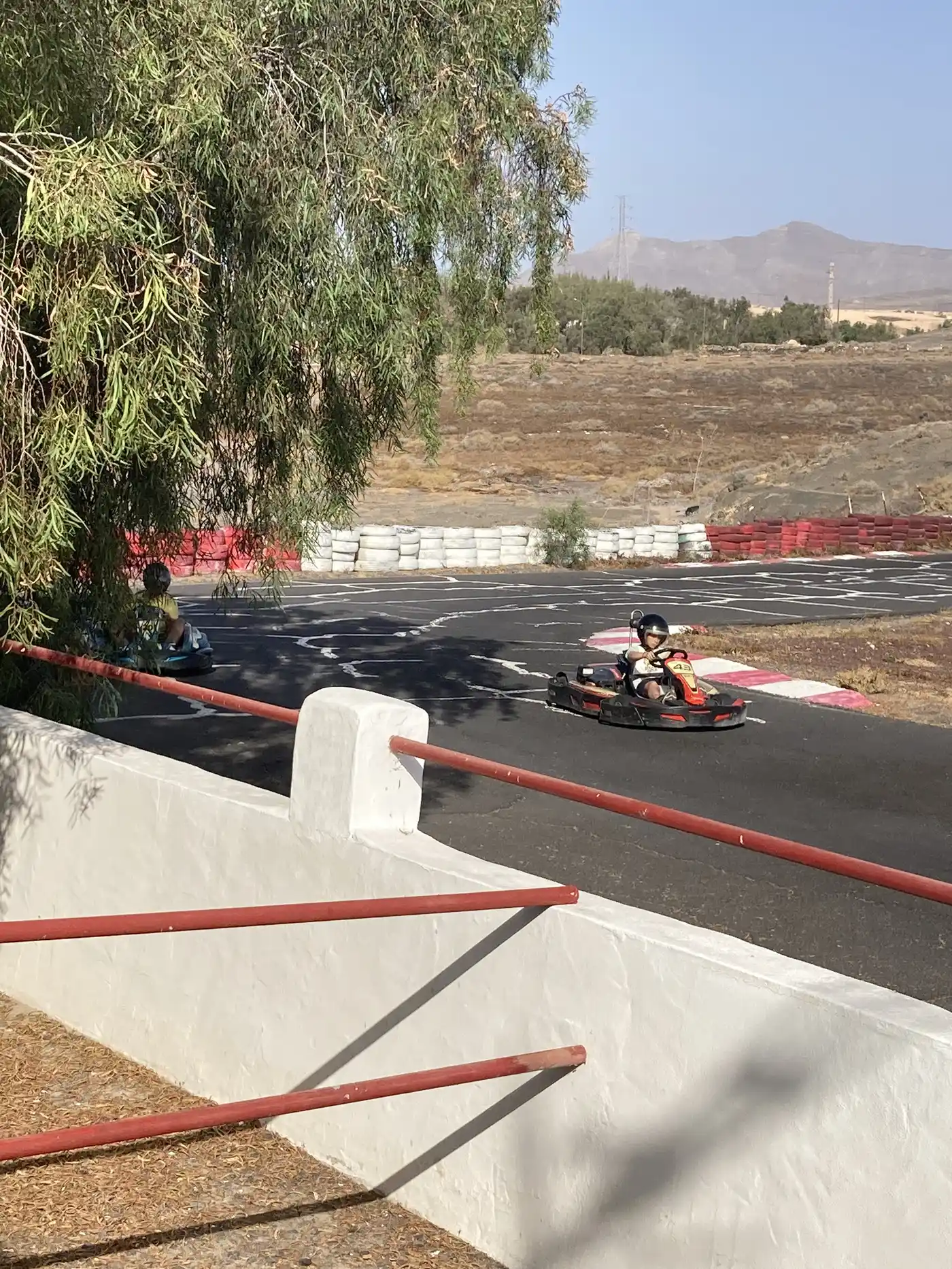
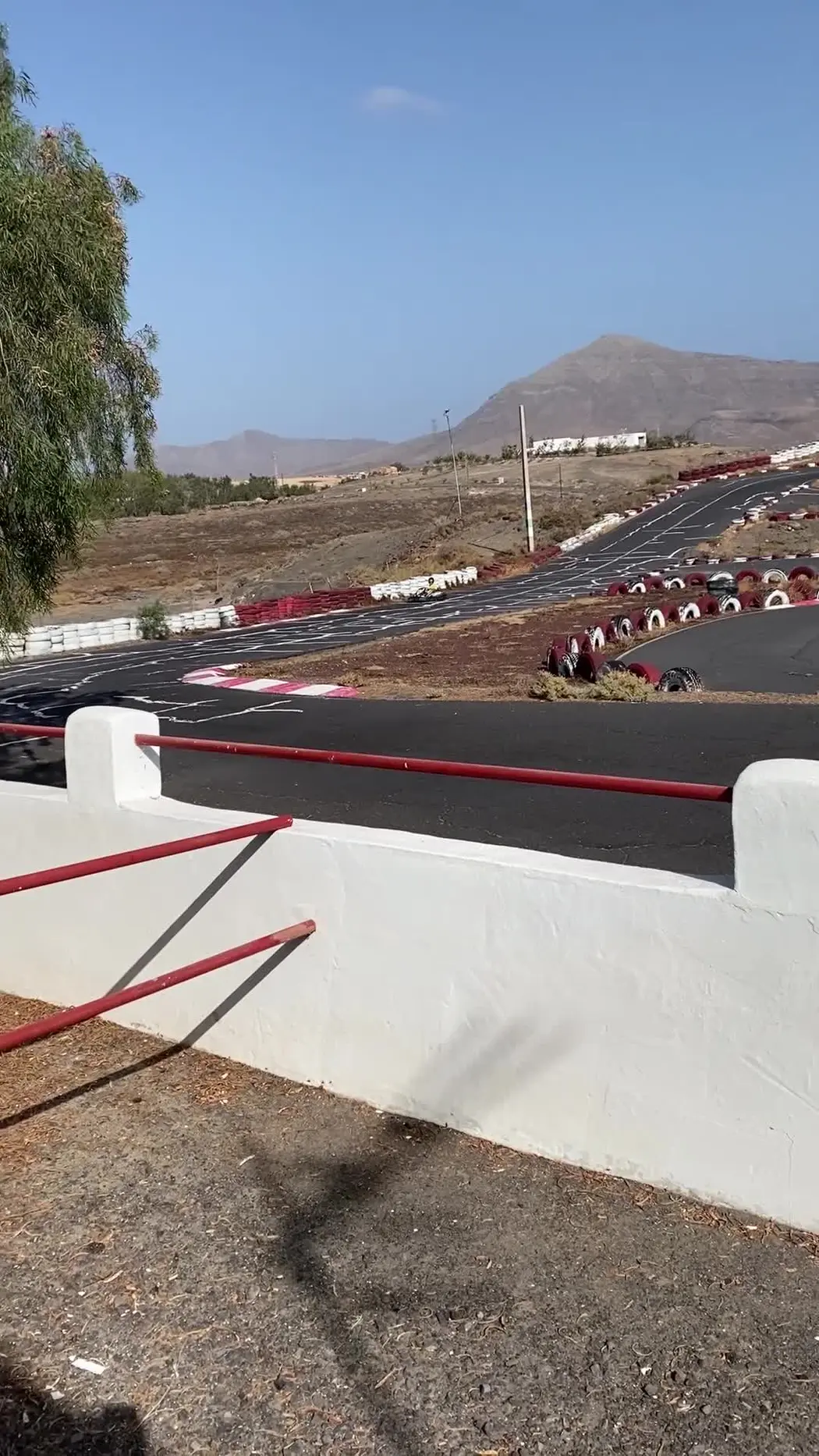
The Karting Club Tamaretilla, also known as Karting El Cardón, is the go-to karting track in southern Fuerteventura. Located in the municipality of Tuineje, it's especially handy for stays around Costa Calma or Jandía, much closer than the tracks in the north of the island. The approved outdoor track runs 1,500 metres for senior drivers, with technical sections and genuine gradients (uphill and downhill) that make it noticeably more interesting than a flat, standard circuit; shorter tracks (500m and 125m) cater to younger drivers on suitably sized karts.
We went as a family in 2023, staying in Costa Calma: my son and I loved the track, its gradients and technical bends — we had the circuit entirely to ourselves that day, a real bonus for running session after session without waiting around.
Karting Club Tamaretilla (Karting El Cardón)
- Location: Carretera Tamaretilla, 35627 El Cardón, Tuineje.
- Approved 1,500m outdoor track (seniors), with gradients, plus 500m and 125m tracks for younger drivers.
- The closest track for a stay in Costa Calma or Jandía, in the south of the island.
Diving and snorkelling: exploring the seabed
You don't need to be a certified diver to explore Fuerteventura's seabed: several centres offer trial dives supervised by an instructor, notably around Costa Calma, Caleta de Fuste and Jandía.
A typical trial dive starts with a briefing at the centre, followed by around thirty to forty minutes underwater, down to 12 metres for a discovery dive (6 metres for a first go in a pool or from the beach, at Caleta de Fuste for example). Allow half a day for the whole experience, with photos and video usually available at extra cost.
For those wanting to go further, several centres offer certifying courses (PADI or SSI) over several days, with varied dive sites along the coast: rocky drop-offs, wrecks, and marine life typical of the subtropical Atlantic (moray eels, rays, occasionally turtles).
Other activities: jet ski, golf and fishing
Jet skiing mainly operates out of Corralejo and Caleta de Fuste, usually as supervised 20-60 minute sessions along the coast, sometimes combined with a trip to Isla de Lobos.
Golfers will find two courses on the island, in Caleta de Fuste and Costa Calma — the ever-present wind adds an extra challenge to the game. Finally, several sea fishing trips are available from the main harbours, from a few hours to a full day.
For kayaking fans, the island also hosts the Vuelta a Fuerteventura kayak race every year in late August, a roughly 350 km Cabildo-organised event around the island — a good sign of the local sea-kayaking scene, beyond the short guided outings on offer to visitors.
When and where to go by weather
Hiring gear without going through a school
Self-sufficient surfers and kitesurfers don't need lessons to enjoy the island's spots: several shops in Corralejo and El Cotillo rent boards, sails and wetsuits by the half-day or the week, with discounted rates over several days. Expect around €25-35 for a half-day surfboard hire, and more for a full kitesurf pack (kite, bar, harness).
For kitesurfing in particular, gear-only hire is reserved for riders who are already independent: most shops ask for proof of level or a prior lesson, since the gear can be dangerous if mishandled on a windy spot like Fuerteventura.
How to book your activity
On an island where the trade winds blow almost year-round, booking a few days ahead is advisable in high season, especially for kitesurfing (limited gear per school) and buggy tours (small convoy sizes). The rest of the year, last-minute availability is more common.
As with most trips on the island, it's best to go with an established local provider or a recognised booking platform rather than a beach tout, especially for activities involving technical gear (kitesurfing, diving).
Safety and common sense at the spots
The wind that gives the island its sporting reputation can also catch an unsupervised beginner off guard: sudden gusts while kitesurfing, side currents on certain beaches, or a simple sunburn under a regularly hazy sky. A few simple habits limit nasty surprises.
To plan the rest of your active trip, head to our Canary Islands guide.
Frequently asked questions
What's the best place to surf in Fuerteventura?
El Cotillo and Corralejo (Flag Beach) for beginners, Majanicho and the north for experienced surfers; Sotavento for world-class kitesurfing and windsurfing.
Do you need a licence to drive a buggy or quad?
Yes, a valid car or motorbike licence (125cc minimum) is required for the driver, usually from age 18.
What's the best time for kitesurfing in Fuerteventura?
Year-round thanks to the trade winds, with a wind peak between June and September.
Can you dive without certification in Fuerteventura?
Yes, via a trial dive supervised by an instructor, with no prior certification required.
Where can you book a buggy or quad tour?
With local providers in Corralejo (north of the island) or via an online booking platform.
Is Sotavento's kitesurfing suitable for beginners?
The lagoon at low tide is manageable, but Sotavento remains primarily an advanced-level spot; the Corralejo schools suit beginners better.
Where can you go karting in southern Fuerteventura?
At the Karting Club Tamaretilla (also known as Karting El Cardón) in Tuineje: a 1,500m track with gradients, the most accessible circuit for a stay in Costa Calma or Jandía.