Travelling by Campervan in Fuerteventura: Rules and Tips
Travelling by campervan in Fuerteventura follows the same parking rules as any vehicle on the island, with one strict exception: wild camping. Here's what you need to know before hitting the road.
In a nutshell
- Parking is unrestricted, just like for an ordinary car, but camping out (table, chairs, awning) remains banned outside the few designated sites, under threat of a fine.
Parking rules for campervans and motorhomes in Fuerteventura
In Spain, as across the Canaries, a campervan in Fuerteventura can park in any authorised parking spot, in town or out, exactly like a car. However, setting up a table, chairs or an awning risks a fine, even in an authorised car park: these outward signs of camping define wild camping, strictly banned across the island, including on the seafront or an isolated natural car park.
Enforcement has been tightening to protect the island's natural areas, particularly in the busiest spots like Corralejo or Cofete. Fine amounts vary by municipality, but checks have increased in recent years at the most exposed beach car parks, especially in high season.
That tightening may soon be written into regulation. In late July 2026, the Canary Islands government sent a draft decree to its advisory council that would set rules for the archipelago's open-air accommodation (campsites, motorhome areas and similar sites) for the first time in thirty-one years. As drafted, it would explicitly ban free camping for tourism purposes, already the reality on the ground, cap stays on any single motorhome area at six months, and set out across eighteen articles the surface area and services required to open a campsite or service area. It has not come into force yet, so the rules described above are the ones that apply for now.
At national level, the line between the two has just been drawn much more clearly. Spain's traffic authority, the Dirección General de Tráfico, has issued an instruction referenced PROT 2026/04 that applies from 1 October 2026 and sets three objective tests an officer can apply on the spot. A vehicle is simply parked, and therefore lawful wherever any vehicle may park, if nothing has been deployed outside it (no awning, no steps, no chocks or blocks), if it is still resting on its tyres rather than on levelling jacks, and if no fluid of any kind is being discharged onto the ground. Fail one of those and you are camping, which is a different matter altogether.
The same instruction makes another point that matters to anyone touring the island: a council cannot issue a blanket ban on parking a motorhome purely because it is a motorhome, since vehicles are meant to be treated equally. Restrictions based on height, length or weight remain perfectly valid, and plenty of seafront car parks in Corralejo and Morro Jable use exactly those. The text also brings in a new road sign, the S-128, to mark authorised wastewater dump points — useful shorthand to look out for on an island where such facilities are thin on the ground.
Separately, and specific to Fuerteventura, the Cabildo has signalled that it wants to control how many motorhomes arrive from elsewhere. In mid-August 2026 the council's president, Lola García, said the island could no longer absorb rising pressure without regard to its actual capacity, and that a quota — annual or limited to the busiest months — was being studied, together with a prior-authorisation step under which visitors would declare the dates their vehicle enters and leaves the island. Island residents would fall outside any such quota.
It is worth being clear about the status of all this: nothing has been voted, no figure has been put on a quota and no start date has been announced. The Cabildo is also drafting an island-wide provisional ordinance (ordenanza provisional insular) covering camping, campsites and motorhome areas, discussed with the municipalities and with the campers' association, with the aim of applying the same criteria everywhere rather than a different rulebook per town. Until any of that is adopted, Pozo Negro remains the island's only campsite with official status, and the practical advice is unchanged — but if you are planning a motorhome trip to Fuerteventura for 2027 or beyond, it is worth a fresh check before you book a ferry.
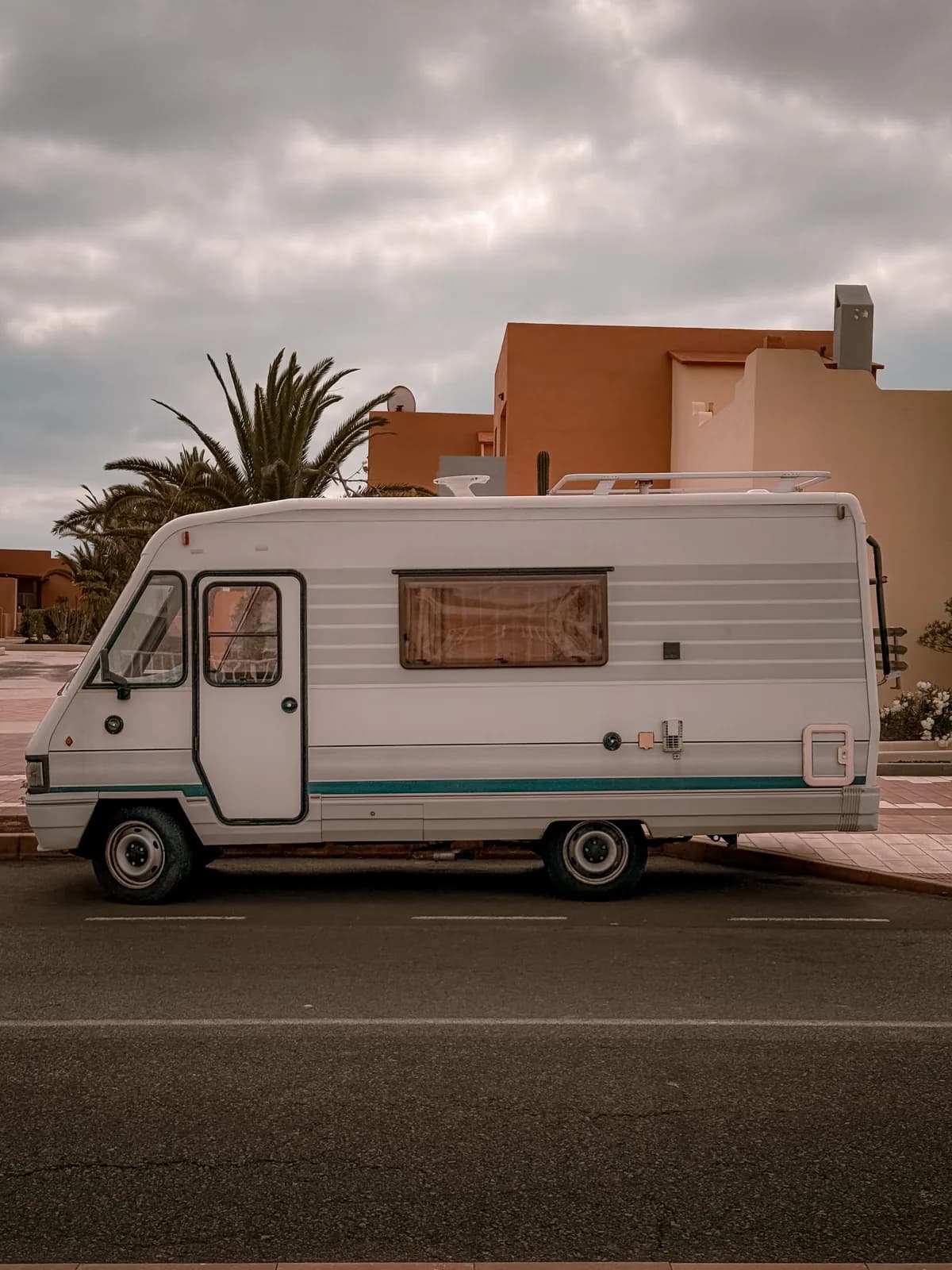
Where to sleep: spots, campsites and useful apps
Fuerteventura has few official campervan service areas. Supply mostly relies on a handful of private campsites and petrol stations equipped for wastewater dumping and topping up fresh water. In this context, apps like Park4Night remain the best way to find a spot already tried by other travellers, with Camperstop and ACSI useful additions for campsites and paid sites.
These apps also flag dumping points and fresh water refills, which are scarce on the island, along with recent reviews from other campervan travellers on how peaceful and legal a spot is.
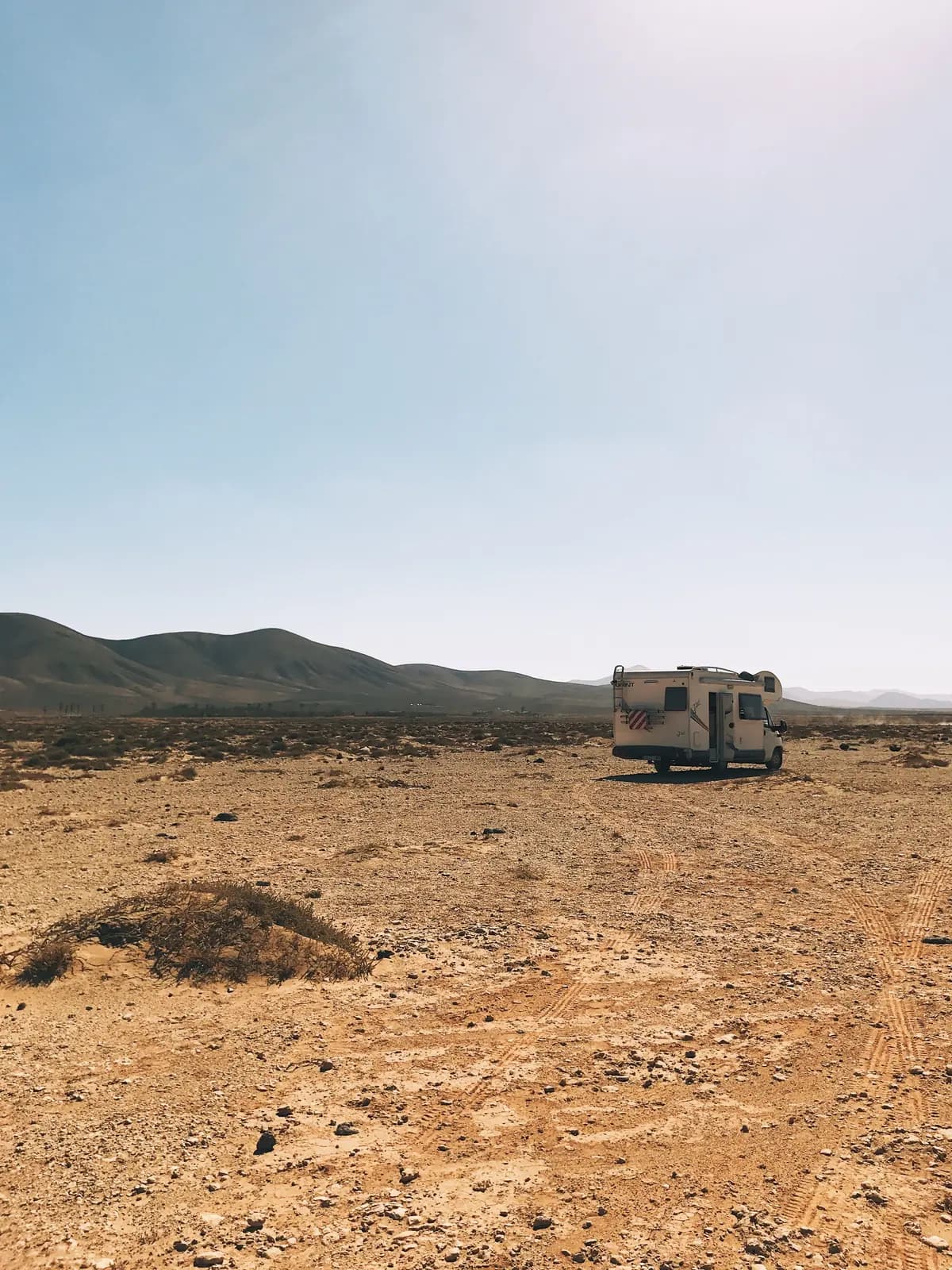
Suggested route: north, centre, south
The north of the island, around Corralejo and El Cotillo, has most of the services (supermarkets, petrol stations, campsites). The interior, around Betancuria, offers quieter stops amid volcanic scenery. The south, towards Jandía, draws visitors for its beaches but calls for more care on road and track conditions.
A typical one-to-two-week route links these three areas: a few days in the north to enjoy the beaches and services, a stop inland to discover Betancuria and the volcanic scenery, then a run south to Jandía towards the end of the trip, setting aside a day for the Cofete track if your vehicle allows it.
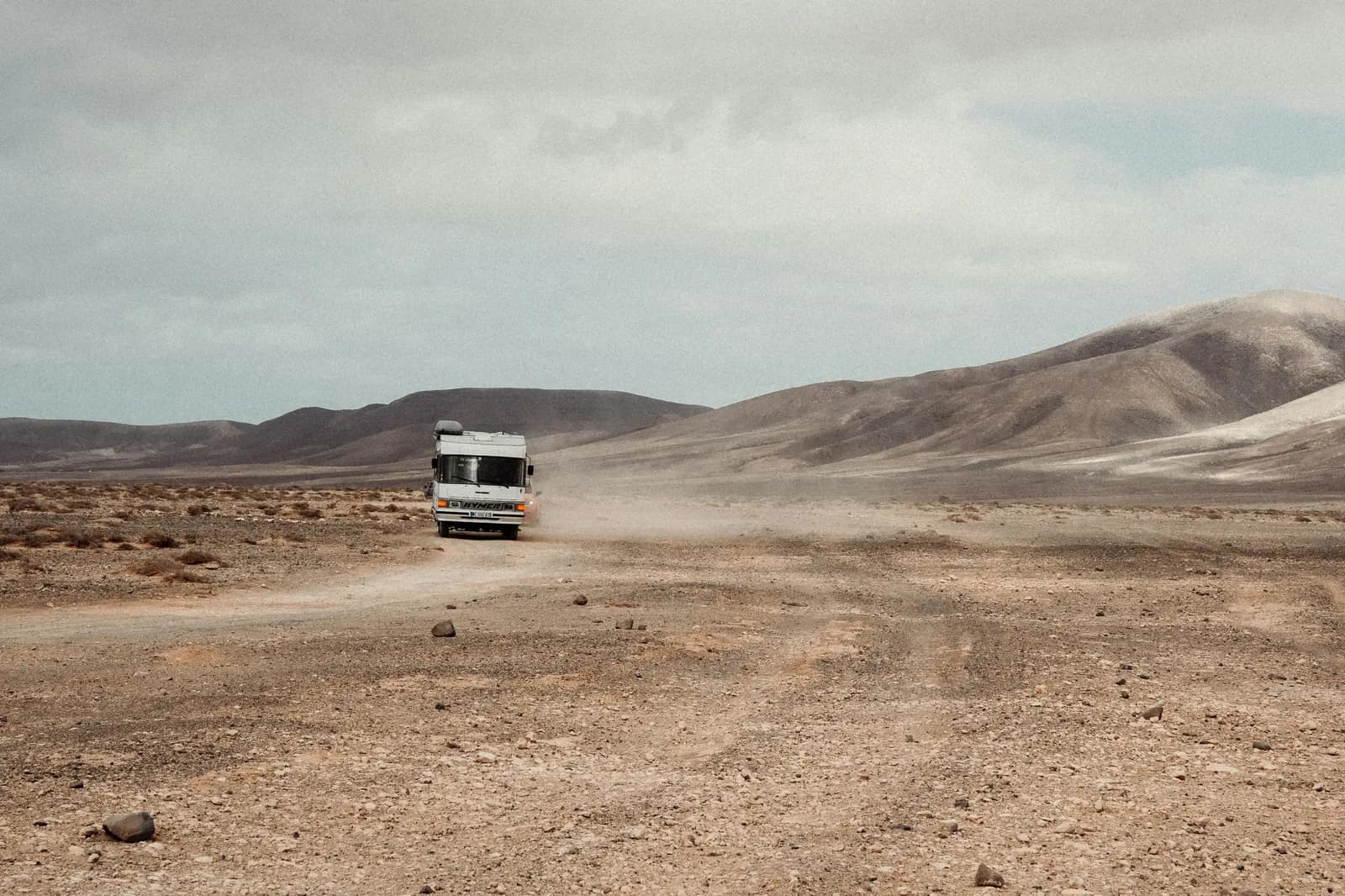
Cofete and the southern tracks: mind the 4x4 requirement
The track to Cofete beach, unsealed and rough, isn't recommended for large, non-off-road motorhomes. Van travellers wanting to reach this exceptional spot are better off hiring a 4x4 locally than risking their own vehicle on this track.
How to get to Fuerteventura by campervan or motorhome
Two main options: bring your own converted vehicle over by ferry, from mainland Spain or a neighbouring island, or hire a converted vehicle locally, at Fuerteventura airport or in the main towns. Hiring locally avoids the cost and time of sea transport, but limits how personalised the interior fit-out is.
For shorter stays, hiring locally remains the simplest solution: it avoids tying up the vehicle during a ferry crossing, often long and costly for a large vehicle, and lets you choose a size suited to the island's tracks, particularly in the south.
Budget and costs to expect
What's the best season for a campervan trip to Fuerteventura?
The mild year-round climate allows for campervan travel in any season, but autumn, winter and spring remain the most comfortable periods, with less strong wind than summer in exposed spots like Corralejo. Spanish school holidays and summer bring most of the crowds to the most popular campsites and spots, so booking ahead is advisable.
To plan the rest of your route, head to our Canary Islands guide.
Frequently asked questions
Can you sleep in a campervan in a car park in Fuerteventura?
Yes, parking follows the same rules as a car, but without setting up a table, chairs or an awning (wild camping is banned).
Are there campervan service areas in Fuerteventura?
Not many: mainly private campsites and a few petrol stations equipped for waste disposal and water top-ups.
Which app should you use to find a spot?
Park4Night, Camperstop or ACSI list spots already tried by other campervan travellers.
Can you take a motorhome to Cofete?
Not recommended for large, non-off-road vehicles: the track is unsealed and rough.
How do you get to Fuerteventura by motorhome?
By inter-island ferry or from mainland Spain, or by hiring one directly on arrival at the airport.
Is wild camping tolerated in practice?
Less and less: enforcement is tightening to protect natural areas, so it's best to stick to authorised sites.
Will wild camping rules change soon in the Canary Islands?
That is the direction of travel: in late July 2026 the Canary Islands government sent a draft decree to its advisory council that would formally ban free camping for tourism purposes, cap stays on a motorhome area at six months and regulate campsites. It is not in force yet.
What separates legal parking from wild camping in a motorhome?
From 1 October 2026, a DGT instruction (PROT 2026/04) applies three objective tests: nothing deployed outside the vehicle (awning, steps, chocks), the vehicle resting on its tyres rather than on levelling jacks, and no fluid discharged onto the ground. Meet all three and you are parked; fail one and you are camping. The same text introduces the S-128 sign for authorised wastewater dump points.
Can you bring a motorhome to Fuerteventura without restrictions in 2026?
Yes, for now. The island council said in mid-August 2026 that it is studying a quota and a prior-authorisation system for motorhomes arriving from outside the island, with residents excluded, alongside a draft [[island-wide ordinance on camping|https://www.cabildofuer.es/cabildo/el-cabildo-de-fuerteventura-acerca-la-ordenanza-provisional-de-acampadas-opi-a-municipios-y-a-la-asociacion-de-campistas/]]. Nothing has been adopted, no figure or start date has been announced, so no entry limit applies at present.