Aloe Vera, Salt, Crafts: the Specialities That Define Fuerteventura
Beyond the beaches, Fuerteventura's specialities and local culture tell another side of the island's story: aloe vera plantations, hand-harvested salt, traditional embroidery and craft markets, alongside our wider Fuerteventura guide. Here's what's worth knowing to extend the visit beyond sand and sun.
In a nutshell
- Aloe vera: several plantations open for visits, with tastings and product sales.
- Salt: the Salinas del Carmen are the island's last working salt pans.
- Calado: traditional drawn-thread embroidery, a hallmark of Lajares and La Oliva.
- Craft markets: a must on Saturday mornings in Lajares.
Aloe vera, Fuerteventura's green gold
Fuerteventura's arid climate is particularly well suited to growing aloe vera, present on the island for several decades now. Several aloe vera plantations in Fuerteventura, notably around La Oliva and Antigua, can be visited in about half an hour: guides explain how the leaf is cut and prepared, followed by a tasting of pure gel and a rundown of the range of cosmetic and food products made from the plant.
During our trip, we looked for aloe vera in several shops on the island before realising a plantation visit was by far the best way to learn where it actually comes from — far more interesting than a simple souvenir-shop purchase.
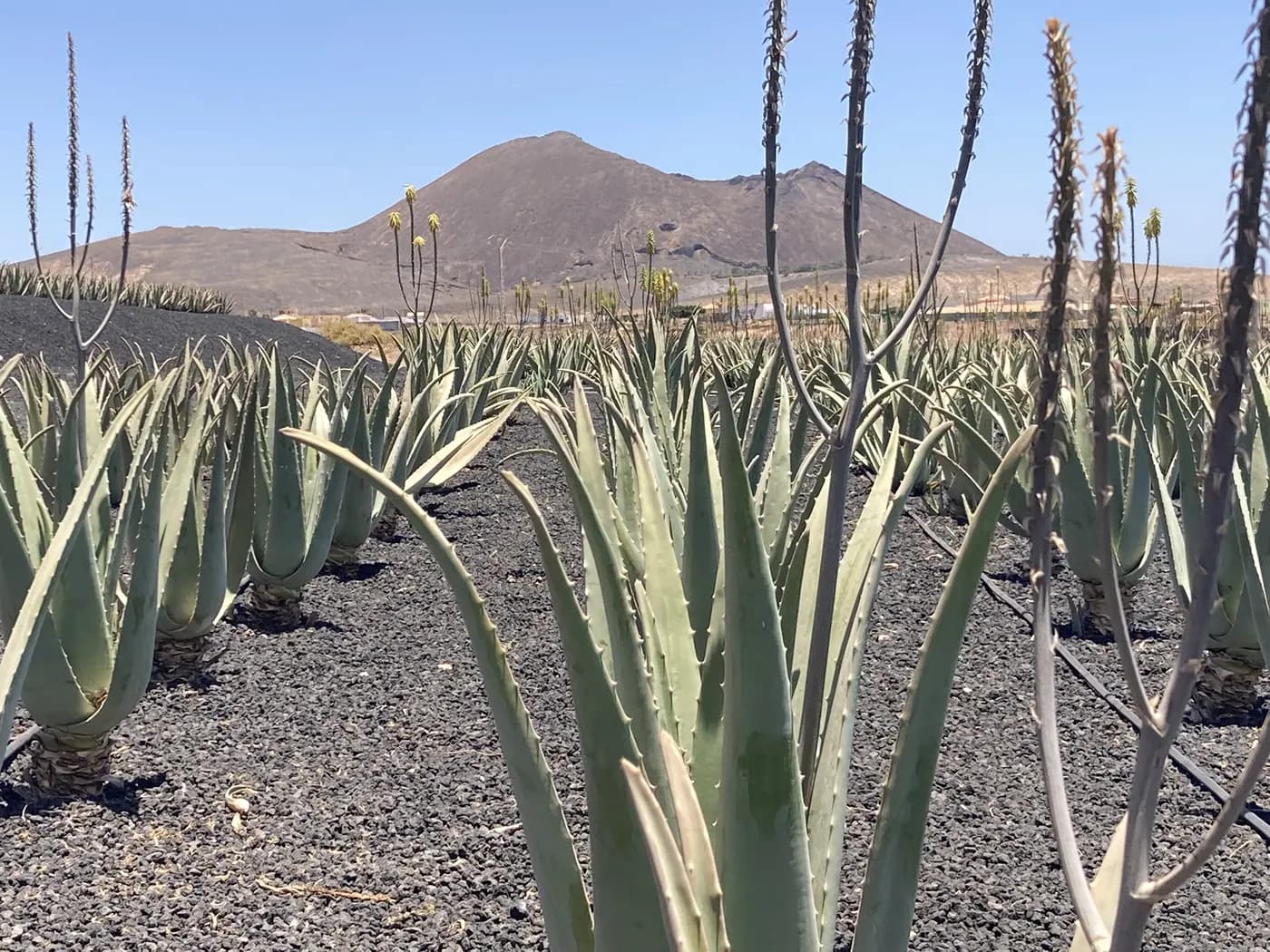
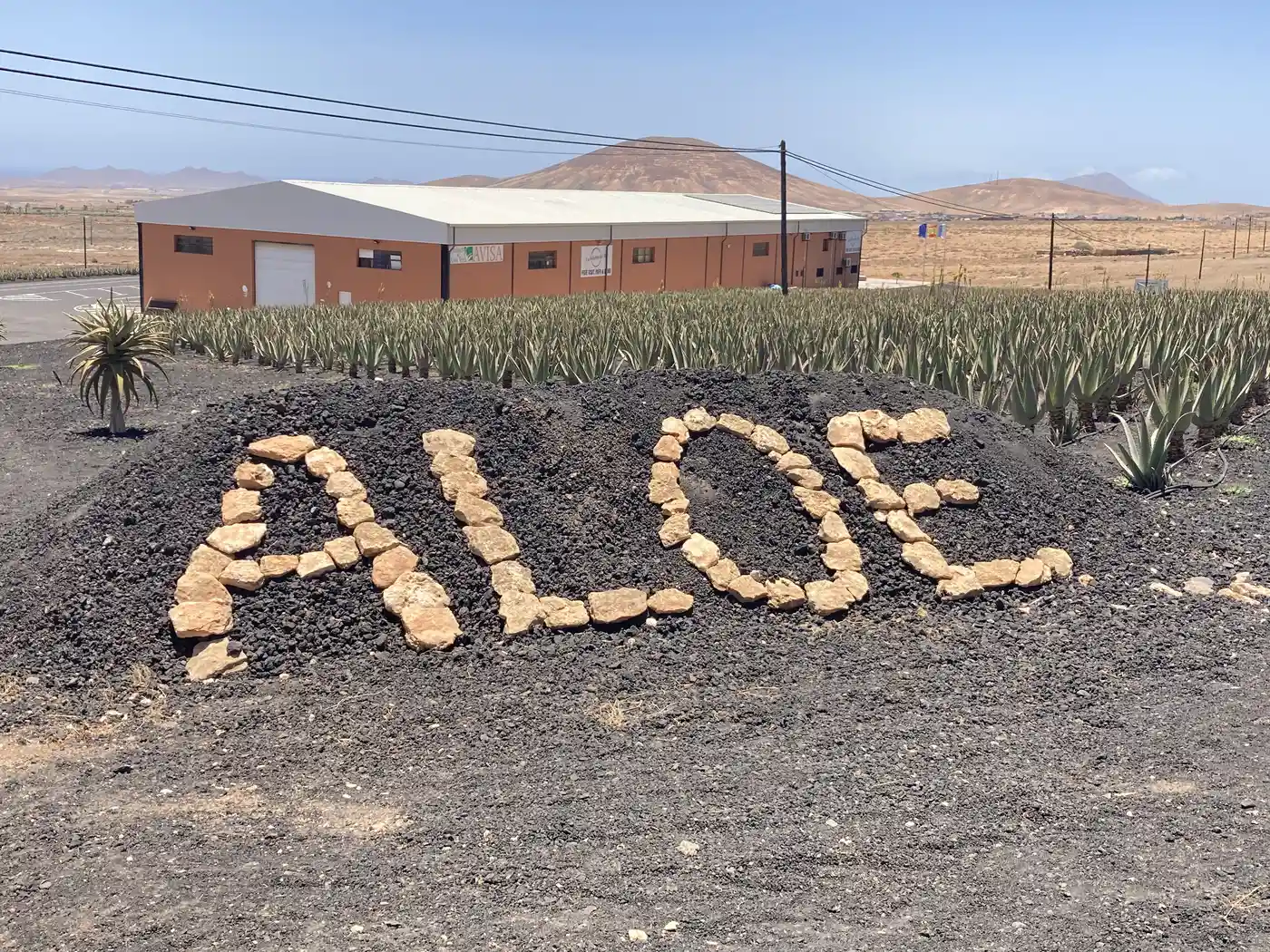
In real life (July 2023 and July 2025): we visited the Aloe Vera Exclusive plantation in Tiscamanita twice — a warm welcome both times, a walk-through from leaf to gel, a tasting, and staff who spoke to us in French even though we speak Spanish. We bought several 250 ml bottles of pure aloe gel and olive oil gel on our last trip, and we still have some left in the fridge: the quality is real, and they keep well once opened.
Salt from Salinas del Carmen, a craft still alive
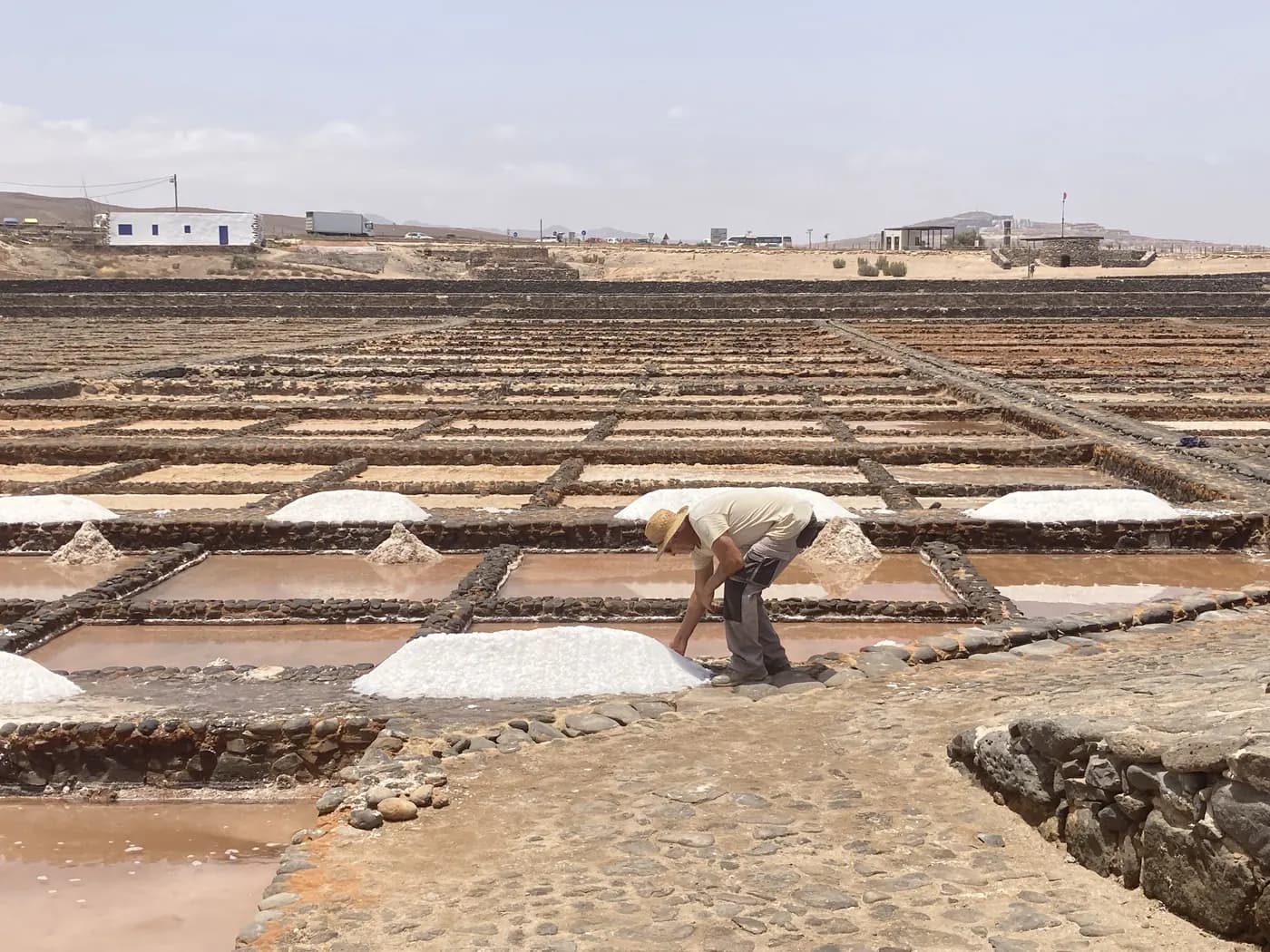
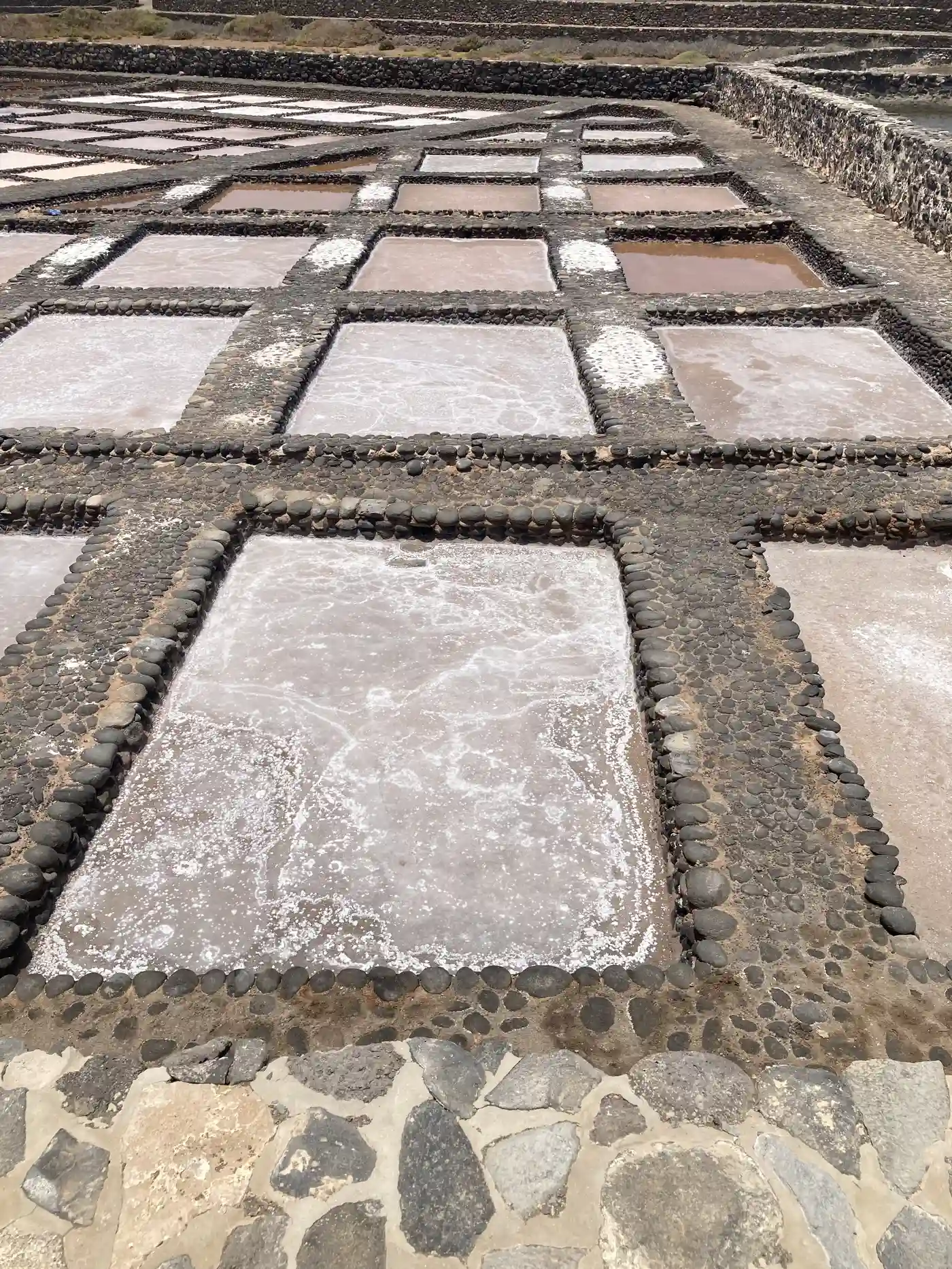
South of Caleta de Fuste, the Salinas del Carmen are the island's last working salt pans, powered solely by wave action, with no pumps involved. Seawater flows through cocederos and then tajos, where it evaporates in the sun to leave the salt, harvested and packed by hand using age-old methods. An adjoining museum, the Museo de la Sal, tells this story through an indoor and outdoor route around still-working pools.
We were lucky enough to watch the salt harvest at the Salinas during our visit: workers rake the crystals by hand in the tajos, a precise, repeated motion that gives real meaning to the museum visit right next door.
Windmills, the typical silhouettes of the majorero landscape
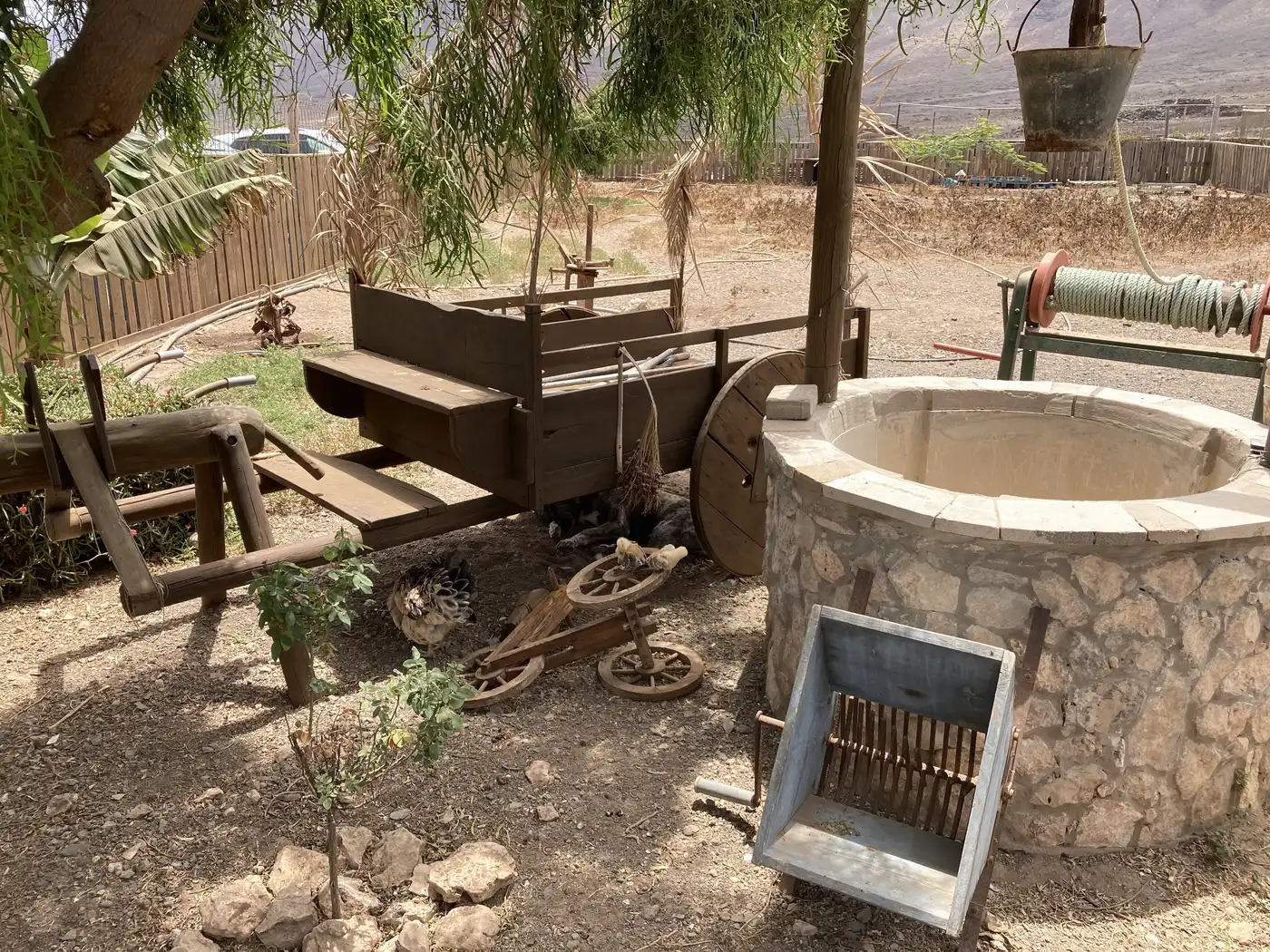
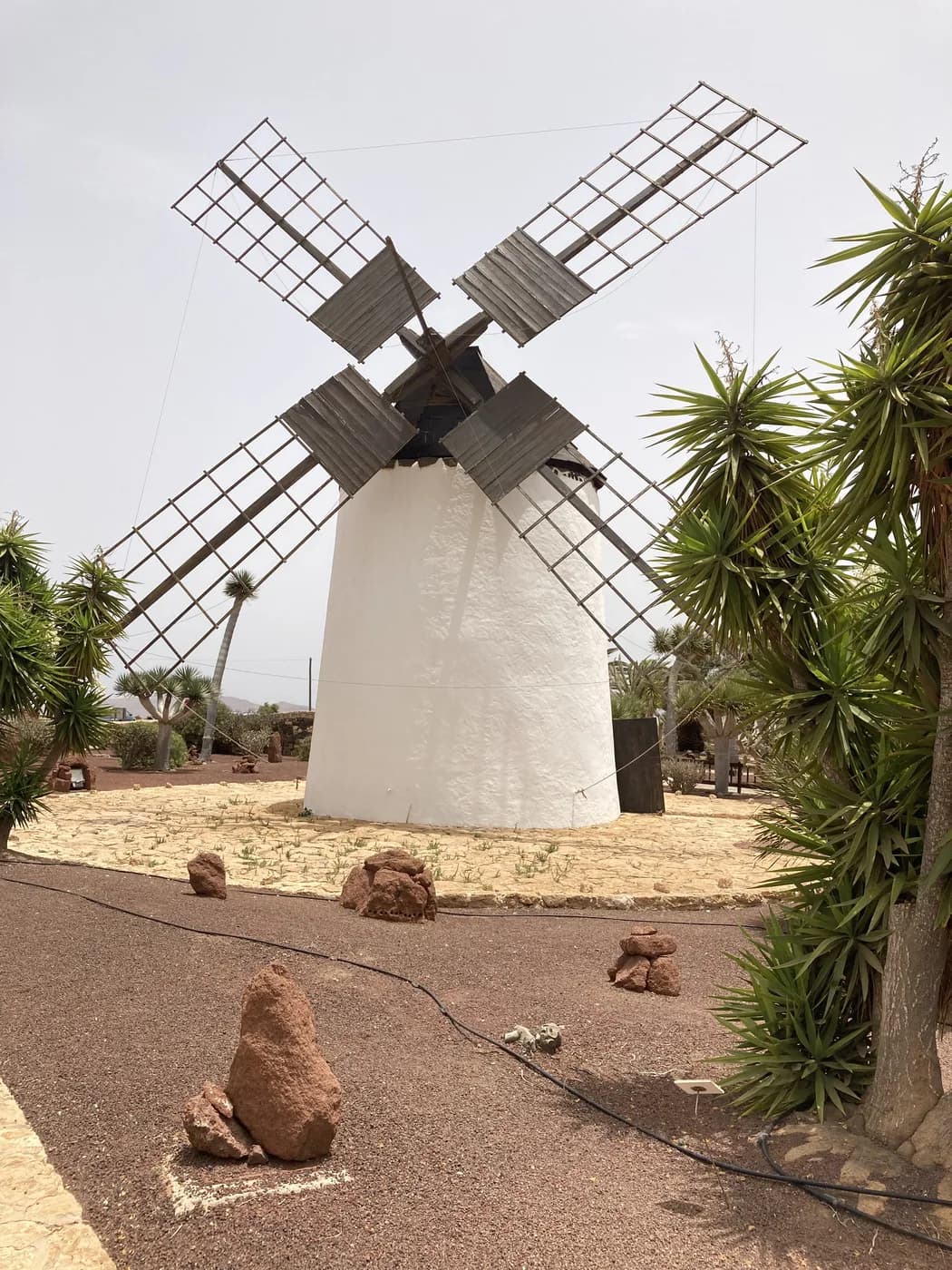
It's hard to explore inland Fuerteventura without spotting a windmill: the island has several dozen, scattered around Antigua, Tiscamanita, Tefía and La Oliva. Two types coexist: traditional cloth-sailed molinos, inherited from Spanish mills for grinding gofio (roasted grain flour), and the later metal-shaft, multi-blade molinos, used to pump water from wells.
The Centro de Interpretación de los Molinos, in Tiscamanita, lets you visit a restored gofio mill and see how it works, while several standalone examples turn up along country roads, often next to a well or a small farm.
We were surprised by how many windmills are still visible on the island, some well preserved, others in ruins but just as photogenic against the surrounding volcanic landscape.
Cacti, another side of the island's plant life
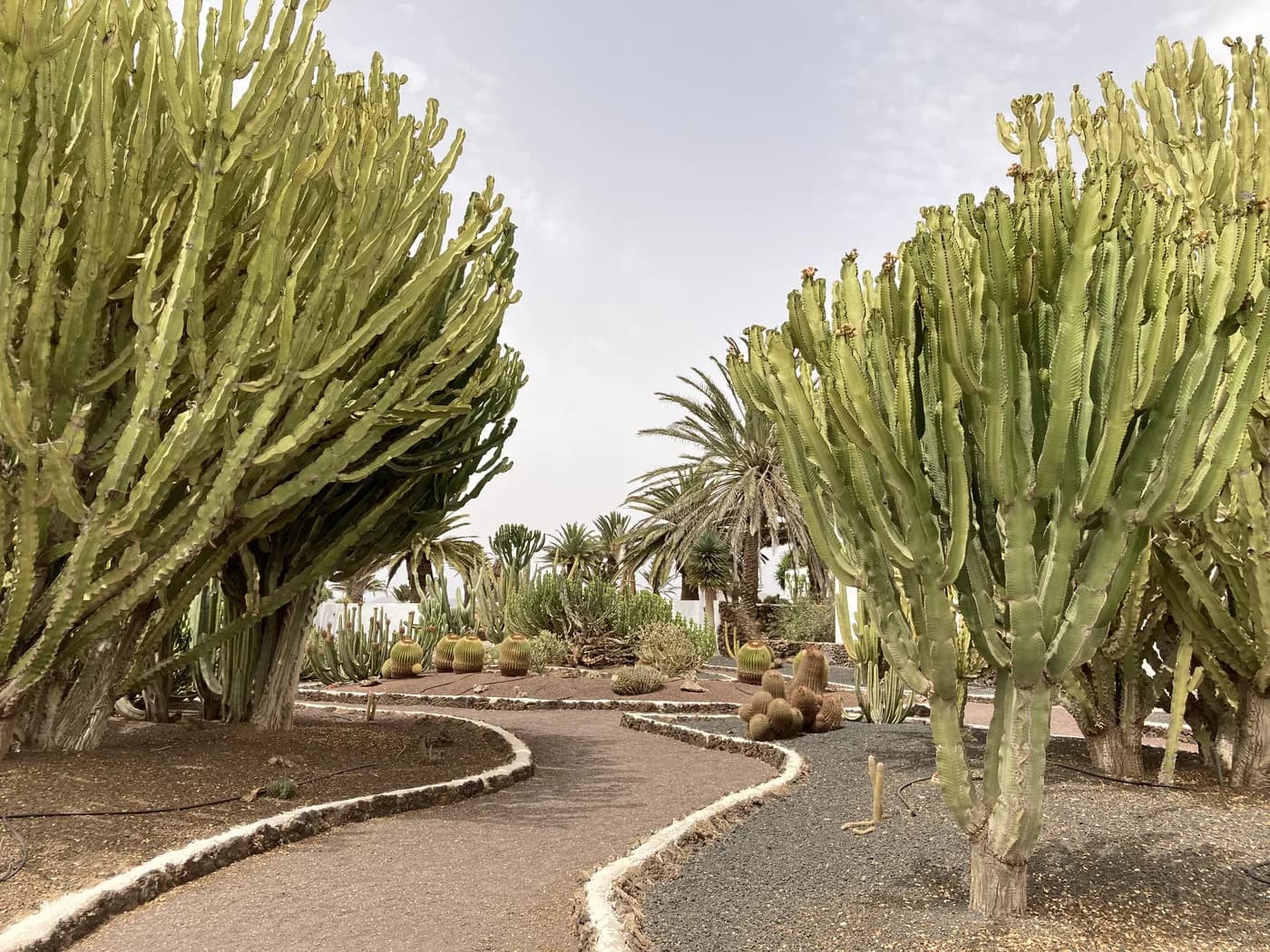
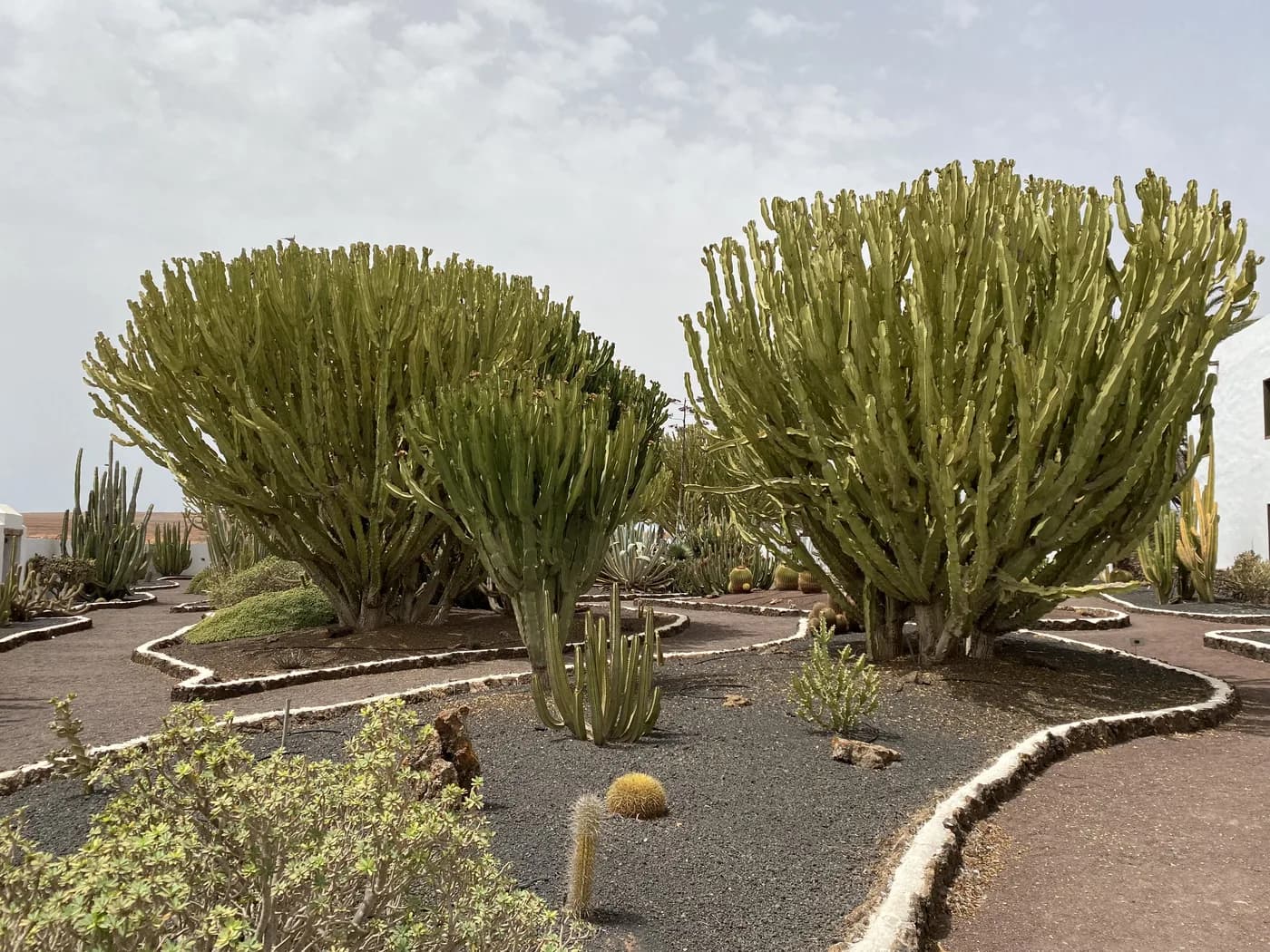
Alongside aloe vera, cacti and candelabra spurges make up much of Fuerteventura's plant life, particularly around inland gardens and properties, where they're often planted as hedges or impressive clumps several metres tall. Some private or hotel gardens have made a real speciality of it, with entire pathways lined with cacti of every shape, from round cushions to upright columns.
These plants, well suited to the island's aridity, aren't all native to the Canaries: several Central American or African species were introduced over time for their resilience and ornamental appeal, alongside the spurges, which really are endemic to the archipelago.
Calado, the island's traditional embroidery
Calado, or drawn-thread embroidery, is among Fuerteventura's oldest crafts, with its own local style known as redondillo majorero. The technique involves pulling certain threads from the fabric, then rebuilding a geometric pattern with a needle. Lajares, La Oliva and Betancuria are its main historic homes, where the embroidery adorns tablecloths, handkerchiefs and traditional dress.
Craft markets and souvenirs: where to buy local
For a genuine Fuerteventura souvenir, craft markets beat roadside shops every time. The Lajares market, every Saturday from 10am to 2pm, remains the must-visit: ceramics, silver jewellery, leather and cork goods, and organic local produce all sit side by side on the stalls, often with live music on the second and last Saturdays of the month.
We stopped by the Lajares market one Saturday morning: the atmosphere is noticeably more craft-focused than the tourist markets on the coast, and it's also a chance to stumble on an impromptu village celebration, like the one we spotted near a fishing harbour during our trip.
Music and traditions: timple and ron miel
The timple, a small five-string guitar, is the Canaries' signature instrument. It accompanies parrandas and romerías, the popular festivals mixing traditional music and costume, which you might come across travelling through the inland villages. Ron miel, a rum and cane-sugar honey liqueur typical of the archipelago, is enjoyed as a digestif and is among the most popular edible souvenirs to bring home from the island.
A surprising resident: the Barbary ground squirrel
Introduced to the island in 1965, Barbary ground squirrels (Atlantoxerus getulus), recognisable by their brown and white stripes, have since spread widely across Fuerteventura. Now a tourist attraction in their own right, particularly around the Barranco de los Molinos and certain natural-site car parks where they happily approach visitors, they also pose a real ecological problem for local flora, which they nibble relentlessly.
We came across several Barbary ground squirrels while hiking, far less shy than you'd expect — though it's best to resist the temptation to feed them, to avoid making their numbers grow further.
To plan the rest of your trip, head to our Canary Islands guide.
Frequently asked questions
Where can you see aloe vera plantations in Fuerteventura?
Several farms open for visits around La Oliva and Antigua, with tastings of pure gel and a look at the derived products.
Where can you see salt harvesting in Fuerteventura?
At the Salinas del Carmen, south of Caleta de Fuste: the island's last working salt pans, with an adjoining museum.
Where can you see windmills in Fuerteventura?
Around Antigua, Tiscamanita, Tefía and La Oliva; the Centro de Interpretación de los Molinos in Tiscamanita lets you visit a restored gofio mill.
What is Fuerteventura's calado?
A traditional drawn-thread embroidery, with its own local style (redondillo majorero), historically produced in Lajares, La Oliva and Betancuria.
When is the Lajares craft market held?
Every Saturday from 10am to 2pm, with live music on the second and last Saturdays of the month.
What is a timple?
A small five-string guitar, the Canaries' most iconic instrument, used in parrandas and romerías.
Why are there so many squirrels in Fuerteventura?
Introduced in 1965, Barbary ground squirrels have multiplied widely on the island in the absence of natural predators.
Are there a lot of cacti in Fuerteventura?
Yes, cacti and candelabra spurges make up much of the island's plant life, particularly in inland gardens.