El Cotillo Beach: the Island's Safest Natural Pools
El Cotillo beach is home to one of the safest places to swim in Fuerteventura, thanks to natural reefs that break the Atlantic swell and form genuine turquoise pools. Between La Concha, Los Lagos and Piedra Playa, this village in the north-west of the island packs several very different moods within a few hundred metres of each other — covered more broadly on our pillar page, Fuerteventura beaches.
In a nutshell
- La Concha: a turquoise lagoon sheltered by a reef, family-friendly, best at low tide.
- Los Lagos: shallow natural pools, sheltered by cliffs.
- Piedra Playa: a watersports beach, more exposed, good waves.
- The south of the village is more open to the Atlantic: red flag common, unlike La Concha.
La Concha: the island's most photographed lagoon
La Concha is arguably Fuerteventura's most photographed beach. A crescent-shaped natural reef shelters a turquoise lagoon from the rest of the ocean, creating calm, shallow, crystal-clear water over fine sand.
The beach is at its best at low tide, when the pools are clearest. At high tide, some pools are submerged and waves can break over the reef: it's worth checking the tide times before you go, to get the most out of the spot.
Los Lagos: more natural pools to discover
A few minutes from La Concha, the natural pools of El Cotillo continue at Los Lagos, with shallow water ideal for young children. Lined with fine white sand, they're sheltered by cliffs that shield them from the swell, in a slightly wilder setting than La Concha.
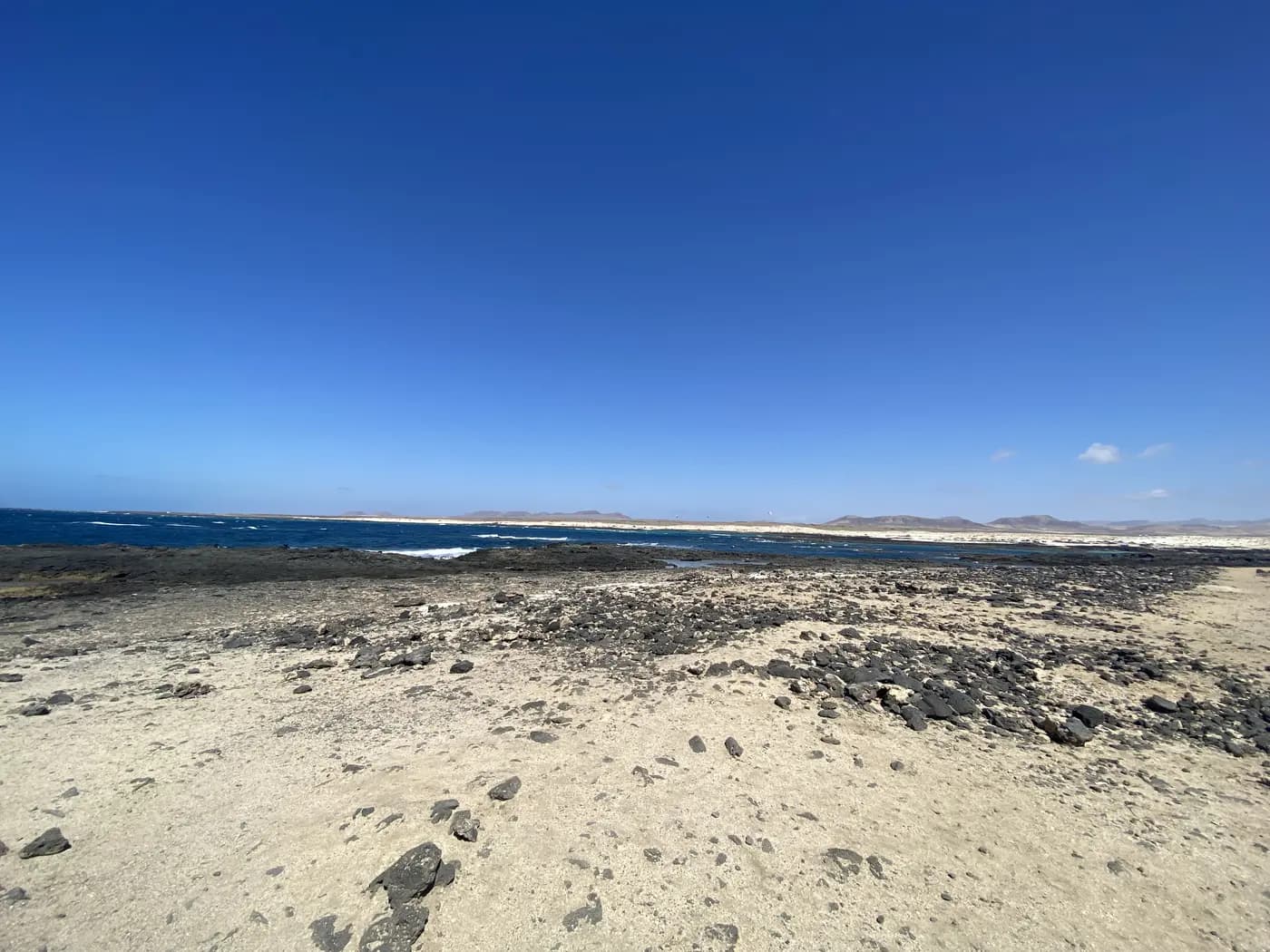
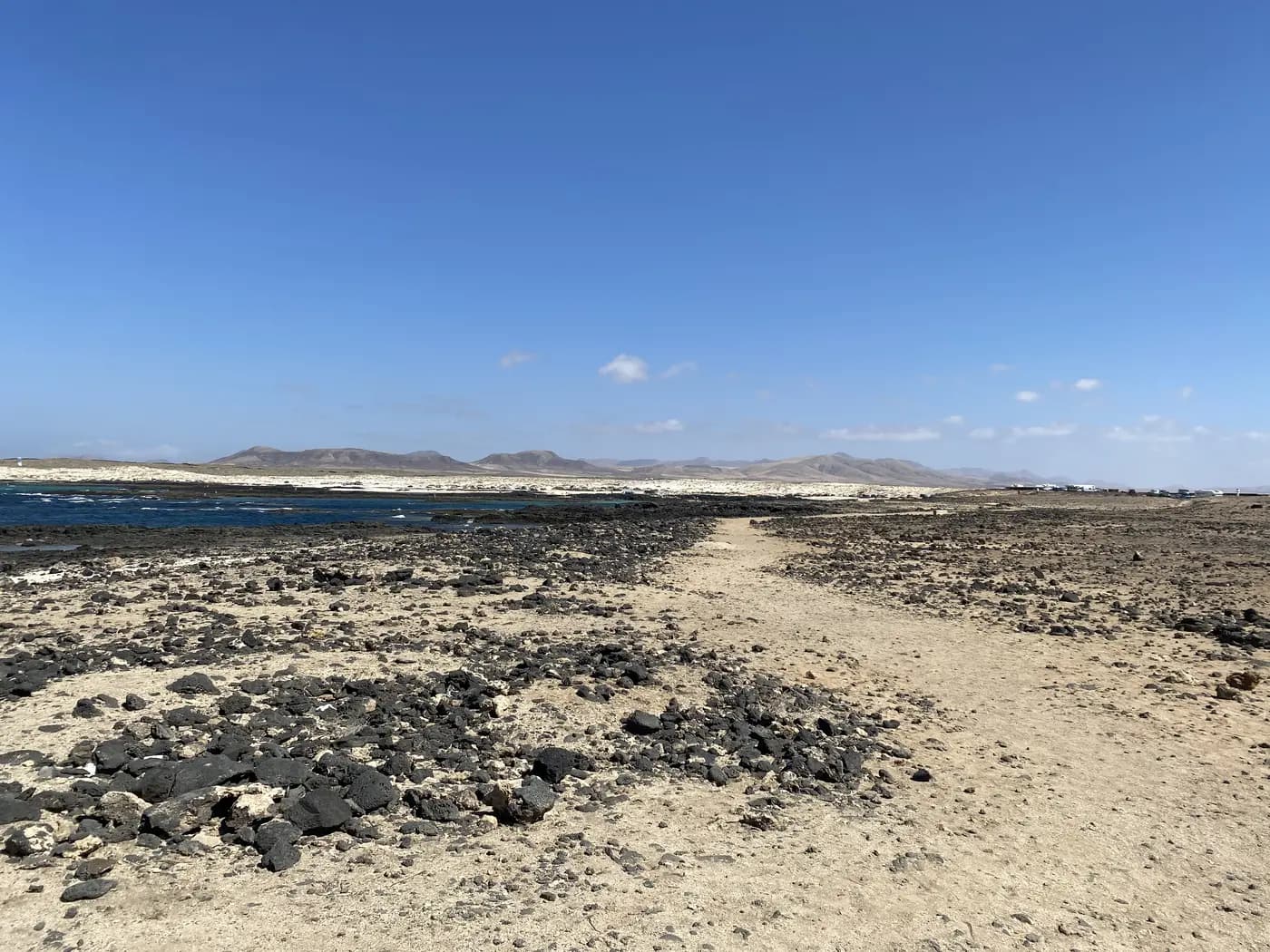
Walking up towards the Tostón lighthouse from El Cotillo, we found some of the most striking ocean views of the whole trip — but water too shallow for anything more than a quick paddle. We also checked out the wild beaches south of the village: gorgeous, but the strong wind and currents clearly put us off going in. Better to save the swimming for La Concha or Los Lagos, and keep this stretch for a walk and photos.
Piedra Playa: the watersports beach
A little further south, Piedra Playa runs for about 1.5 km of sand facing decent waves, more exposed than La Concha or Los Lagos. It's the go-to spot for surfers and watersports enthusiasts, with a sportier vibe than family-friendly, roughly halfway between the north of the island and the southern coves.
Safety: why the south of the village is different
Not all of El Cotillo's beaches are equal on safety. The south of the village stays more exposed, with a red flag common, unlike La Concha and Los Lagos, sheltered by their reefs and cliffs. Always check the day's flag before swimming, whichever beach you choose.
To explore the island's other beach moods before you plan your day, head to our Canary Islands guide.
Frequently asked questions
Where can you swim safely in El Cotillo?
La Concha and Los Lagos, sheltered by reefs or cliffs, are the safest. The south of the village, more exposed, often flies a red flag.
What's the difference between La Concha and Los Lagos?
La Concha forms a large, very photogenic crescent lagoon; Los Lagos is a set of smaller natural pools sheltered by cliffs, slightly wilder.
What tide is best for La Concha's turquoise pools?
Low tide: the pools are clearest and largest then. At high tide, some are submerged and waves can break over the reef.
Can you surf at El Cotillo (Piedra Playa)?
Yes, Piedra Playa is known for its waves and draws surfers and watersports fans, in an area more exposed than La Concha.
Why does the south of the village often fly a red flag?
That stretch is more directly exposed to the Atlantic swell, with no protective reef, unlike La Concha and Los Lagos.
Is El Cotillo suitable for young children?
Yes, especially La Concha and Los Lagos, whose calm, shallow water suits family swimming under supervision.