Planning Your Trip to Tenerife: The Practical Guide
Eternal-spring climate, two airports, ferries to the neighbouring islands: planning your stay starts with Tenerife weather and a few practical pointers. The largest of the Canaries can be visited year-round, but it pays to know its microclimates, transport and budget before you go. We haven't been ourselves yet; this hub gathers verified, up-to-date information and points to our detailed sections to organise every step.
The essentials at a glance
- Climate: mild year-round ('eternal spring'); sunny, dry south, greener, cloudier north, cold Teide at altitude.
- Airports: Tenerife South (TFS, international flights) and Tenerife North (TFN, inter-island).
- Getting around: car recommended, TITSA buses, a tram between Santa Cruz and La Laguna.
- Practical: euro, Spanish, time zone one hour behind mainland Spain.
Our approach: verified research, not first-hand experience (yet)
- We haven't visited Tenerife ourselves yet. This practical guide is based on official sources and up-to-date data; confirm hours, prices and conditions before you leave.
- We'll enrich it with our own on-the-ground experience after our next visit. Until then, the details are indicative: check them before you go.
What's the weather and when to go to Tenerife?
Tenerife weather is one of its great assets: mild year-round, with pleasant temperatures in every season. So the island suits a trip at any time, in summer as in deep winter, popular with northern Europeans chasing the sun.
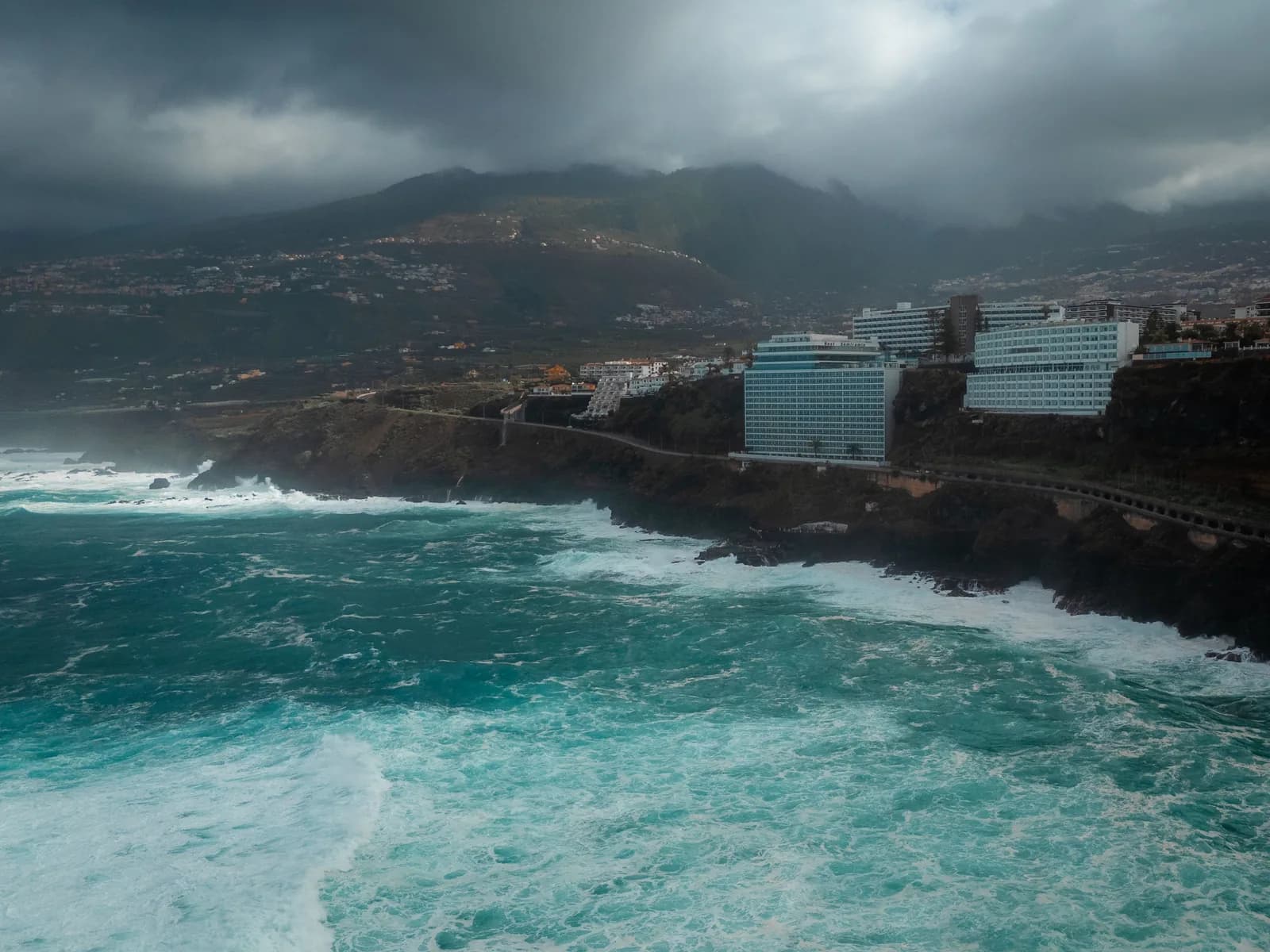
Watch the microclimates, though: the south (Costa Adeje, Las Américas) is drier and sunnier, the north (Puerto de la Cruz) greener and often cloudier, and Teide, at altitude, can be freezing and snow-capped in winter. You can go from sun to cloud in an hour's drive.
Airports, flights and ferries
Tenerife has two airports: Tenerife South (TFS), which handles most international flights, and Tenerife North (TFN), geared mainly to inter-island and domestic routes. Choose the right one for your accommodation: see our pages on car hire at Tenerife South Airport and at Tenerife North Airport.
From Los Cristianos, ferries link La Gomera, El Hierro and La Palma; other lines serve Gran Canaria and the mainland. Handy for combining islands, as our page on car hire in Los Cristianos explains.
How to get around the island?
To explore Tenerife freely, a car is the handiest option: see our car hire in Tenerife section. Without a car, the TITSA bus network serves the main towns and resorts, and a tram links Santa Cruz to La Laguna.
If you stay in a single beach resort, a car isn't essential day to day; it becomes so as soon as you want to reach Teide, Masca or the northern villages.
History, culture and key facts
Before the Spanish conquest, completed in the late 15th century, Tenerife was home to the Guanches, a people of Berber origin whose heritage lives on in crafts, food and museums. The capital, Santa Cruz, and the listed town of La Laguna tell the rest of that story.
Practical points: the currency is the euro, the language Spanish (English is common in the resorts), and the archipelago runs on Canary time, one hour behind mainland Spain. For local culture, see our page on souvenirs from Tenerife.
How many days and what budget?
Allow at least 5 to 7 days for the must-sees, and one to two weeks to explore north and south at leisure. A well-paced road trip in Tenerife lets you combine Teide, beaches, villages and towns in a single busy week.
The budget depends heavily on the season and travel style: the island covers every level, from guachinche to Michelin table, from apartment to resort. Above all, plan ahead for high season (summer, Christmas, carnival).
One extra line belongs in the budget if the summit of Teide is on your list: since 19 January 2026 the two ascent trails (Telesforo Bravo and Montaña Blanca) are chargeable for visitors who don't live on Tenerife, from €6 to €10 per person depending on the trail and time slot, and up to €25 for certain profiles and slots. It is booked on TenerifeON on top of the free permit and comes in addition to the cable car ticket if you use it. Entry to the national park itself remains free.
That Teide charge is specific to Tenerife, and it should not be confused with the "Canary Islands tourist tax" that keeps surfacing in the British press. There is no compulsory tourism levy across the archipelago, and the regional executive has said plainly that it does not want one: government spokesperson Alfonso Cabello and tourism minister Jéssica de León both ruled out an archipelago-wide tax during 2026, on the grounds that it would also fall on residents.
What the Canary Islands government launched instead, in July 2026, is RegNext — the Canary Islands Tourism Regeneration and Nature Restoration Fund. It is voluntary: travellers, tourism businesses and organisations can donate online, and the money funds biodiversity conservation, habitat restoration, climate adaptation and affordable housing across the islands. Nothing is collected on arrival or added to your hotel bill, so no extra line is needed in your budget unless you choose to contribute. On Tenerife, in practice, the only charge to plan for remains the Teide summit-trail fee described above.
Planning every step of your stay
This practical guide points to our detailed sections to organise everything: where to sleep with accommodation in Tenerife, what to see with things to do in Tenerife, where to swim with Tenerife beaches, and where to eat with Tenerife food.
For the adventurous, see hiking in Tenerife and activities in Tenerife. And remember to protect your home while you're away.
Booking your trip: useful links
To finish organising your trip, here are the well-known booking platforms we recommend, grouped by need. Always compare offers before you book.
Frequently asked questions
When is the best time to visit Tenerife?
Year-round, thanks to a mild climate. Winter draws sun-seekers, summer the swimmers. Mind the microclimates: the south is drier and sunnier, the north greener and cloudier.
What are Tenerife's airports?
Tenerife South (TFS), which handles most international flights, and Tenerife North (TFN), mainly for inter-island and domestic routes. Choose by where you're staying.
How do you get around Tenerife?
A car is the handiest way to explore. Without one, the TITSA bus serves towns and resorts, and a tram links Santa Cruz to La Laguna.
Can you reach the other islands from Tenerife?
Yes, ferries leave Los Cristianos for La Gomera, El Hierro and La Palma, and other lines serve Gran Canaria and the mainland.
How many days should you spend in Tenerife?
At least 5 to 7 days for the must-sees, and one to two weeks to explore north and south at your own pace, from Teide to beaches, villages and towns.
What's the time difference in Tenerife?
The Canaries are on GMT, one hour behind mainland Spain and France. The currency is the euro and the language Spanish.
Is there a tourist tax in Tenerife in 2026?
There is no compulsory tourist tax across the Canary Islands, and the regional government has ruled one out. Since July 2026 it runs RegNext instead, a voluntary online contribution fund for conservation, habitat restoration and affordable housing. The one charge specific to Tenerife is the Teide summit-trail fee in force since 19 January 2026 for visitors who don't live on the island.