What to see and do in Lanzarote: Timanfaya, César Manrique and the must-sees
Working out what to do in Lanzarote is unavoidable given how much the island packs into a small area of unique volcanic and artistic sites. Two pillars anchor any visit: Timanfaya National Park, born from 18th-century eruptions, and César Manrique's works — Jameos del Agua, Mirador del Río, Cueva de los Verdes, Jardín de Cactus — which blend architecture into the volcanic landscape. Add to that the La Geria wine route and the historic village of Teguise. This guide runs through every must-see, with practical pointers for planning one day or several.
In a nutshell
- The most spectacular site: Timanfaya National Park and its Montañas del Fuego.
- The best viewpoint: the Mirador del Río, facing the island of La Graciosa.
- The most unusual site: Jameos del Agua, a volcanic tube turned into a work of art.
- The wine route: La Geria and its vines planted in volcanic ash.
Timanfaya National Park: the must-see site
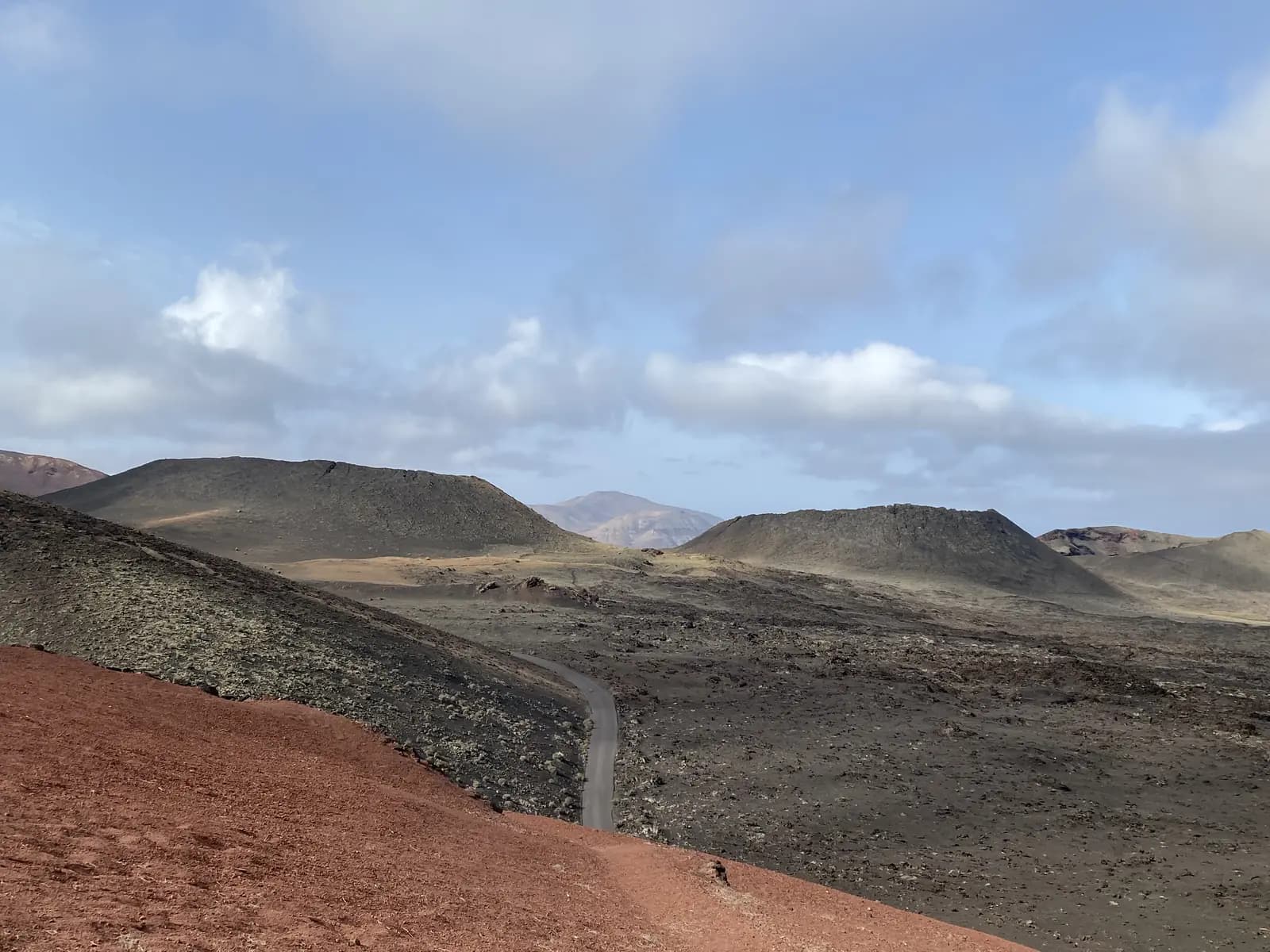
If you only remember one visit, make it this one: Timanfaya National Park, shaped by 18th-century eruptions, is the island's most spectacular visit. Between 1730 and 1736, massive eruptions covered a quarter of Lanzarote in lava and ash, creating the Montañas del Fuego ("Fire Mountains"), a near-untouched lunar landscape of red and black craters.
The visit is tightly managed to protect the site: you reach the park entrance by car (Yaiza/Tinajo area, LZ-67 road), and exploring the heart of the park is then done via the Ruta de los Volcanes, a roughly 40-minute panoramic route travelled by official bus, with no option to leave the vehicle — free movement is prohibited. Since 15 June 2026, you also have to book online before you arrive: tickets are no longer sold at the gate, entry runs on 15-minute time slots and the coach tour now costs €30 per person.
At the visitor centre, geothermal demonstrations show the heat still present just a few metres below the surface, and the El Diablo restaurant, designed by César Manrique, grills its food over the volcano's natural heat. Our dedicated page on Timanfaya National Park covers the visit step by step.
Spotlight on Timanfaya
- Access to the heart of the national park is regulated: no free hiking and no driving your own car along the tourist route. Expect a wait at the entrance in high season (queues of cars are common late morning). A limited number of guided walking tours exist, by reservation only.
We visited Timanfaya National Park: it's one of the most spectacular visits we've done. We drove to the car park early in the morning — traffic jams and long queues aren't unusual there. Since 15 June 2026, booking online has become compulsory and tickets are no longer sold at the gate: reserve your slot in advance (15-minute time bands) and arrive 15 minutes before it starts. Once there, you board a bus to tour the park. After the visit, you can watch a geothermal demonstration and eat at the El Diablo restaurant, whose speciality is chicken cooked over hot volcanic stones. Allow half a day in total: driving time, a possible queue if you don't get there early, the visit itself, the geothermal demonstration — and more still if you're tempted by the restaurant.
César Manrique's works: art built into the landscape
César Manrique (1919-1992), painter, sculptor and architect born on Lanzarote, turned his island into a manifesto: the island-born artist designed places where architecture blends entirely into the volcanic landscape. It's largely thanks to him that Lanzarote escaped mass concrete development — and his creations now rank among the most visited sites in the Canaries. Our dedicated page on César Manrique's works covers them in detail.
Jameos del Agua
In the north-east of the island (Haría municipality), Jameos del Agua occupies a collapsed section of a lava tube from the La Corona volcano. Manrique built an underground lake there — home to tiny blind white crabs, the site's emblem —, a brilliant white pool, gardens and an auditorium carved into the rock. Lanzarote's most unusual site.
Mirador del Río
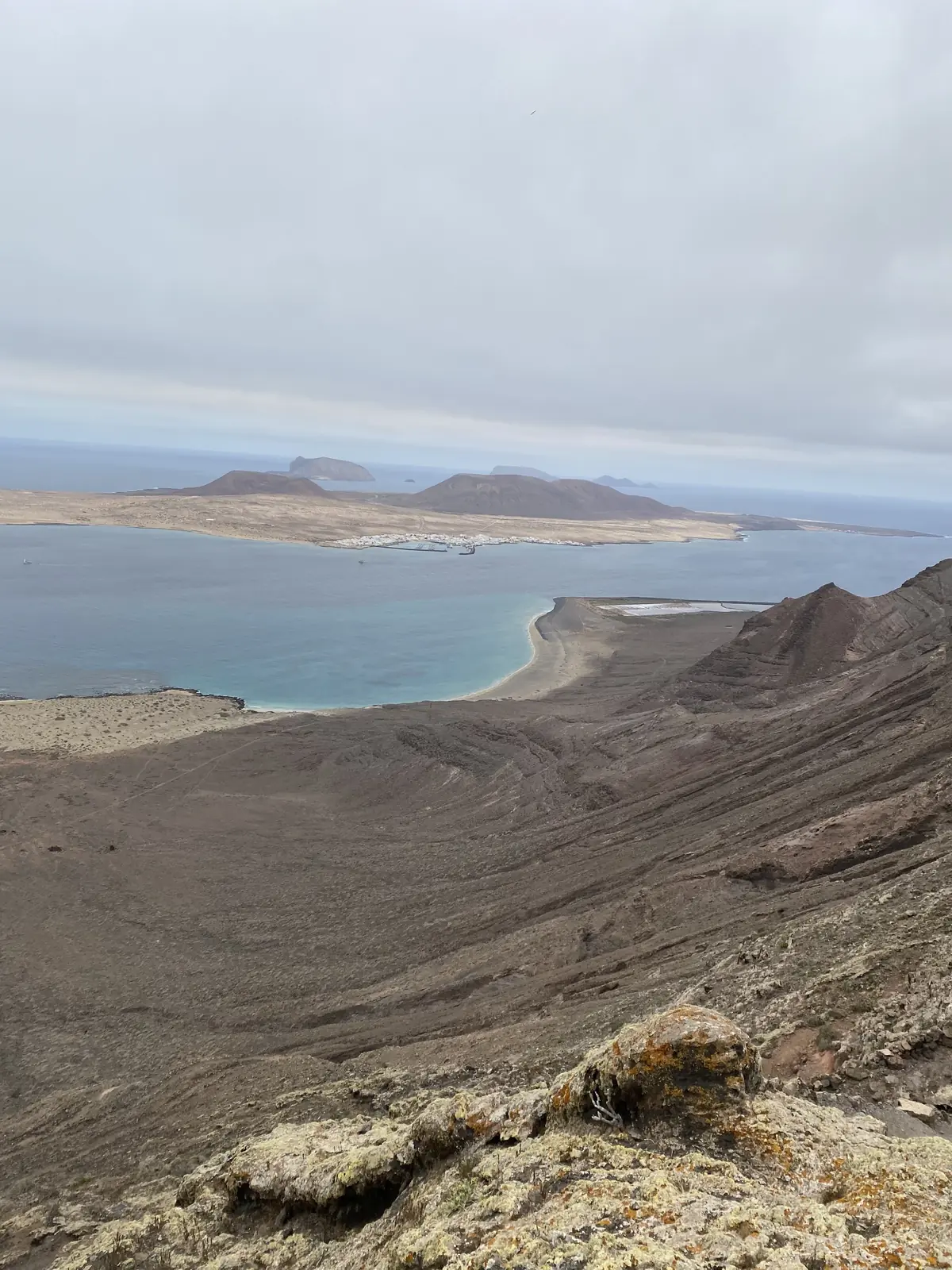
At the northern tip, the Mirador del Río is a viewpoint tucked into the Famara cliff, roughly 470m above sea level. Behind its huge picture windows, the view takes in the El Río strait and the island of La Graciosa: the island's finest panorama.
Cueva de los Verdes
A few minutes from Jameos del Agua, the Cueva de los Verdes opens up another section of the same volcanic tube, left in its raw state: a kilometre of lit-up galleries, ending with an optical illusion we won't give away here. Historically, the cave served as a refuge for the population during pirate raids.
Jardín de Cactus
In Guatiza, the Jardín de Cactus is Manrique's last major work: a green amphitheatre set inside a former volcanic ash quarry, home to several hundred species of cactus, watched over by a traditional windmill.
Of Manrique's works, we only visited the Mirador del Río, spectacular enough on its own with its superb viewpoint. We haven't visited the artist's house, but it's certainly on our list.
La Geria: the volcanic wine route
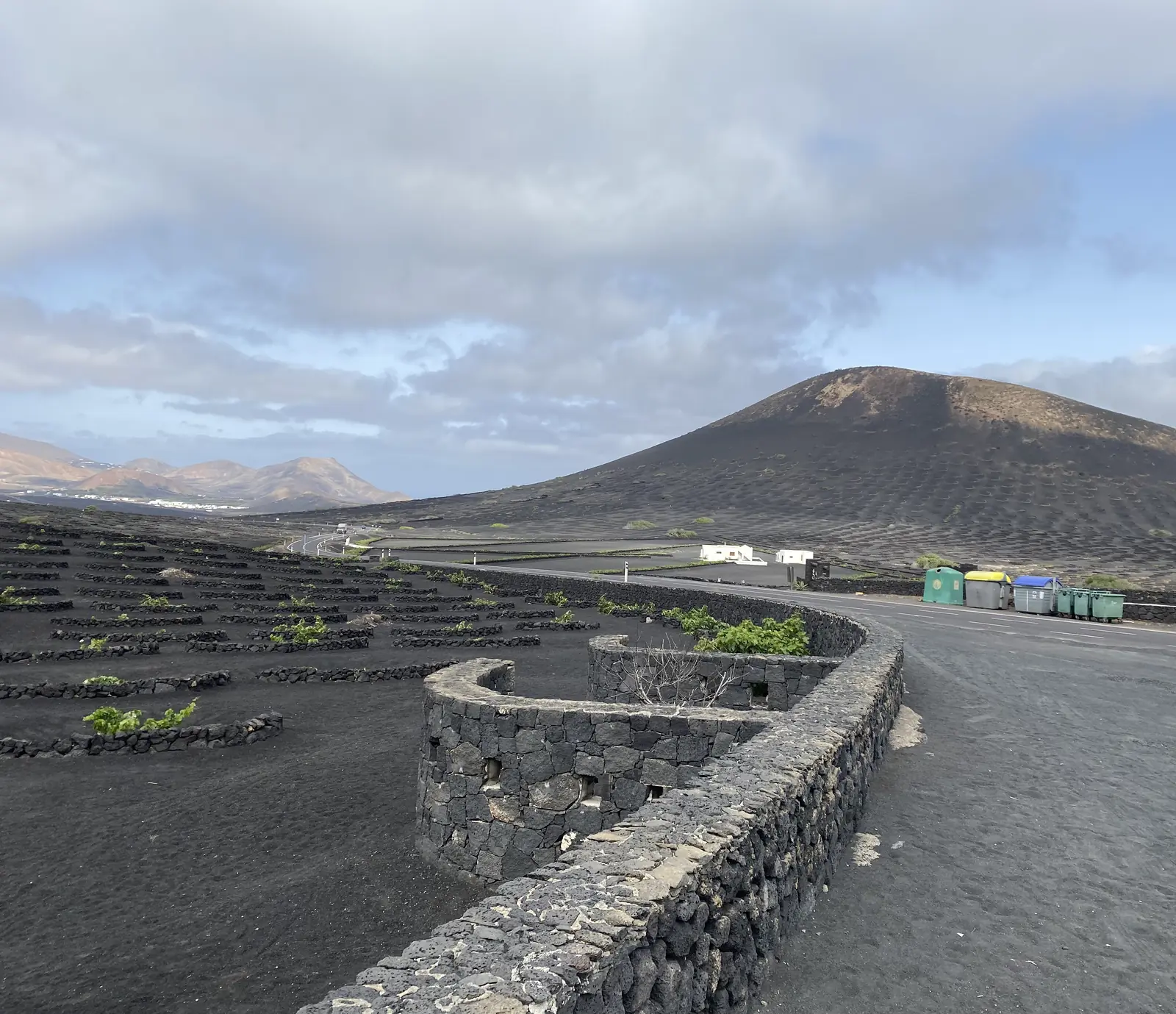
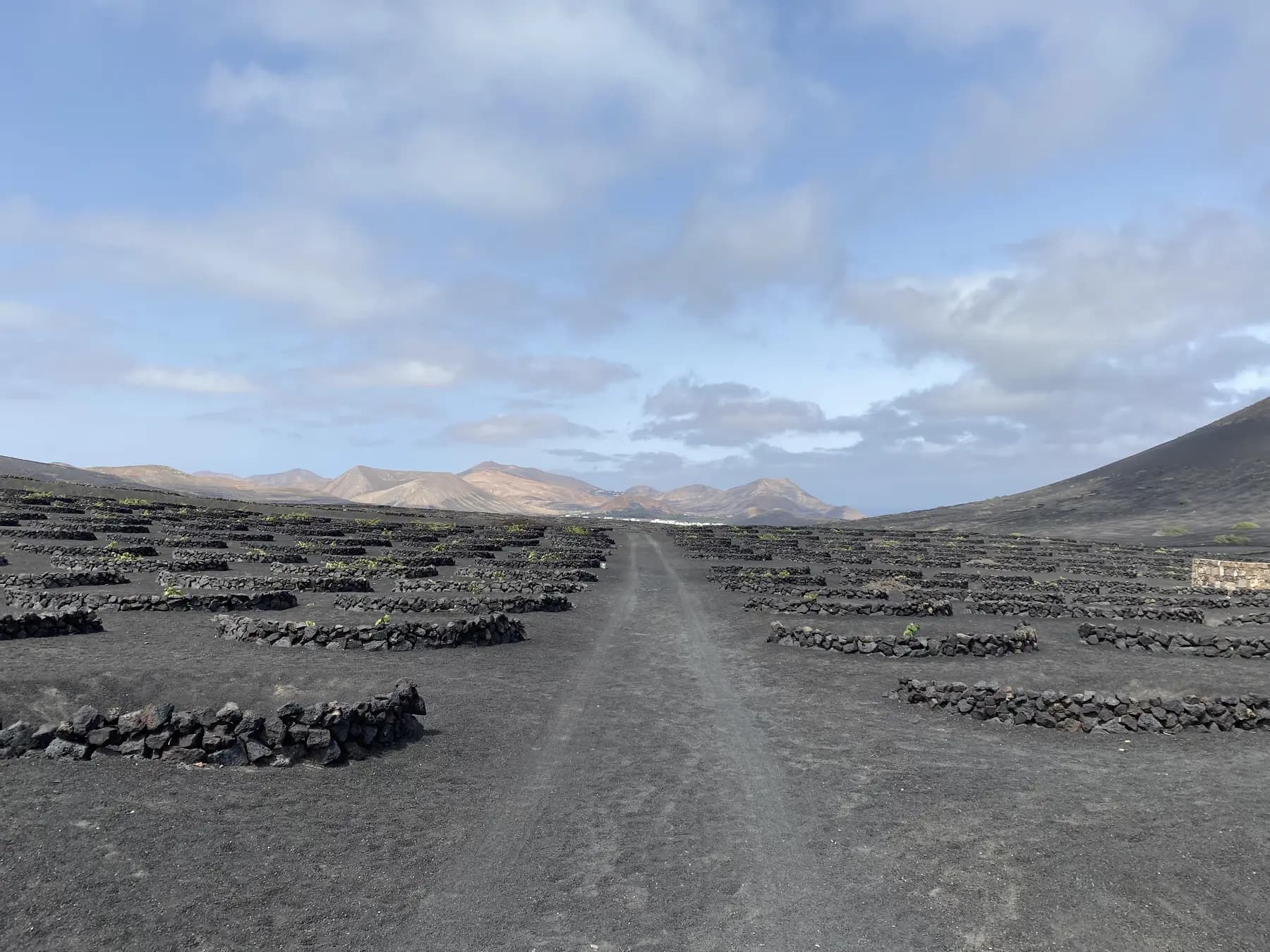
Between Yaiza and San Bartolomé, La Geria is one of the world's most singular vineyards: every vine grows in a funnel dug into the volcanic ash (known as "zocos" or hoyos), sheltered from the wind by a crescent-shaped black stone wall. The result is a striking, one-of-a-kind landscape, best explored along the LZ-30 road.
The dominant grape is malvasía volcánica, which produces well-regarded dry whites. Several bodegas welcome visitors for tours and tastings along the route — a chance to sample La Geria's wines while sticking to the golden rule: a sober driver.
Our accommodation's location let us drive along the road through the vineyards several times over — watch out for speed checks on this stretch, by the way. We visited two wineries in particular, including the Bodega El Grifo, founded in 1775 and the oldest winery in the Canary Islands. As wine lovers, we couldn't resist coming away with several bottles of red and rosé, for just over €100 in total (€101.20 exactly, in July 2025). You can of course taste on site, with a few tapas alongside: that's when we were won over by the quality of the wines.
Las Grietas: the volcanic fissures near San Bartolomé
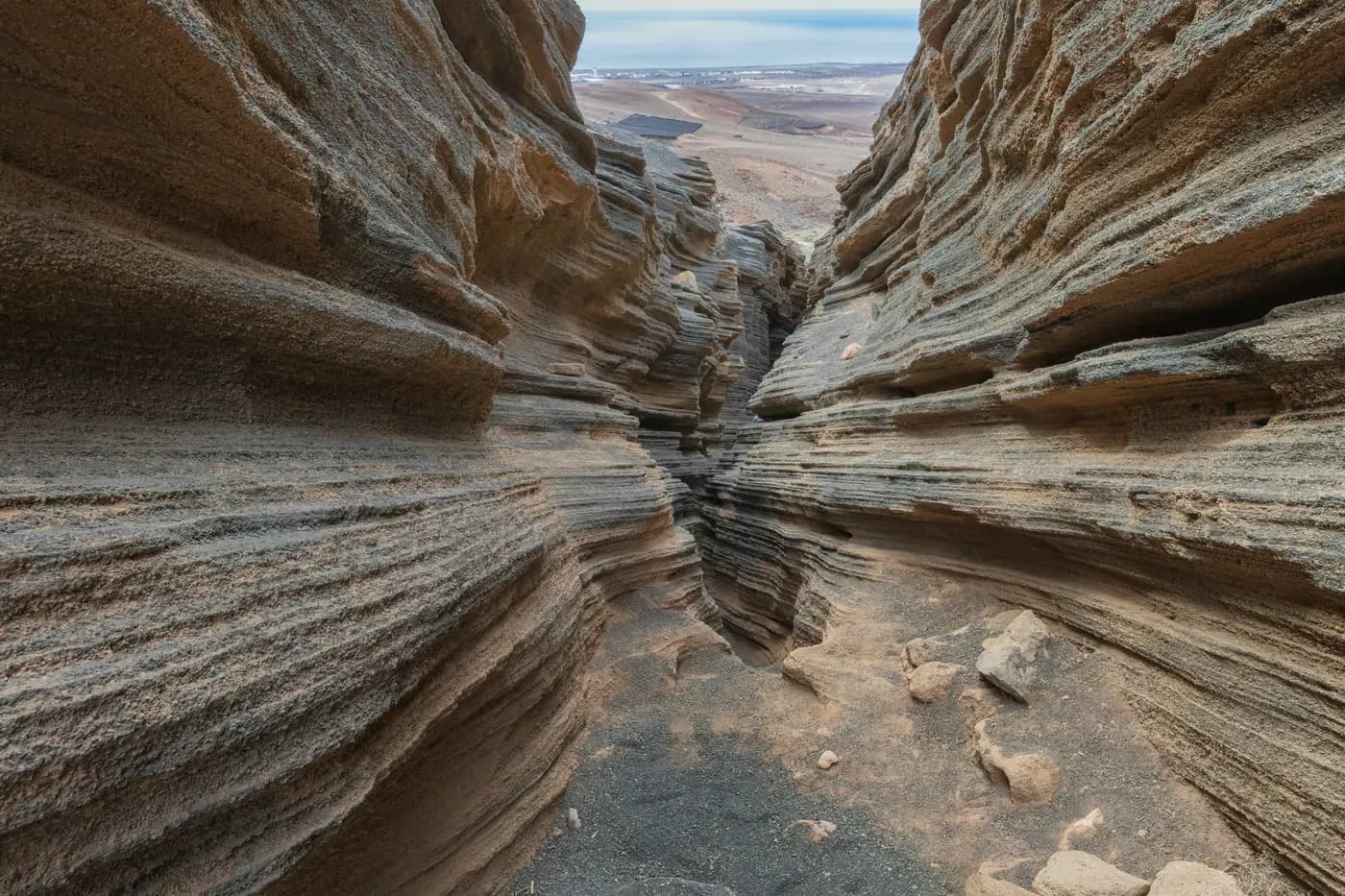
Between Tías and San Bartolomé, on the slopes of the Montaña Blanca, Las Grietas is one of Lanzarote's lesser-known geological curiosities: several narrow fissures cut into the volcanic rock, completely free and explorable in under an hour. Access, parking and practical tips are covered in our dedicated page on Las Grietas.
Other must-sees: Teguise and the historic villages
Teguise, Lanzarote's former capital until the 19th century, is the island's most beautiful historic village: cobbled streets, white façades, churches and stately homes. On Sunday mornings, its market — the island's largest — draws crowds and craftspeople; the rest of the week, the village settles back into a delightful calm.
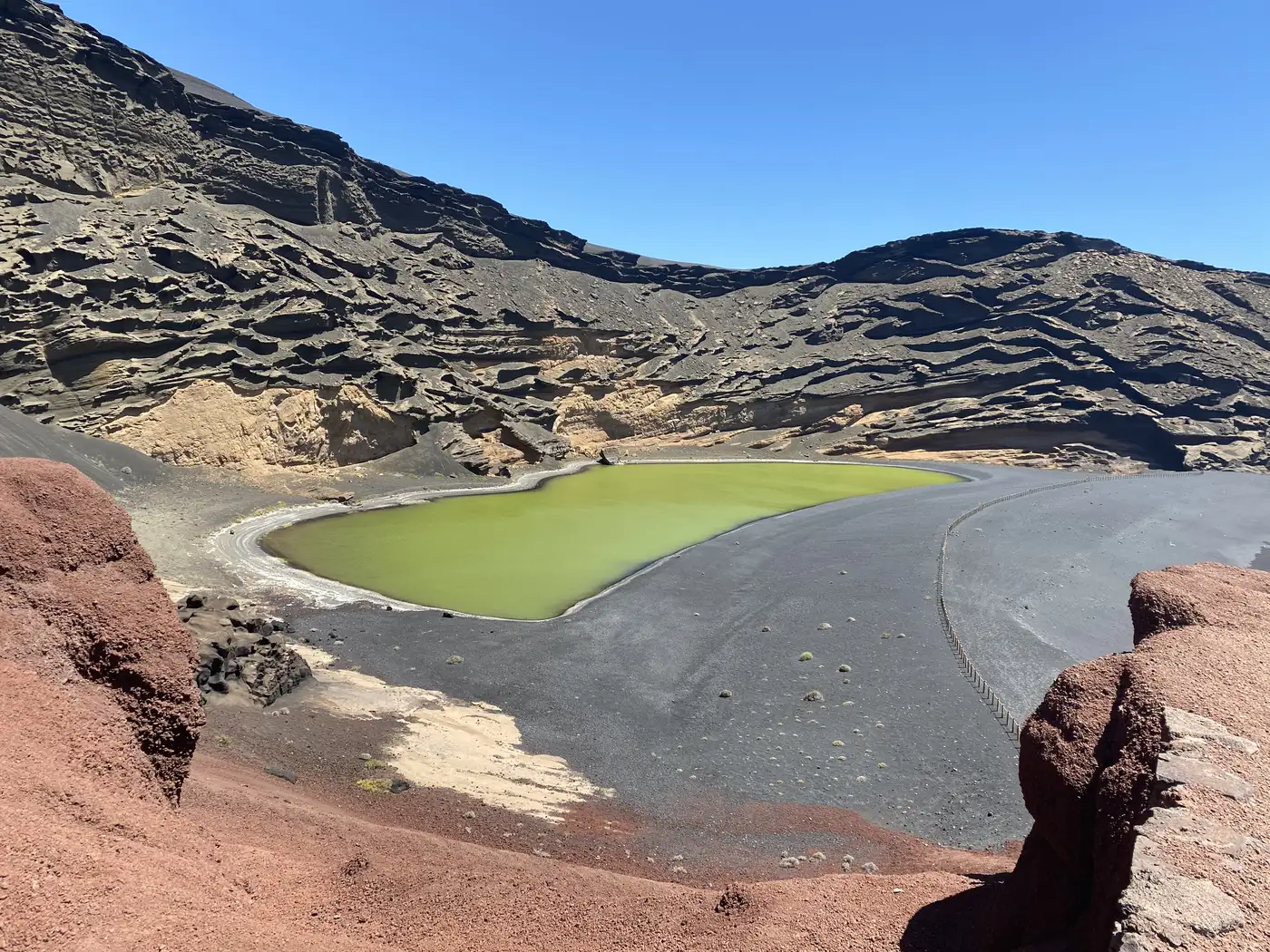
Other stops are well worth the detour: Haría and its "valley of a thousand palm trees" in the north, Yaiza, regularly named among the Canaries' most beautiful villages, the fishing port of El Golfo with its green lagoon (Charco de los Clicos), or the Fundación César Manrique in Tahíche, housed in the artist's former home, built over a lava flow.
Suggested itinerary for one day or more
With a single day, focus on the centre: Timanfaya in the morning (arrive early), La Geria in the afternoon, sunset at El Golfo. With sites spread out, hiring a car to explore the island remains the most practical option.
To go further, explore our Lanzarote guide or head back to the Canary Islands guide to compare the islands.
Frequently asked questions
What is the single must-see site in Lanzarote?
Timanfaya National Park is generally considered the island's most iconic visit, with volcanic landscapes born from 18th-century eruptions and geothermal demonstrations.
How do you visit Timanfaya park?
You reach the park entrance by car, then exploring the heart of the park is done via the Ruta de los Volcanes, a roughly 40-minute panoramic route by official bus — free movement is prohibited.
Who was César Manrique?
An artist and architect born in Lanzarote (1919-1992), who designed several sites where architecture blends into the volcanic landscape, such as Jameos del Agua or the Mirador del Río. His influence also helped protect the island from mass development.
What is Jameos del Agua?
A site built by César Manrique inside a former volcanic tube, in the north of Lanzarote: an underground lake home to tiny blind white crabs, an immaculate pool, gardens and an auditorium carved into the lava.
What is La Geria in Lanzarote?
A wine-growing region where vines grow in funnels dug into volcanic ash (zocos), sheltered from the wind by low black stone walls. This unique growing method produces notably the dry white wines of malvasía volcánica.
How long should you allow to visit Lanzarote?
A single day lets you see one major site (Timanfaya or the northern César Manrique sites); allow three days to cover all the must-sees at an easy pace, and a week to add beaches and villages.