Lanzarote's best beaches: the complete guide
Between turquoise coves in the south and long wave-battered stretches in the north, Lanzarote's beaches stand out for their black volcanic sand and unspoilt coves. The island offers three main types of beach: the wild coves of Papagayo, the surf spots of the north coast around Famara, and the family-friendly, developed beaches of Playa Blanca, Puerto del Carmen and Costa Teguise. This guide helps you pick the beach that suits you — family, surfer, nature lover — with practical access information for each.
In a nutshell
- Best family beach: Playa Blanca and Costa Teguise (Playa de las Cucharas), developed and sheltered.
- Best surf/kitesurf spot: Famara, on the north-west coast.
- Most beautiful wild beach: the coves of Papagayo, south of Playa Blanca.
- Closest beach to the airport: Playa de Guacimeta, next to ACE airport.
Which beach suits your trip?
The choice mainly depends on what you're after: relaxed swimming, watersports, or a wild cove.
Papagayo: the finest coves in the south
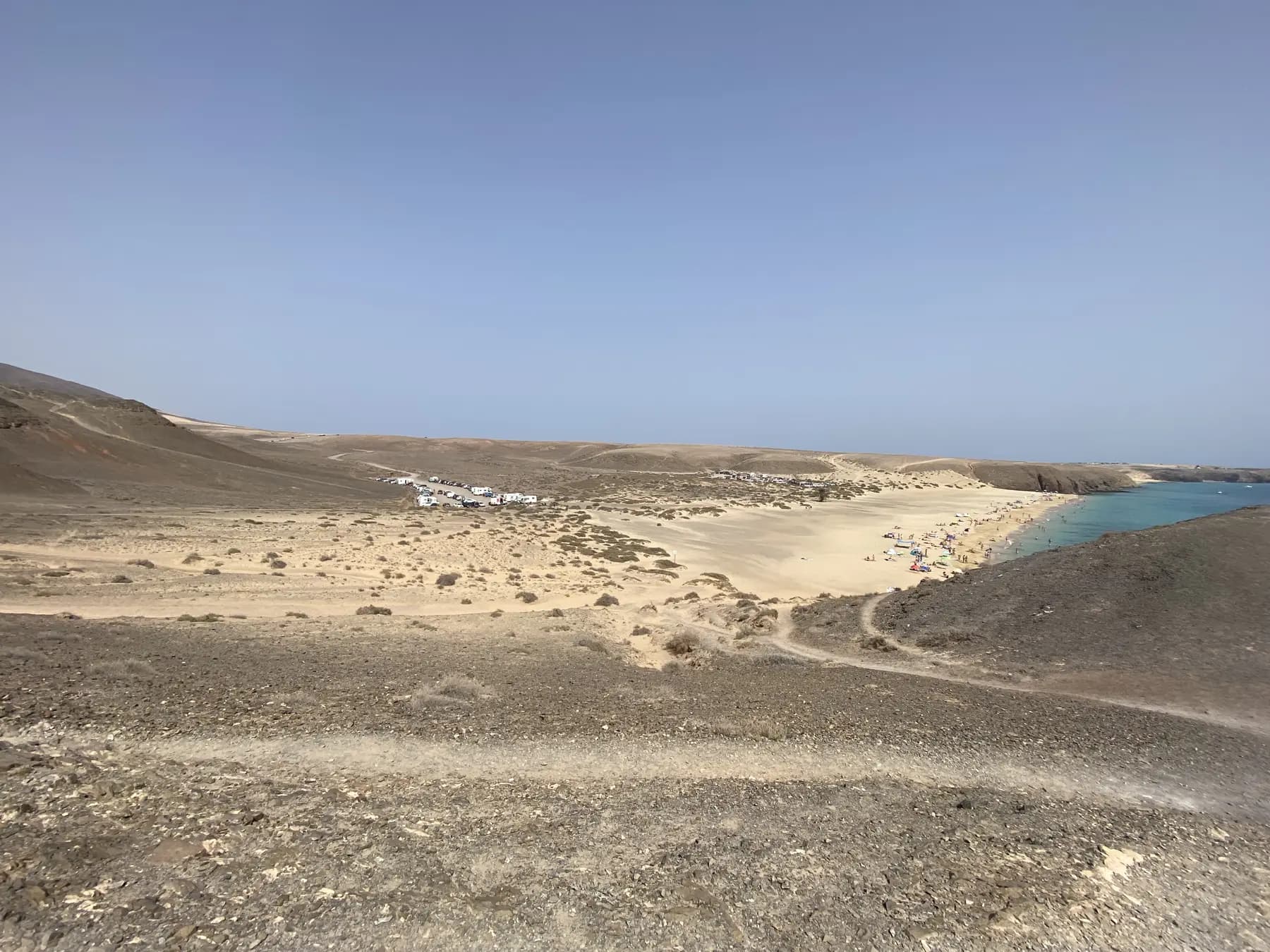
The beaches of Papagayo, south of Lanzarote, rank among the island's most beautiful wild coves: a string of pale-sand coves with turquoise water, tucked inside a protected nature reserve (Monumento Natural de Los Ajaches), a few kilometres east of Playa Blanca.
You can reach them by car along an unpaved track from Playa Blanca — an access fee to the protected area may apply — or on foot via the coastal path. Another pleasant option: a boat or catamaran trip from Puerto del Carmen or Playa Blanca, with a swimming stop facing the coves.
There's almost nothing built up on site: little to no shade, very few facilities. Bring water, a parasol and something to eat, and take your rubbish with you — the area is protected. Our dedicated page on the Papagayo coves covers each cove and how to reach it.
Spotlight on Papagayo
- Papagayo isn't a single beach but a string of coves (Playa Mujeres, Playa del Pozo, Playa de la Cera, Playa de Papagayo, Puerto Muelas...). The eponymous cove, tucked between two rocky points, is the most photographed. A protected nature area: accessible by track, on foot, or by boat.
We tried to reach the Papagayo coves with our hire car: the very rocky dirt track looked impassable for our tyres, so we chose to give up. We fell back on the far end of Playa Blanca, where, parking at the edge of town and following a dirt path, we found a little "secret" beach with fine sand and clear, cool water — a very good swimming spot.
Famara: the surfers' beach
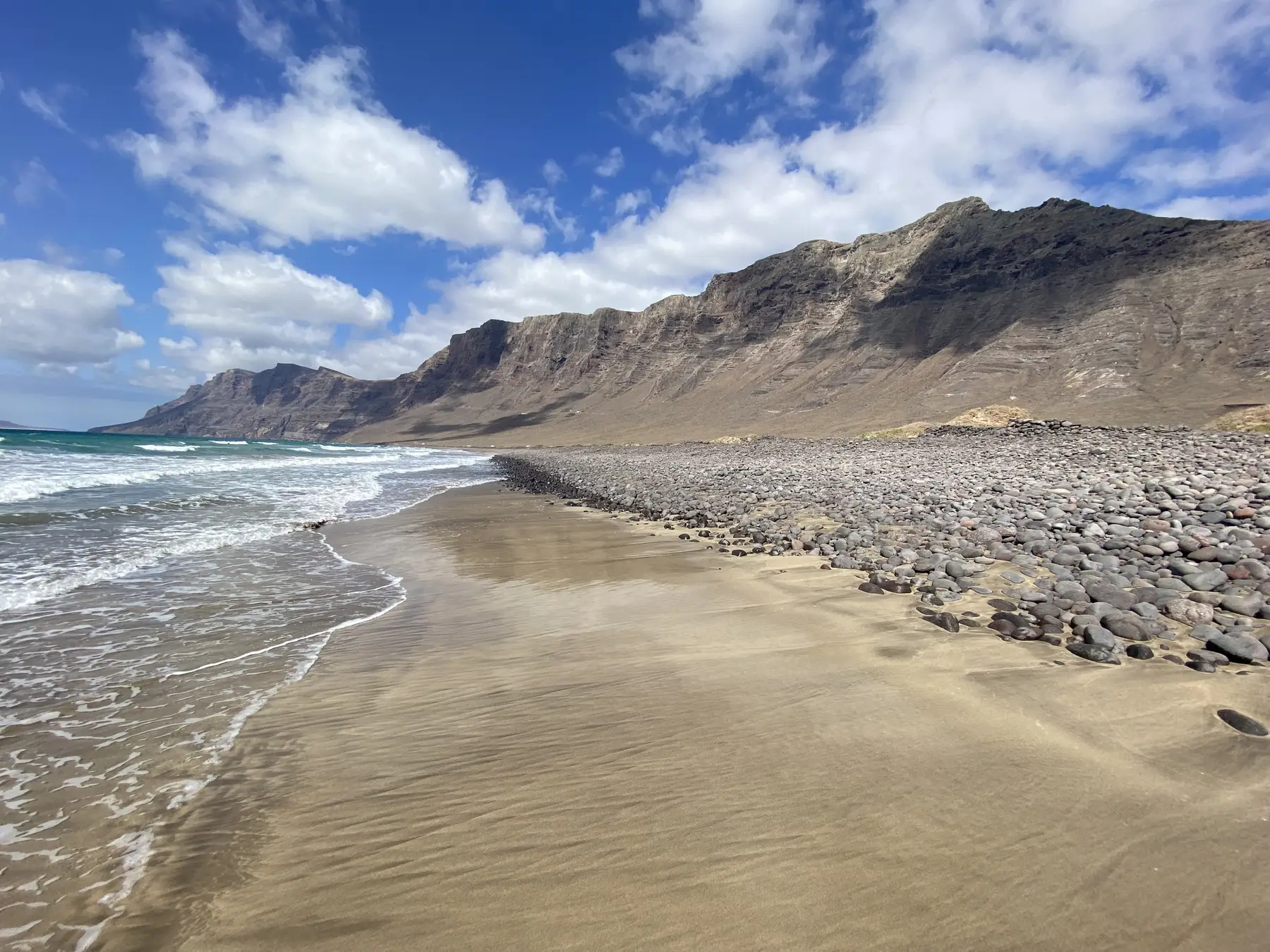
On the north-west coast, Famara remains the best-known surf and kitesurf spot on the north coast. Playa de Famara stretches several kilometres of sand beneath the imposing Famara cliff (Risco de Famara), facing the Atlantic swell.
The scenery is dramatic, but swimming isn't recommended: strong currents, powerful waves, an exposed beach. Famara is above all a playground for surfers and kitesurfers, with several schools based in the village of Caleta de Famara and, a little further on, around La Santa, well known among athletes for its training centre.
The wind, almost constant along this coast, is a boon for riders and delivers great kite sessions. For everything on the waves, the schools and the village, check our dedicated page on Famara beach.
We didn't try surfing or kitesurfing ourselves, but it has to be said that Famara and its beach offer spectacular scenery; on our walk along the sand, we even came across donkeys roaming freely, real regulars on the beach. Surfing and kitesurfing aren't necessarily practicable all year round: if you're keen on riding, check the conditions carefully — regulars know exactly when to head to Lanzarote for the best conditions.
Family beaches: Playa Blanca and Costa Teguise
For a relaxed swim with children, head to the developed resorts. In Playa Blanca, in the south of the island, Playa Dorada and Playa Flamingo are sheltered by breakwaters: calm water, pale sand, sun loungers, restaurants and a beachfront promenade just steps away. It's the most comfortable area for families — and handy too for choosing where to stay near the beaches.
In Costa Teguise, Playa de las Cucharas combines a family beach with a windsurfing spot: calm swimming closer to shore, riding a little further out. The resort, quieter than Puerto del Carmen, has everything you need (shops, equipment hire, watersports schools).
The water quality and facilities of the island's serviced beaches have gained fresh recognition in 2026: Lanzarote now flies six Blue Flags, up from two the year before. The municipality of Tías has won the label back for its four Puerto del Carmen beaches (Playa Grande, Matagorda, Pocillos and Playa Chica), while El Reducto in Arrecife keeps its own and Playa Blanca, in the Yaiza municipality, joins the list. One change worth knowing: from 2026 the award runs for two years (2026-2027) rather than a single season, a transitional rule adopted at European level.
Other beaches worth knowing
We also swam in the natural pools of Las Rosas, at Punta Mujeres: they were quiet when we visited, and the water, quite cold, was still very pleasant — just watch out for sea urchins.
Black sand and volcanic landscapes: what makes Lanzarote's beaches unique
The sand on many Lanzarote beaches is black or dark, a direct legacy of the island's volcanic origins. Unlike neighbouring Fuerteventura, with its long stretches of white and golden sand, Lanzarote alternates pale coves (Papagayo, Órzola) with volcanic sand beaches, as at El Golfo or along parts of the west coast.
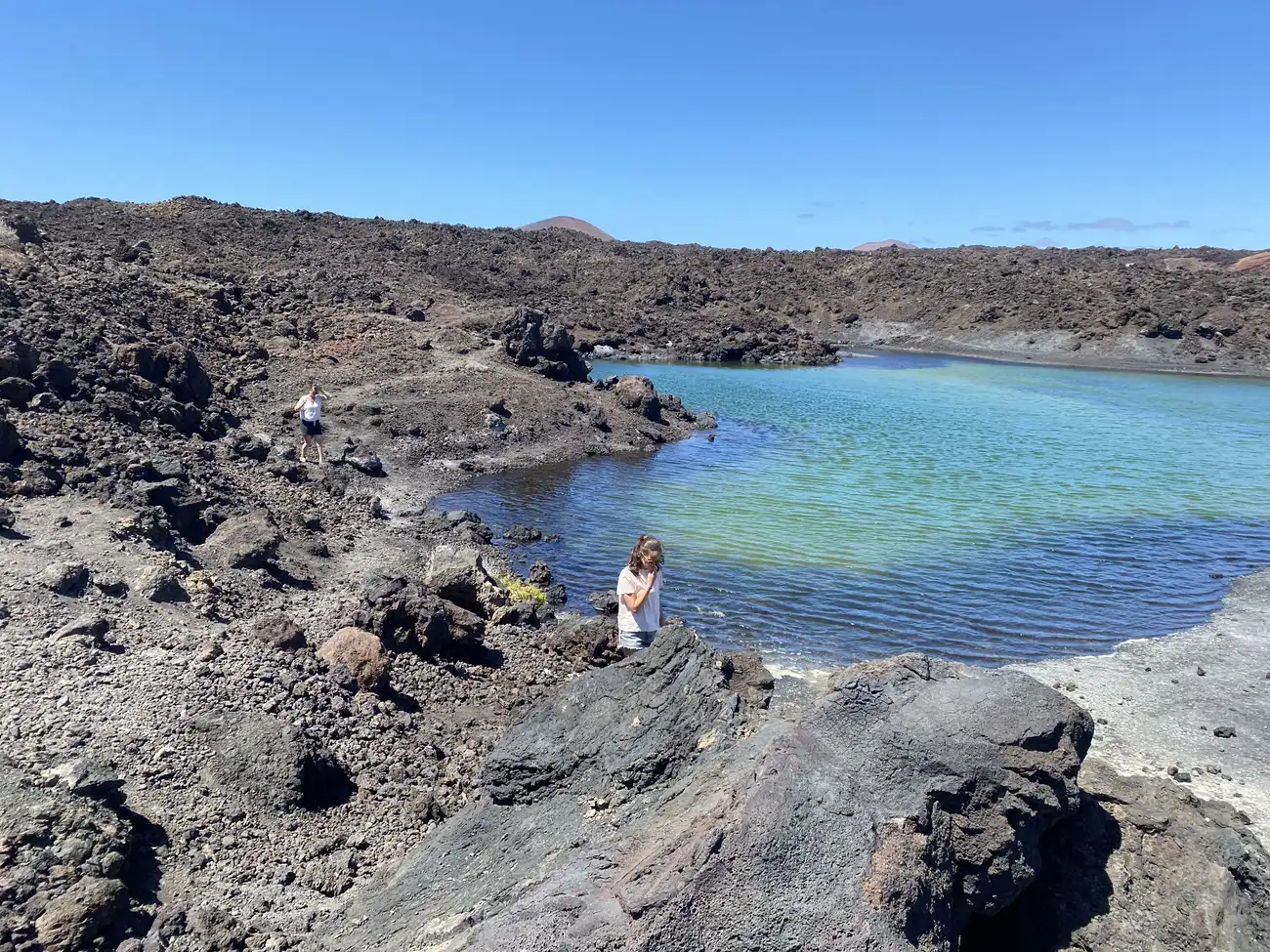
This mineral scenery — lava fields, dark cliffs, turquoise water over black rock — gives the island its whole character. To carry on the volcanic experience beyond the beaches, discover the island's volcanic landscapes, from Timanfaya to the green lake of El Golfo.
To go further, explore our Lanzarote guide or head back to the Canary Islands guide to compare the islands.
Frequently asked questions
What is the most beautiful beach in Lanzarote?
Papagayo, in the south of the island, is often named the most spectacular stretch of beaches in Lanzarote thanks to its unspoilt coves and turquoise water. Famara impresses more for its cliff scenery and waves.
How do you get to the Papagayo beaches?
By car along an unpaved track from Playa Blanca (an access fee to the protected area may apply), on foot via the coastal path, or on a boat trip from Puerto del Carmen or Playa Blanca.
Where can you surf in Lanzarote?
Famara, on the north-west coast, is the island's best-known surf and kitesurf spot: a long beach exposed to Atlantic swell, with several surf schools in the village of Caleta de Famara.
Are Lanzarote's beaches suitable for children?
Yes, provided you choose carefully: Playa Blanca (Playa Dorada, Playa Flamingo) and Costa Teguise (Las Cucharas) offer developed, sheltered, shallow beaches recommended for families. North coast beaches, such as Famara, aren't recommended for swimming.
Why is the sand on Lanzarote's beaches black?
The island's volcanic origins give several beaches black or dark sand, formed from eroded basalt rock. Other beaches, such as Papagayo or Órzola, keep pale sand — the contrast between the two is part of Lanzarote's charm.
What is the closest beach to Lanzarote airport?
Playa de Guacimeta, which runs alongside ACE airport near Playa Honda, a few kilometres from Arrecife. It's ideal for a quick swim before a flight.
Which beaches in Lanzarote have a Blue Flag?
Six of them for the 2026-2027 period: the four beaches of the Tías municipality in Puerto del Carmen (Playa Grande, Matagorda, Pocillos and Playa Chica), El Reducto in Arrecife and Playa Blanca in the Yaiza municipality. Famara, on the north coast, is not among the awarded beaches.