César Manrique on Lanzarote: Jameos del Agua, Mirador del Río and the must-sees
You can't really understand Lanzarote without César Manrique. Painter, sculptor and architect, born on the island (1919-1992), he turned raw volcanic sites into works of art open to visitors. Jameos del Agua is Lanzarote's most unusual site, built inside a former volcanic tube, but the Mirador del Río, the Cueva de los Verdes and the Jardín de Cactus are just as worth the detour. This guide, which complements our things to do and monuments on Lanzarote, covers each site — what you'll see, where it is, how long to allow — to help you choose which ones to visit, even on a short trip.
In a nutshell
- The most unusual site: Jameos del Agua, a volcanic tube turned into a work of art.
- The best viewpoint: the Mirador del Río, facing the island of La Graciosa.
- The cave with the optical illusion: the Cueva de los Verdes, 1km of volcanic galleries.
- Manrique's last garden: the Jardín de Cactus, in a former ash quarry.
On Lanzarote, César Manrique's works are spread across four main sites: Jameos del Agua (a converted volcanic tube), the Mirador del Río (a viewpoint over La Graciosa), the Cueva de los Verdes (a volcanic cave) and the Jardín de Cactus (a cactus garden in a former quarry), all designed to blend architecture into the island's volcanic landscape.
Jameos del Agua: Lanzarote's most unusual site
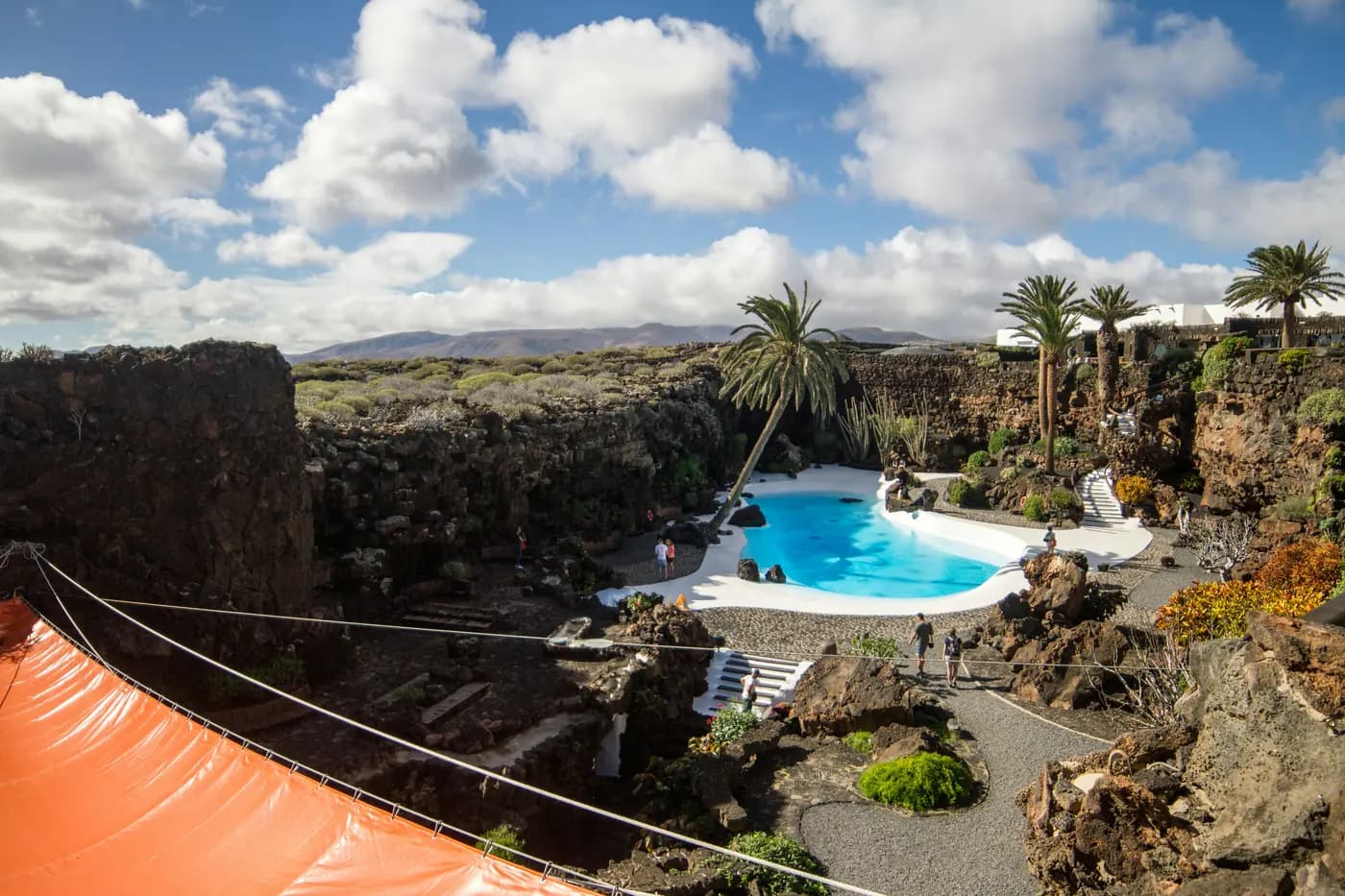
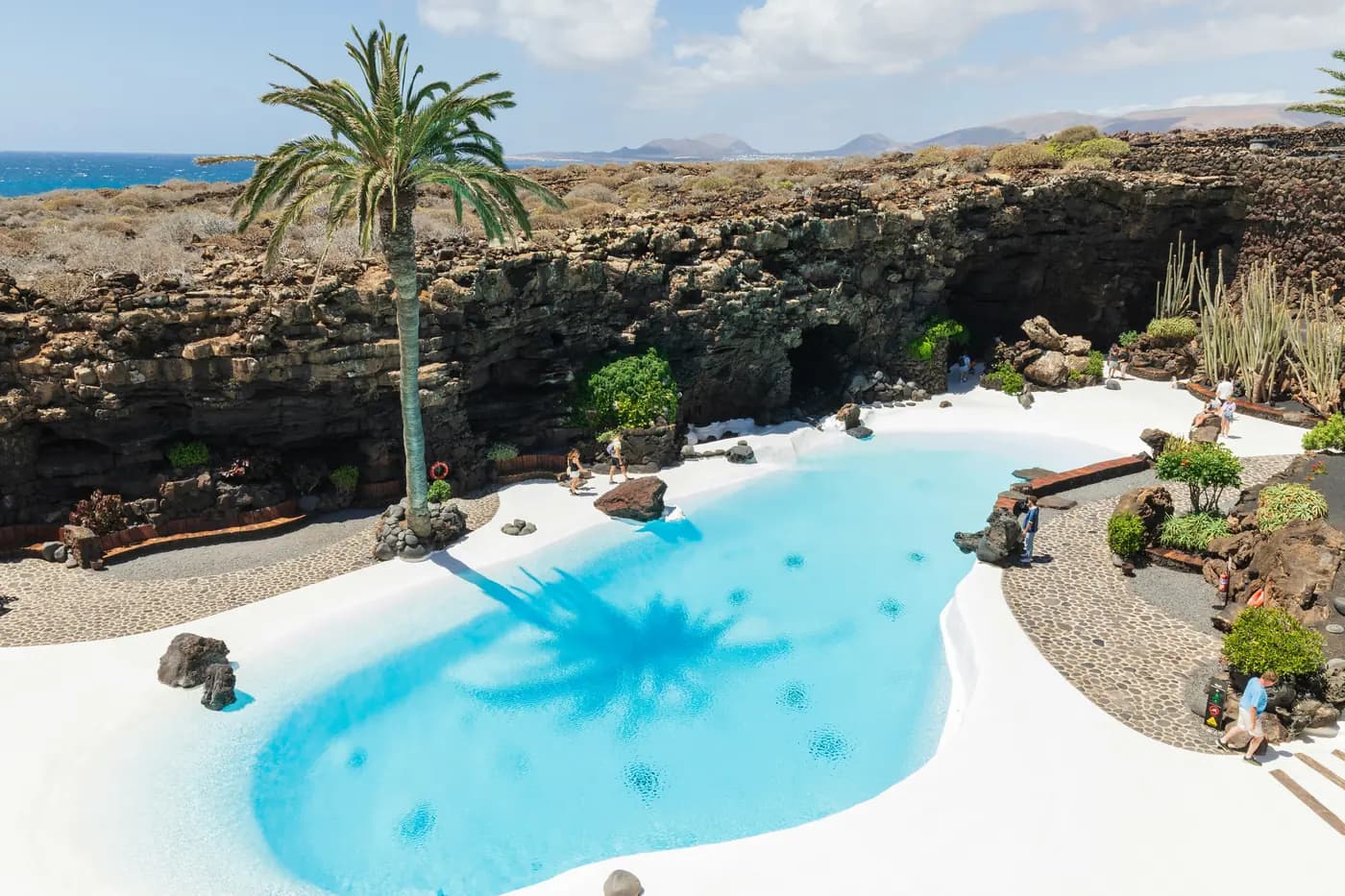
Jameos del Agua occupies a collapsed section of a lava tube from the La Corona volcano, in the north-east of the island (Haría municipality). César Manrique built an astonishing route through it: an underground lake, a brilliant white pool surrounded by gardens, and an auditorium carved straight into the volcanic rock.
The underground lake is home to the site's emblem: tiny blind white crabs (Munidopsis polymorpha), a species found nowhere else at such shallow depth. It's this contrast between raw nature and an artist's design that makes Jameos del Agua Lanzarote's most singular visit.
The auditorium, carved into the widest part of the cave, still hosts concerts and festivals: the natural acoustics of the volcanic rock make it a venue unlike any other in the world. Check the programme ahead of your trip — catching a concert inside a lava tube is a rare experience.
Allow around 1 to 1.5 hours on site. In high season, booking online is recommended to avoid queuing; up-to-date opening times and prices are on the official Centros Turísticos de Lanzarote website.
Mirador del Río: the island's finest panorama
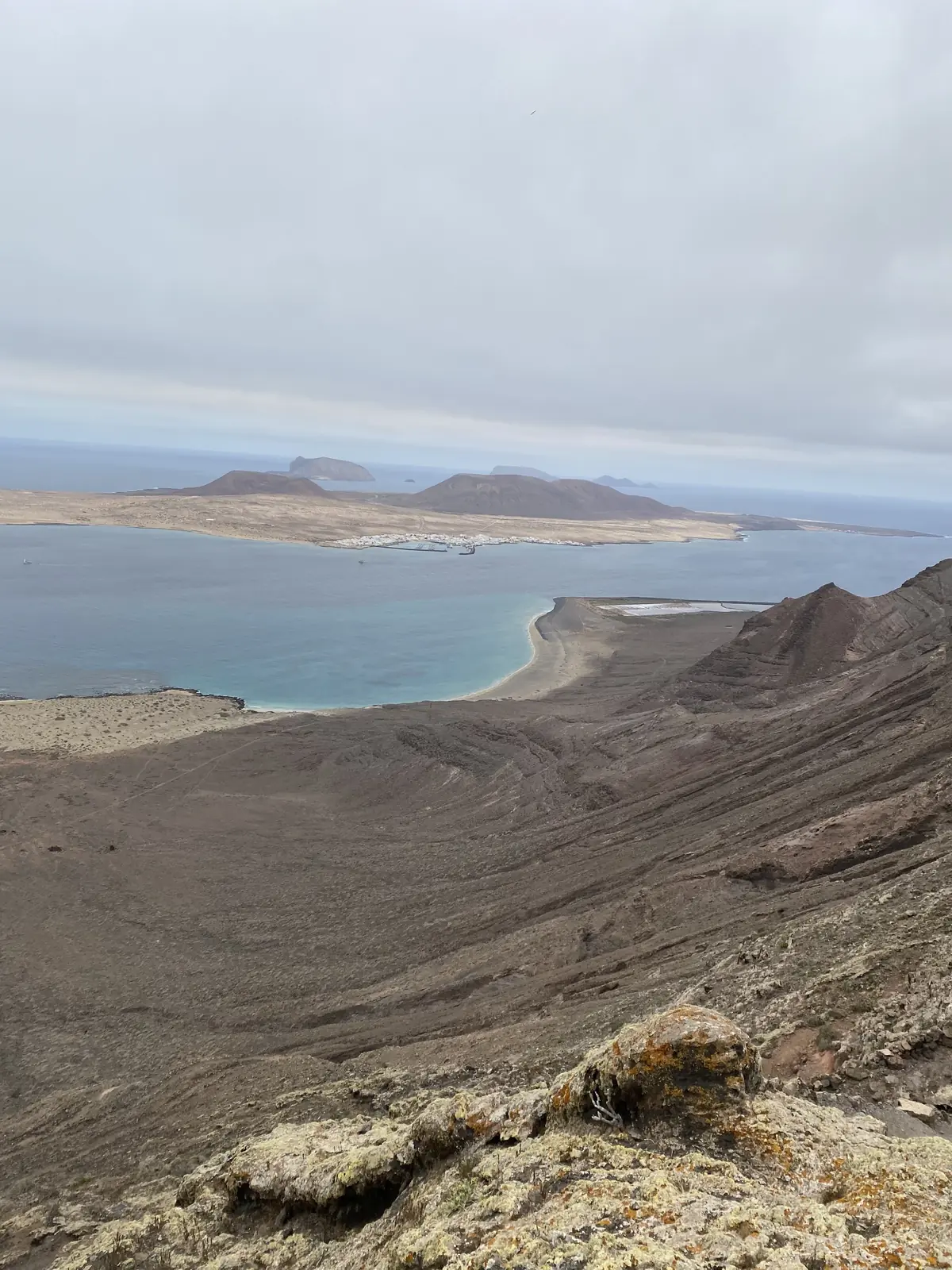
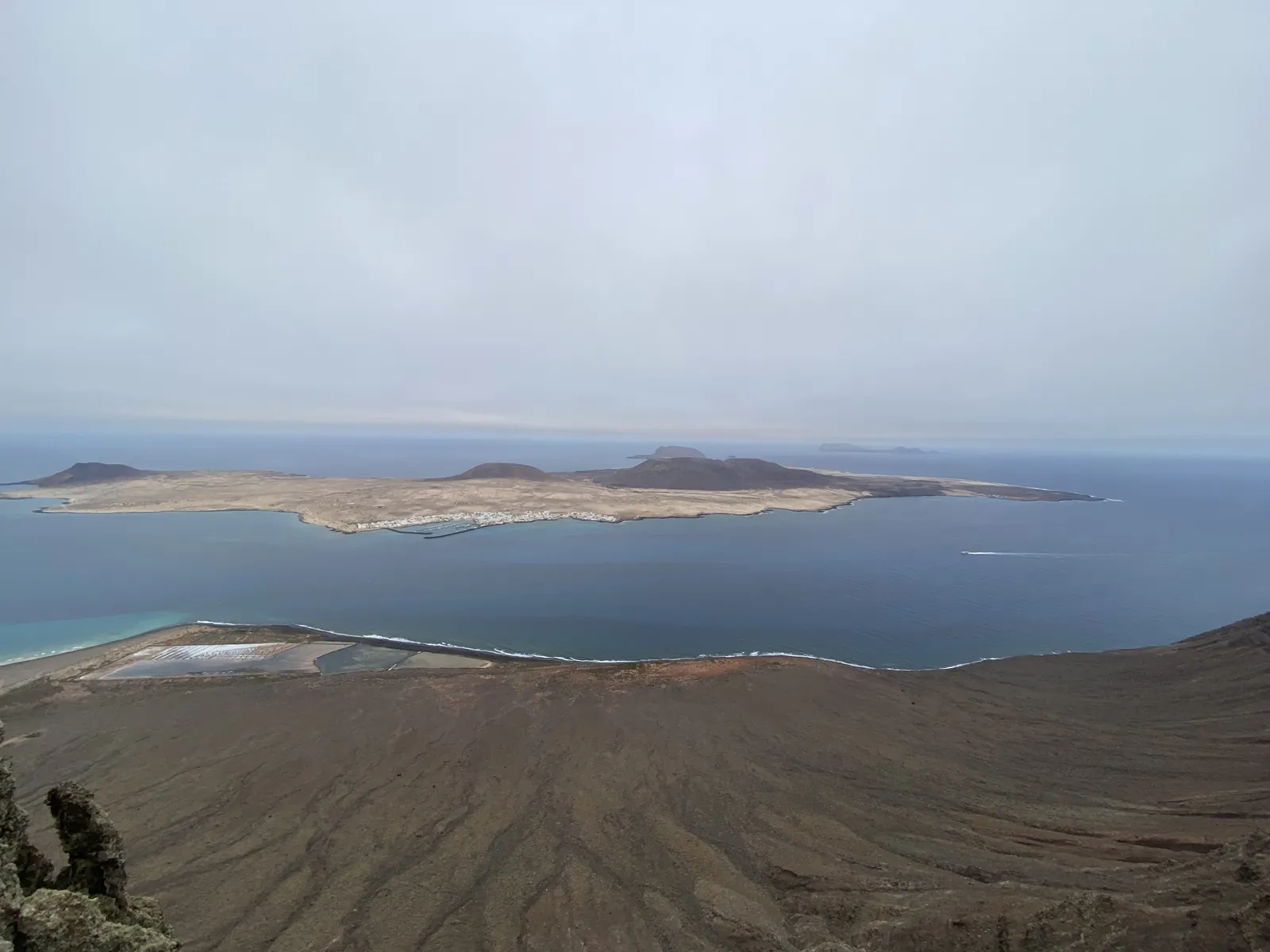
At Lanzarote's northern tip, the Mirador del Río offers the island's finest panorama over the El Río strait and the island of La Graciosa. The viewpoint is tucked into the Famara cliff, roughly 470m above sea level: from the road, you'd barely guess the structure is there.
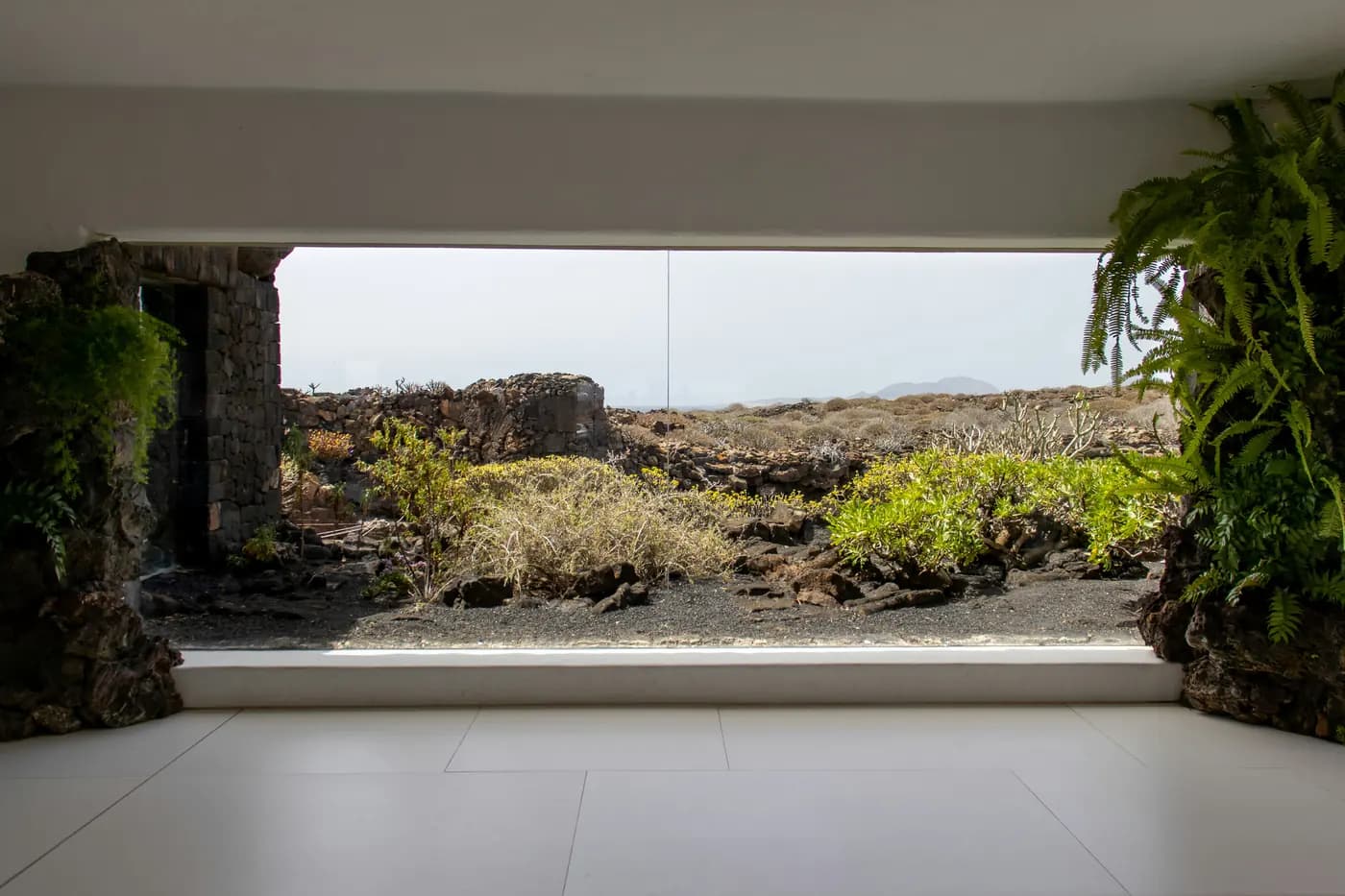
The interior carries Manrique's signature: a rounded space carved straight from the rock, natural skylights and huge picture windows that frame the landscape like a painting. The architecture disappears into the cliff rather than standing out against it.
The site has a history: the viewpoint occupies the former Batería del Río, a coastal gun battery installed in 1898 during the Spanish-American War to watch over the strait. Manrique transformed it between 1971 and 1973 into one of the island's icons.
We visited the Mirador del Río during our trip: the view over La Graciosa is stunning and the visit takes 30 to 45 minutes. One honest note though — after seeing it in countless photos and guidebooks, we half-expected something even more dramatic; go on a clear day to get the most out of it, as haze can veil the view.
Cueva de los Verdes: the volcanic cave
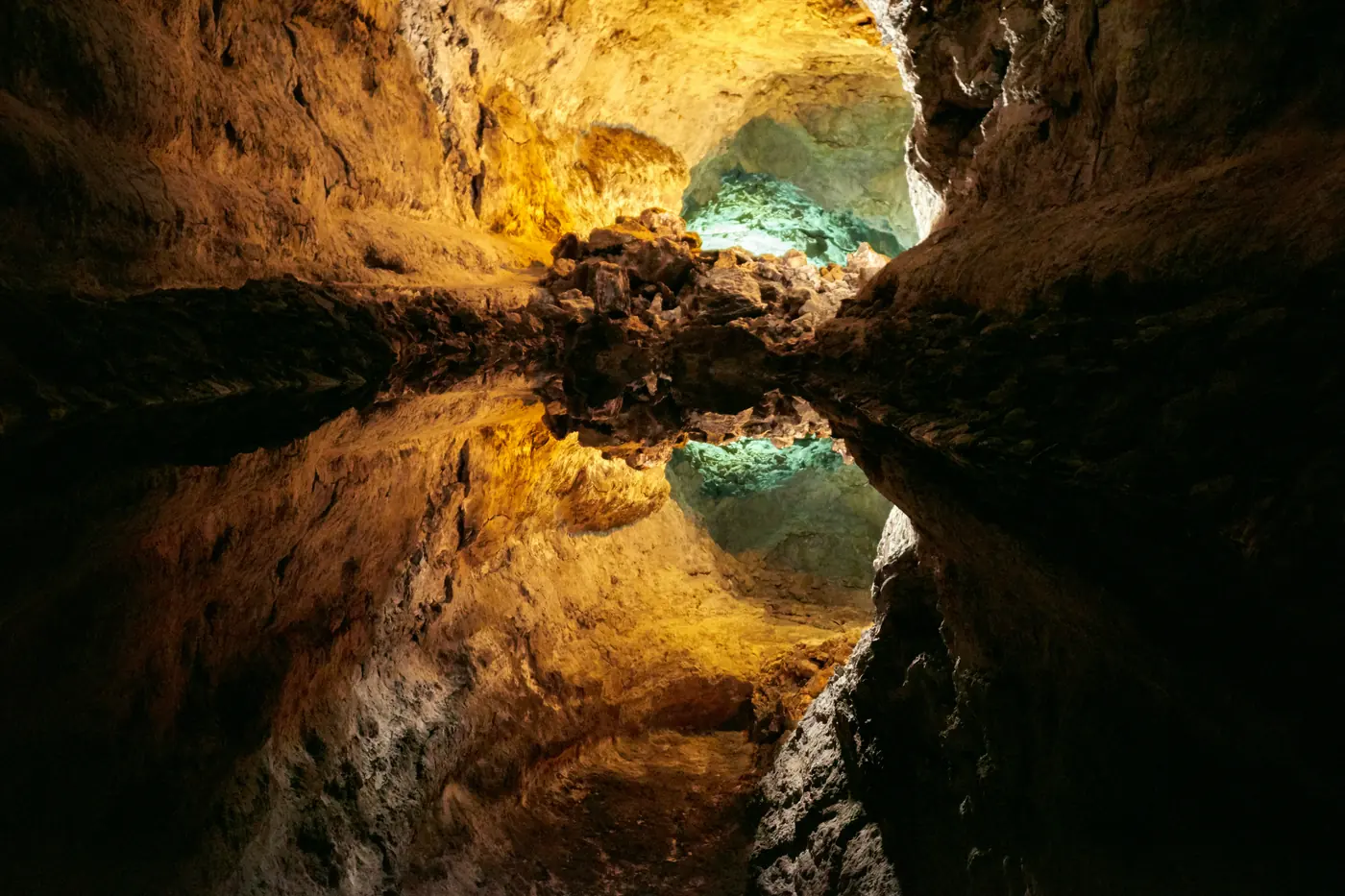
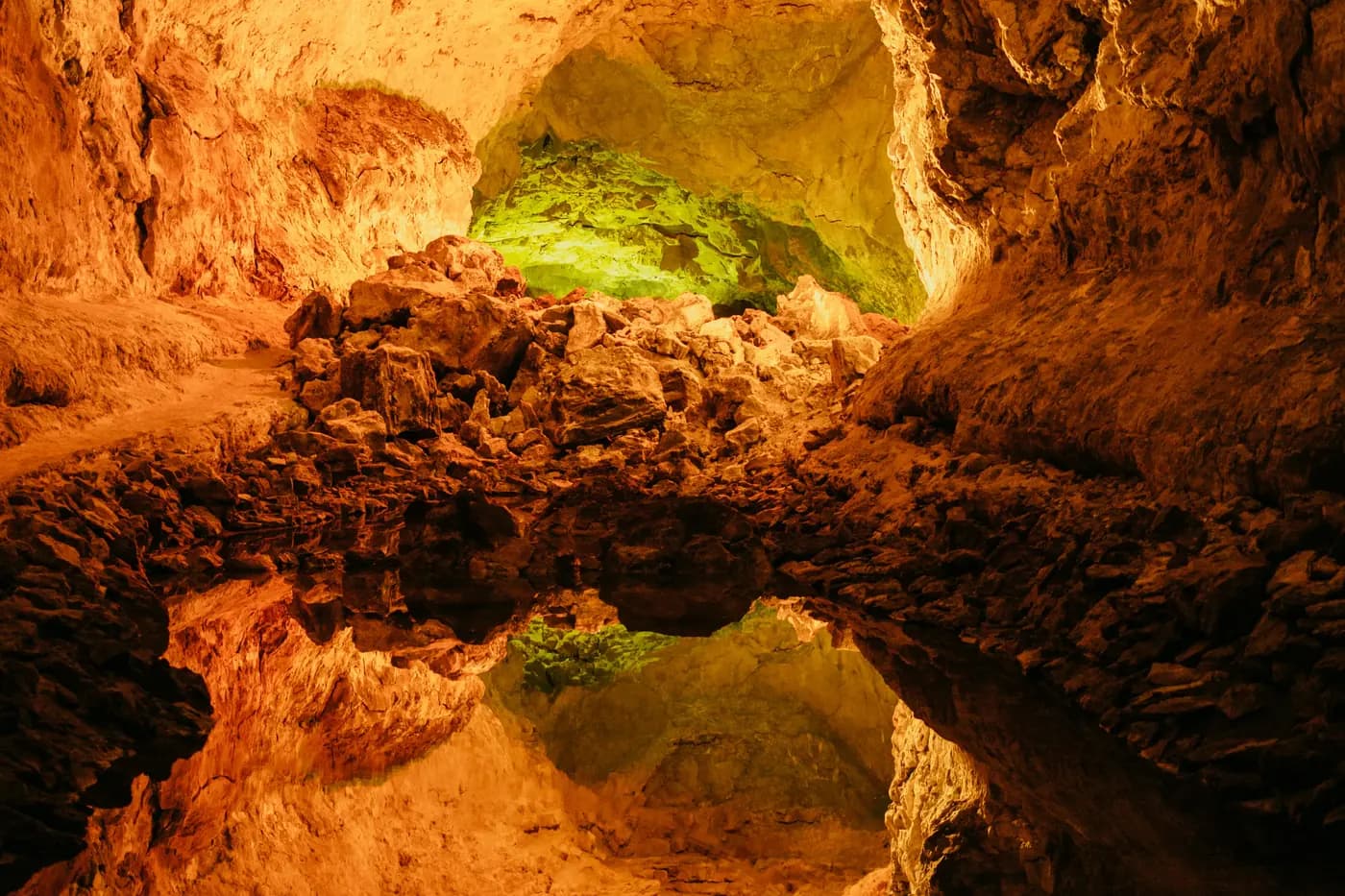
The Cueva de los Verdes opens up another section of the same volcanic tube as Jameos del Agua, left in its raw state: roughly 1km of lit-up galleries, explored on a guided tour. The two sites sit just minutes apart and combine easily into the same half-day.
Historically, the cave served as a refuge for the population during pirate raids. The tour ends with a now-famous optical illusion — we won't give it away here, since the surprise is part of the experience.
Practical notes: bring a light jumper (the galleries stay cool), wear closed shoes for the occasionally uneven ground, and allow about an hour for the guided visit.
Jardín de Cactus: Manrique's final work
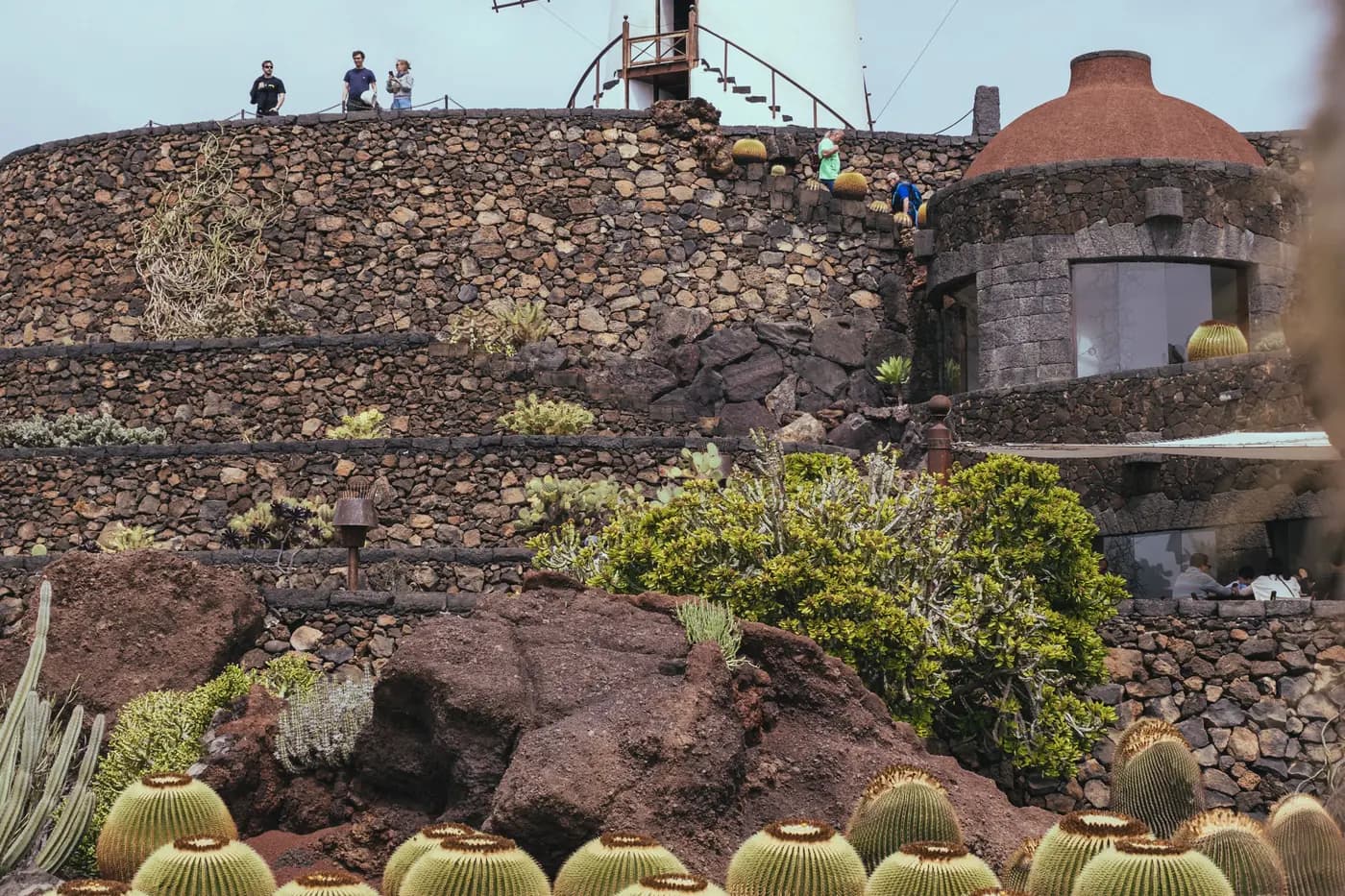
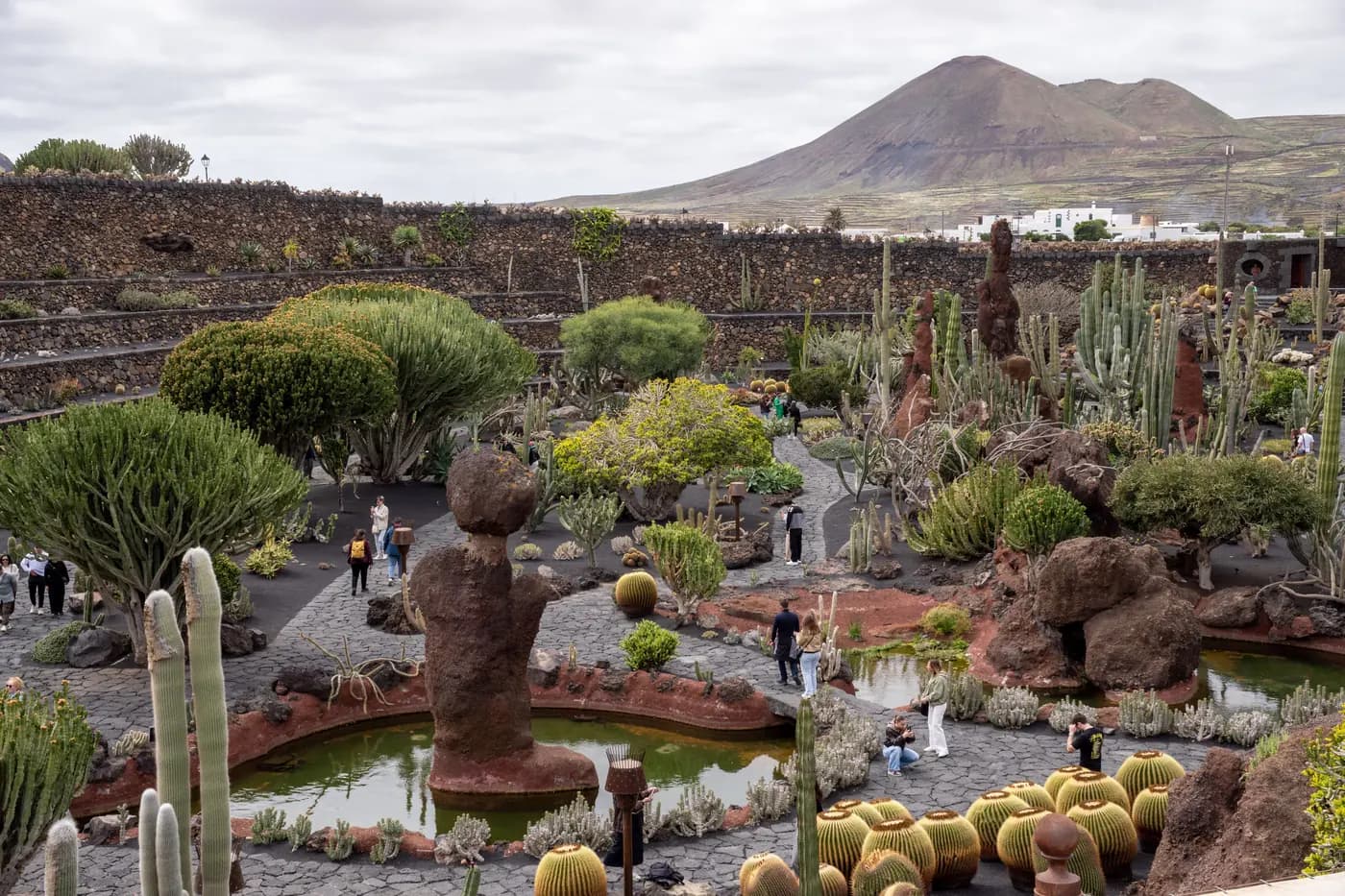
In Guatiza, the Jardín de Cactus is César Manrique's last major project: a green amphitheatre set inside a former volcanic ash quarry, home to several hundred species of cactus, watched over by a restored traditional windmill.
The visit takes about an hour and combines well with Jameos del Agua and the Cueva de los Verdes, all on the north-east coast. Climb up to the windmill for an overview of the amphitheatre and of Guatiza's prickly pear fields, grown for cochineal — a local tradition still very much alive.
Fundación César Manrique: inside the artist's studio
In Tahíche, the Fundación César Manrique occupies the artist's former home and studio, built on and inside volcanic bubbles formed by a lava flow. Here you'll find his art collection and, above all, the most intimate demonstration of his guiding idea: Manrique's architecture blends entirely into the volcanic landscape, a principle visible at every one of his sites.
We haven't visited the artist's house yet on our own trips — it's certainly on the list, regularly cited as one of the island's most memorable visits.
Planning your visit: locations and timings
The sites at a glance
- Jameos del Agua — Haría (north-east coast) — 1 to 1.5 hours.
- Mirador del Río — northern tip (Famara cliff) — 30 to 45 minutes.
- Cueva de los Verdes — Haría, minutes from Jameos — about 1 hour (guided tour).
- Jardín de Cactus — Guatiza — about 1 hour.
- Fundación César Manrique — Tahíche — 1 to 1.5 hours.
Geography is on your side here: Jameos del Agua, the Cueva de los Verdes and the Mirador del Río can all be visited in a single day in the north, adding the Jardín de Cactus along the way. With the sites spread out and poorly served by bus, hiring a car to reach these sites remains the most practical option.
If you only have two days of sightseeing on the island, pair a "Manrique north" day with a volcanic day around Timanfaya National Park and La Geria.
Short on time to see everything? Prioritise by what appeals most: Jameos del Agua for wonder and originality, the Mirador del Río for the view, the Cueva de los Verdes for the underground atmosphere, the Jardín de Cactus for photos and a gentle late-afternoon stop.
To go further, explore our Lanzarote guide or head back to the Canary Islands guide to compare the islands.
Frequently asked questions
What is Jameos del Agua?
A site built by César Manrique inside a former volcanic tube of the La Corona volcano, with an underground lake, a white pool and an auditorium carved into the rock.
How long should you allow to visit the Mirador del Río?
Around 30 to 45 minutes to take in the view over the El Río strait and the island of La Graciosa, a little longer if it's busy.
What is the Cueva de los Verdes?
A section of the same volcanic tube as Jameos del Agua, open for guided tours over about 1km of galleries, once used as a refuge during pirate raids.
Is the Jardín de Cactus César Manrique's final work?
Yes, it's his last major project, built inside a former volcanic ash quarry in Guatiza.
Can you visit César Manrique's house?
Yes, the Fundación César Manrique in Tahíche, his former home and studio built inside volcanic bubbles, is open to the public.
Do you need to book these sites in advance?
Booking online is recommended in high season to avoid queuing, particularly at Jameos del Agua and the Mirador del Río; exact details are on the official Centros Turísticos website.